Today we commune to talk about the stellate ganglion! A portion of the nervous system located in the neck which has direct implications for PTSD treatment. AND indirect uses for downstream PTSD symptoms like painful somatizations.
Something I hadn’t heard of before getting the tip-off from our community Fucker ThePlanetsDreamer / Somber Mercy. Thank you for the brain-busting share!
But don’t take our word for it. We’ll let the research do that.
Let’s first hear from:
Stellate Ganglion Block for Post-traumatic Stress Disorder: A Comprehensive Review of Evidence, Technique Considerations and Symptom Outcomes in Military and Non-Military Patients
Thomas Bielawiec · Brittany Melvin · Bhuvaneswari Sandeep Ram · Magdalena Anitescu
Current Psychiatry Reports
2026
Thanks to the medical community finally acknowledging “PTSD” rather than “shell shock” or “personal weakness,” targeted therapies have been rapidly improving. We no longer recommend generalized SSRIs or one-size-fits-all interventions, but instead use multidisciplinary treatments to tackle the myriad causes and symptoms.
One of those modern treatments is the stellate ganglion block.
SGBs involve injecting anesthetic between cervical vertebrae (vertebrae in your neck) to stunt the activity of the stellate ganglion. The stellate ganglion, itself, refers to the fusion of the cervical and thoracic ganglions. This area contains the nerve interchange between the brain, upper limbs, and head, and is known to hold a central role in sympathetic nervous system activation (that’s your fight or flight response).
Stellate ganglion blocks (SGBs) have been investigated as an interventional treatment option for PTSD. SGB is a minimally invasive procedure in which local anesthetic is injected at the C6 or C7 vertebral level to target the stellate ganglion which is composed of the inferior cervical ganglion and the first thoracic ganglion fusion, thought to be found in approximately 80% of the population [33].
The stellate ganglion carries both preganglionic fibers and postganglionic fibers that provide sympathetic innervation of the upper limbs and head and play a role in driving the nervous system’s “fight or flight” response.
The SGB is foreign to most of us, but it’s been used since the 1940s to treat depression. In the 1990s it was first utilized for PTSD in conjunction with medication and traditional therapy. In the 2000s it became a subject of scientific research, finally exploring these anecdotal and clinical connections.
The first reports of SGBs being used in mental disorders dates to 1947 where the block was observed to have positive effects on depression [39]. In 1990, the stellate ganglion block was first described in its use in PTSD in conjunction with pharmacologic treatment and therapy [40]. Interest in the topic began to pick up in the 2000s during which all the reviewed literature was published (Table 3).
Though the SGB procedure has been used for PTSD, pain, heart arrhythmias, and other nervous system aberrations, the mechanisms by which it is effective are currently (say it with me) unknown to medical science. One theory is that the block reduces nerve growth factor and nerve growth, which can then decrease neurotransmitters and nervous system activity.
This block has been utilized in pain conditions in the head, upper limbs, refractory angina and cardiac arrhythmias that occur as a product of abnormal connections between the sympathetic and sensory nervous systems.
The precise mechanism of the block has been a topic of investigation, however newer theories suggest that the block may reduce the amount of nerve growth factor and neurite outgrowth, causing a decrease in norepinephrine and sympathetic activity [34, 35].
These authors conducted a review of prior publications on the SGB to seek answers.
And they found…
Results/Discussion
The majority of previously published research on SGBs confirms that it’s an effective treatment for PTSD, including in non-military applications. The largest study on the topic reports that over 80% of patients experienced “significant improvement” of symptoms. Other research indicated anywhere from 50 to 70 to 96% efficacy across patients in reference to clinically decreasing their scores on the PTSD checklist of symptoms.
Overall, most of the literature obtained for this review appears to support the clinical efficacy of SGB in PTSD patients.. Lipov et al. analyzed the largest retrospective cohort analysis involving 327 military and non-military patients, in which 81% of patients experienced significant improvement [43]. In other large (at least 75 patients), non-RCT studies using PCL, at least 70% of patients had clinically significant PCL improvement, with one study showing up to 96% [44, 45]. In smaller case series, the clinically significant decrease was observed in a range from 50 to 100% of patients [46, 47].
PCL = PTSD checklist
It seems that symptoms are not unilaterally improved, though.
PTSD clusters
Symptoms like nervous system hyperarousal, reactivity, and avoidance are the most affected symptoms of the stellate ganglion block. Declines in emotional behaviors like numbing, having outbursts, and being irritable are included in these positive changes. Traumatic re-experiencing, however, is not shown to be greatly improved. This means the SGB is not appropriate for treating nightmares, flashbacks, and intrusive memories – but it could help with the resulting emotional and autonomic upsets.
While most of the evidence supports SGB in overall PTSD, of interest is whether any specific symptoms improve more than others. In one secondary descriptive analysis of a RCT involving 113 patients, hyperarousal, reactivity and re-experiencing symptoms were the most improved, although re-experiencing was per clinician ratings and not patient reported measures [49, 50]. In three additional smaller case series that looked at symptom clusters, the hyperarousal and avoidance clusters had the most benefit, which included symptoms such as irritability, outbursts, avoiding thoughts and feelings and emotional numbing [51–53]. When compiling observations across all the studies, hyperarousal symptoms consistently showed the most benefit, while re-experiencing, which includes symptoms like intrusive thoughts, flashbacks and nightmares, had the least or no improvement for patients.
And when it comes to anxiety and depression? Unfortunately, the results are all over the board in the existing literature. Some research found “meaningful improvement for at least a month.” But one study showed no improvement in depression, anxiety, or pain. And two additional cases suggested that a left-sided SGB increased anxiety symptoms, which was improved after a subsequent right-side block.
In terms of effects on anxiety and depression, one case series of 285 PTSD patients specifically looked at improvements in anxiety after SGB using the General Anxiety Disorder Scale (GAD-7) and found that there was a clinically meaningful improvement for at least a month [55]. This was a finding that was also observed in the Olmsted et al. RCT along with improvements in depression, anxiety, pain symptoms and physical functioning [49]. However, in the Hanling et al. RCT, there was no improvement in depression, anxiety or pain in comparison to the sham group [48]. In two case reports, a left sided stellate ganglion block was found to increase anxiety symptoms, with improvement after an additional right sided block [56].
These results are controversial and may indicate depression and anxiety can’t be knocked out by local anesthesia. But perhaps the most exciting news is, the SGB doesn’t appear to diminish cognitive performance to influence the improvements it more consistently causes. In other words, despite improvements in arousal, emotionality, and reactivity, memory, attentional capacity, and reaction time aren’t stunted overall – a welcome improvement compared to some other treatments that improve PTSD symptomology, but at the expense of broader brain functioning.
In a case series of 11 patients, it was noted that a SGB did not degrade neurocognitive performance in the form of reaction time, memory or in concentration at the expense of PTSD improvement [57].
But another thing to note:
Pre-SGB PTSD Severity
The greater the PTSD severity, the greater the improvement caused by the SGB.
While all the patients in the analyzed studies had a qualifying diagnosis of PTSD (minimum PCL score of 31–33), there were differences in the starting degree of PTSD severity, with some studies failing to note the starting severity all together. Olmsted et al. primarily enrolled patients with mild-moderate PTSD in their RCT showing a significant improvement after a SGB [49]. In the 166 patient case series by Mulvaney et al., the authors specifically separated their analysis by severity using a PCL score of 50 for a cutoff between higher severity and lower severity groups [45]. They found that both groups had a clinically significant improvement, however, the more severe group had a greater response, suggesting that the overall benefit of SGB may be greater in severe cases.
Demographics and Trauma Types
The SGB is effective across military and civilian applications. The procedure has been studied most widely in combat and military trauma, but studies including civilians have also reflected meaningful improvements in symptomology, in both men and women.
PTSD has primarily been studied in the military population with trauma related to combat or military deployment. As the military make up is primarily male, this also results in most of the studies reflecting such a demographic. The Lipov et al. retrospective cohort analysis specifically looked at differences between males, females, civilians and non-civilians [43].
81% of patients had a clinically significant decrease in PCL-M or PCL-C scores after SGB. Statistical analysis showed that a significantly greater change occurred in men with a military background than in civilian men. Likewise, women with a military background had a greater reduction than in civilians. Overall, the SGB was equally effective for men and women across all trauma types. Another retrospective cohort analysis of 99 patients by Verrills et al. specifically looked at the non-civilian patient population and involved ~ 50% women [58]. The findings supported that there was a significant change observed in both men and women equally.
The caveat being that military members indicated greater improvements compared to civilians – which one might hypothesize is due to nervous-system dominant symptoms that come with war experiences. (my words, not theirs)
However, they say:
These studies support that SGB is effective for both genders in both military and non-military populations, irrespective of trauma type.
Length of Effect
While the overwhelming amount of literature appears to have a positive correlation between SGB and PTSD, all the investigations have varying follow up points (ranging from 1 day to 24 weeks). Mulvaney et al. performed two larger retrospective analysis with both short term (4–8 weeks) and long-term (3–6 month) follow ups [44, 45]. In one study of 75 non-military and military patients, 96% of patients had significant improvement at the 1 week, 1 month, 3 month and 6 month follow ups, regardless of trauma type [44]. In the other case series of 166 military patients, follow ups occurred at 1 week, 4–8 weeks and 12–24 weeks, with 70% of patients showing clinically significant improvement persisting beyond 3–6 months, regardless of PTSD severity [45]. These studies argue that the results are durable.
The results have been validated between 1 day and 6 months. In one study, demonstrating that nearly 3/4ths of patients had significant symptom improvement persisting beyond 3 or 6 months, irrespective of prior PTSD severity. It appears that the results of the block are not fleeting.
And these results might be even more improved by the application of:
Adjunct Therapies
One variable that is tough to assess across studies is adjunct therapies prior and during the study period. Most of the patients included in the investigated literature had already failed standard therapy or had received some care prior. Positive effects seem to be observed in both patients that were therapy naïve and treated patients. For example, a handful of smaller case series looked at individuals treated for at least a year with a SSRI and psychotherapy while another looked at patients that had not received any treatment within 6 months and both found statistically significant positive correlations in most patients [47, 53, 57].
In most research studies, the authors noted that the participants had previously failed to find improvement through standard therapy approaches or received care that did not assist them (let’s be honest, through a facetious lens, and say “probably both!”). However significant improvements post-SGB were seen in patients without previous therapy attempts, as well. Positive results were seen when using SSRIs and psychotherapy in conjunction with the SBG, and with the SGB, alone.
And this is where we break away from the class to talk about:
Challenges and Limitations
While the highest quality evidence in RCTs appears to be mixed, much of the current literature supports the efficacy of SGBs in the treatment of PTSD as evidenced by this review. Further large, randomized, clinical trials with clear designs and protocols must be performed to assess the efficacy of the treatment in non-biased and generalizable study populations. There are four active randomized controlled trials that are ongoing in clinicaltrials.gov that may provide further data [74–77]. The combination of these will offer more information on treatment versus control groups for SGB injections, compare the effectiveness of therapy in conjunction with injections, and provide fMRI comparisons. Although SGBs have been supported to be effective across trauma types, further insight can be made into trauma and non-trauma subtypes. For example, in the military population, active-duty vs. retired, deployment sites, extent of involvements and additional injuries that were sustained may play a role. Some of the blocks utilized sedation, which might alter the results. Patients may also have secondary gains such as graduating their treatment programs, compensation for studies or applying for disability.
Most of the studies included were retrospective cohort studies and uncontrolled case series, which are inherently subject to limitations. These studies risk selection bias as patient inclusion is often determined by referral patterns and treatment availability and may capture patients more likely to respond to interventions. Some of the included studies originated from the same investigative groups, potentially introducing overlapping patient populations, limiting external validity and reducing generalizability. It may also create observer bias if the investigator anticipates positive results from previous assessments. Without randomized controlled groups, it is challenging to distinguish true treatment effects from placebo response, regression to the mean, or the natural disease progression and symptom fluctuation in PTSD. While most studies incorporated standardized outcome measures, there were variable follow-up durations for comparability across these studies, which do not account for attrition. Confounders such as PTSD severity, comorbid psychiatric conditions and concurrent pharmacologic or psychotherapeutic interventions, may also limit the results.
So with that, we hop into the:
Conclusion
SGBs have emerged as a potential intervention for PTSD, with much of the existing literature suggesting benefit across multiple symptom domains. The strongest effects have been observed in hyperarousal, though improvements have also been reported in re-experiencing and avoidance. Evidence indicates that outcomes may be more pronounced in patients with greater baseline severity. Despite these findings, the current literature is limited by small sample sizes, heterogenous methodologies, and a lack of long-term follow up. Larger, well-designed randomized controlled trials are required to establish the efficacy, durability and appropriate clinical role of SGB in the treatment of PTSD. SGBs should be considered in conjunction with other PTSD treatment.
The stellate ganglion – a nerve cluster near the cervical and thoracic vertebrate - appears to be related to PTSD symptoms rooted in the nervous system, which can be improved through locally anesthetizing the SG. It is most effective in treating hyperarousal, avoidance, and other unregulated emotional behaviors. With greater symptom severity comes greater improvement, but overall, the procedure appears to be effective in men and women, military and civilian applications. Larger trials are underway to better explore the mechanisms of action underpinning these successes to make the non-invasive procedure even safer and more effective. However, it appears to be a promising treatment option, especially in conjunction with other therapies, and when previous therapies have failed.
And with that, I’d like to briefly tell you about another paper that takes this story one step deeper.
You know, unless you’re in the nerdy upper tiers, in which case… we’ve got a lot of detail left to cover.
Let’s talk about:
The connection between the stellate ganglion, PTSD, and chronic pain in a case-study style.
This paper is called:
Stellate Ganglion Block for PTSD and Chronic Low Back Pain: A Case Report of Three Veterans
Lindsay Sterling 1, Kristy Fisher 1,2 and Anna Woodbury 1,2,*
Journal of Clinical Medicine
2025
And you know what, nerds? I’m going to give you this one upfront. Here’s the fascinating background and results of their clinical observations. Stick around to unpack all the details afterwards. (If this sounds like your experience with stress disorder and undiagnosable pain, I know you’ll want to).
Abstract:
Background: Stellate Ganglion Blocks (SGB) involve injecting local anesthetic near the stellate ganglion, which includes the C6, C7, and T1 ganglia. This procedure induces a sympathetic blockade and has been employed to address various conditions, such as post-traumatic stress disorder (PTSD), ventricular arrhythmias, and chronic pain syndromes like complex regional pain syndrome (CRPS). Central to this case series is the exploration of SGB as a unified treatment for PTSD and chronic low back pain—two conditions linked by central sensitization. Case Series Overview: The study presents three female veterans with histories of PTSD, chronic low back pain, and myofascial pain. These patients had not responded to conventional treatments, including medications and interventional procedures. They underwent SGB with a combination of 10 mg preservative-free dexamethasone sodium phosphate, 4 mL preservative-free lidocaine 2% with epinephrine, and 1 mLpreservative-free bupivacaine 0.25%. The procedure was well tolerated without adverse effects. All three patients experienced significant improvements. The first and third patients reported reductions in PTSD symptoms, low back pain, and myofascial pain. The second patient experienced relief from PTSD symptoms and prolonged reduction in myofascial pain. This case series is the first to document SGB’s effectiveness in treating chronic low back pain alongside PTSD. Conclusions: The findings suggest that SGB could be an effective therapy for chronic overlapping conditions like PTSD, chronic low back pain, and myofascial pain, all of which share central sensitization mechanisms. The literature supports the notion that these conditions involve both physical and psychiatric components potentially responsive to SGB. By targeting sympathetic hyperactivity and reducing norepinephrine levels, SGB may alleviate symptoms across these interconnected syndromes. This case series highlights the potential of SGB as a novel approach for managing comorbid PTSD and chronic pain conditions. Further research is warranted to confirm its efficacy and explore its broader applications in treating central sensitization-related disorders and chronic overlapping pain conditions (COPC), potentially responsive to sympathetic blockade.
Now we know what’s going on.. lets get into the nitty gritty. They tell us:
Introduction
While SGBs have been used in PTSD applications, they’ve also been applied for chronic pain, including the head, neck, upper limbs, complex regional pain syndrome, chronic myofascial pain, and chronic lower back pain.
The connection being? These authors theorize it’s due to a shared problem underlying both PTSD and chronic pain…. Central sensitization. This would explain why military personal, in particular, are highly responsive to the SGB.
Central sensitization is caused by an elevated response in nociceptive pathways (those are sensory nerves responsible for detecting painful, dangerous, or potentially harmful stimulation events) which presents as hyperalgesia (abnormally heightened pain sensitivity) and allodynia (perception of non-painful stimuli as painful). Central sensitization also has ties to the psychosomatic nightmare diagnosis of fibromyalgia.
Stellate ganglion blocks (SGB) have effectively been utilized in both treatment resistant post-traumatic stress disorder (PTSD) [1], as well as with refractory chronic pain in the upper extremities, head, and neck [2]. In the field of chronic pain management, SGB has been most utilized in the treatment of complex regional pain syndrome (CRPS) [3]. The overlapping pathophysiology of PTSD and chronic pain syndromes such as low back pain, CRPS, and chronic myofascial pain may contribute to the success of the SGB in alleviating two seemingly distinct indications. PTSD and chronic pain syndromes, like chronic low back pain (cLBP), share mechanisms involved in central sensitization (CS). This partially explains the high comorbidity rate, particularly in veterans. A 2023 study of over 5 million VA service users found that over half of those diagnosed with PTSD also met the criteria for chronic pain [4].
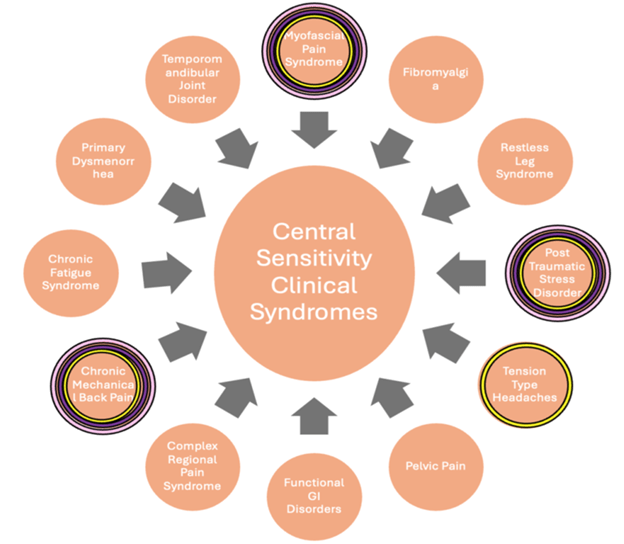
CS involves heightened response in nociceptive pathways due to increased excitability and reduced inhibitory modulation [7] and can manifest clinically in patients as hyperalgesia and allodynia. While CS has been proven in animal models through electrophysiological recordings [8], studies have found a higher degree of acute central sensitization in individuals with PTSD [7], as well as cLBP [9]. cLBP and PTSD are both categorized as central sensitization syndromes (CSS) (Figure 1), along with disorders such as fibromyalgia, myofascial pain syndrome, and CRPS.
Underlying central sensitization and PTSD may be anxiety sensitivity. Anxiety sensitivity promotes avoidance of activities that may be painful or perceived as painful, which may limit healthy self-support options. The attentional drain caused by both, resulting energetic drain, and pain as a traumatic memory trigger, may worsen symptoms.
One (proposed) mechanism is the Shared Vulnerability model, where anxiety sensitivity is a predisposing factor. Anxiety sensitivity increases fear and avoidance of pain-inducing activities, raising the risk of chronic pain [5]. The mutual maintenance model also identifies factors that maintain both chronic pain and PTSD, including attentional biases, avoidance coping, and pain as a trauma reminder; the cognitive demands from the symptoms of pain and PTSD may limit the use of healthy coping strategies [5].
Furthermore, neurostructural changes have been seen in both PTSD and chronic pain patients. On top of prefrontal and hippocampal diminishment, the old amygdala – the part that processes survival threats – is both atrophied and overstimulated in each case. Indicating decision making, memory, and fear responses may be impaired. The immune system is also dysregulated, pumping out and over-uptaking pro-inflammatory signal transmitters – causes of additional pain and disorder.
Anatomical studies reveal gray matter atrophy in brain areas related to stress, pain response, and memory (medial prefrontal cortex, hippocampus, and insular cortex) in patients with PTSD and chronic pain [6]. The amygdala, which processes threat and fear, is hypertrophied and hyperactive in both conditions. Immune system dysregulation is also linked, with increased pro-inflammatory cytokines and cortisol receptor reactivity in PTSD patients and those with chronic pain.
SGB can influence CS through multiple mechanisms, making it a potential treatment for comorbid PTSD and chronic pain syndromes. SGB inhibits sympathetic nervous system activity, decreasing central nervous system hyperexcitability seen in CS [11]. This blockade may disrupt abnormal connections between the sympathetic and sensory systems that can develop after nerve injury. The stellate ganglion has extensive neuronal connections to brain regions involved in pain processing, such as the hypothalamus and amygdala [12]. SGB also has anti-inflammatory properties, which may help reduce neuroinflammation, a key component of CS.
In other words, there are many reasons to study central sensitization – including the symptoms we accept as “PTSD.” These connected conditions may be attenuated, also, by stellate ganglion blocks, as the SG has connections to the hypothalamus, amygdala, and anti-inflammatory signal transductors.
And in this paper, for a change, we see three clinical case studies describing symptom, procedure, and result.
Case Series
Patients were assessed for PTSD symptoms by a psychiatrist using the Clinician Administered PTSD scale for DSM-5 (CAPS-5) and at treatment visits and via telephone follow-up.
CAPS-5 is a structured interview that makes a current diagnosis of PTSD, as well as assesses PTSD symptoms over the past week. Standardized questions are used to target the duration and onset of symptoms, impact of symptoms on daily functioning, and change in symptoms.
Pain levels were similarly assessed at visits and over the phone.
Patient 1: 40 year old Female African American veteran suffering from non-responsive PTSD, migraines, chronic low back pain, neck, and arm pain. Previous treatments: SSRIs, prazosin, topiramate, psychotherapy, and trauma-recovery programs; for pain: duloxetine, gabapentin, epidural steroid injections, radiofrequency ablation, and peripheral nerve stimulation. None of which helped with PTSD or pain symptoms. Within one day her pain dropped to 0/10 and PTSD symptoms disappeared. After some recurrence, she was retreated at week 8. One year later she still had reduced PTSD symptoms and no upper limb pain.
Patient 1: A 40-year-old African American female veteran with treatment-resistant PTSD, migraines, and chronic myofascial pain presented with low back pain and bilateral, non-radiating neck and posterior arm pain. Imaging revealed multilevel degenerative discogenic disease and neural foramina narrowing. Despite extensive treatment—including duloxetine, gabapentin, epidural steroid injections, radiofrequency ablation, and peripheral nerve stimulation—her pain persisted. PTSD management with SSRIs, prazosin, topiramate, and gabapentin also failed to provide relief. The patient had participated in psychotherapy and trauma-focused recovery programs. Given the refractory nature of her symptoms, a unilateral stellate ganglion block (SGB) was recommended to address both PTSD and upper extremity pain (Figure 2). On the day of the procedure, her pain was rated 8/10 for both upper extremity and lower back pain, while PTSD symptoms were classified as “severe” on the CAPS-5 scale. Day 1 post procedure, her pain dropped to 0/10 in both areas, and PTSD symptoms became undetectable (Table 1). One week later, her upper extremity pain increased to 5/10 and lower back pain to 4/10, but PTSD symptoms remained absent. At six weeks post-procedure, she experienced a slight recurrence of PTSD symptoms and low back pain, though both were improved compared to baseline. By eight weeks, her low back pain returned, prompting continued treatment with bilateral L5-S3 radiofrequency ablations. Remarkably, one year after the initial SGB, she reported sustained reduction in PTSD symptoms with no recurrence of upper extremity pain.
Patient 2: 55 year old female Caucasian veteran; history of mental disorder including bipolar, conversion, and PTSD; over two decades of chronic low back pain. Previous laminectomy, non-stimulatory anti-inflammatory drugs, duloxetine, gabapentin, methocarbamol, ibuprofen, topiramate, and epidural steroid injections were not effectively managing her conditions. After SGB her pain and mobility scores increased, and she reported lesser PTSD symptomology, all of which were still observed 7 months after the procedure. However, her lower back pain wasn’t improved.
Patient 2: A 55-year-old Caucasian female veteran with history of PTSD, bipolar disorder, and conversion disorder presented with over 20 years of chronic low back pain. She underwent a L3-S1 Laminectomy in 2008, which resolved her pain for about 3–4 years before symptoms of low back and leg pain returned. The patient had failed trials of multiple NSAIDs, and at time of procedure, her medication regimen included duloxetine 120 mg daily, gabapentin 800 mg three times daily, methocarbamol 2–3 times a week at night, ibuprofen 800 mg 4–5 times daily, and topiramate 25 mg daily for headaches. The patient had received multiple epidural steroid injections but reported irritability and angry mood swings after injections. In addition to her low back pain, she experienced symptoms of shoulder myofascial pain. The decision was made to undergo a unilateral SGB for pain and PTSD symptoms. Her pre-procedure pain scores were 8/10, and post- procedures scores were 6/10 with improved range of motion of her left arm. She was unable to be contacted for her 1- and 6-week follow-ups. At 3 months, she reported improvement in her PTSD and shoulder symptoms, but no improvement in her low back pain. She elected to repeat the SGB 7 months after her initial procedure for continued shoulder pain and PTSD relief.
Patient 3: 29 year old female Caucasian veteran; severe PTSD; chronic low back pain, shoulder pain, and headaches. Previous treatments included physical therapy, medication, epidural steroid injections. Following SGB, headache and shoulder pain scores dropped from 10/10 and 6/10 to 1/10 and 0/10, respectively. Back and PTSD symptoms were not affected… until one week later. She repeated the SGB procedure and underwent sacral radiofrequency ablation to assist the low back pain, which was more tolerable following the ganglion block. She continues to undergo SGB every 3-4 months to manage PTSD and pain symptoms.
Patient 3: A 29-year-old Caucasian female veteran with severe PTSD presented to the
pain clinic with chronic low back pain, myofascial shoulder pain, and chronic headaches.
Despite multiple treatments, including physical therapy and various medications, her symptoms persisted. Previous interventions like sacroiliac joint injections and caudal epidural steroid injections provided limited or no relief. A Stellate Ganglion Block (SGB) was recommended to address her central sensitization syndromes and COPC. Pre-procedure, her pain scores were 10/10 for back pain and 6/10 for headache and shoulder pain, with PTSD symptoms in the “severe” range on CAPS-5. Immediately post-SGB, her headache pain reduced to 1/10 and shoulder pain to 0/10, while back pain and PTSD symptoms remained unchanged. At one-week follow-up, she reported significant improvement in PTSD symptoms, including decreased sensitivity to triggers. Pain scores for low back, headache, and shoulder were all 0/10. At 12 weeks, she received a repeat SGB with similar positive results. Subsequently, she underwent Bilateral L5-S3 Sacral Radiofrequency Ablation for sustained low back pain relief, which she tolerated better post-SGB. Four months later, when her low back pain returned to 10/10, the patient opted for another SGB over sacral RFA, prioritizing PTSD symptom relief with the added benefit of pain reduction. She has since been receiving these injections every 3–4 months, with similar benefit.
So, three women, ages 29-55, with mixed chronic pain and PTSD, both unresponsive to traditional treatments, underwent SGB and had significant reductions in each category, (sometimes after repeating the procedure), with chronic lower back pain appearing to be the least improved condition in one case.
And in:
CONCLUSION
It seems that central sensitization lies below PTSD and complex regional pain syndrome (chronic pain). Under central sensitization, pain detection and interpretation become artificially heightened by the nervous system, potentially without injury, leading to poorly responsive treatments.
The underlying mechanisms of PTSD and conditions such as CRPS may seem unrelated, but their pathophysiologies can be linked under CS (Figure 1), a term covering a range of clinical disorders related to the amplification of pain reception by the central nervous system, which can occur independently of direct result or injury [14].
SGB is generally considered a safe procedure, especially when performed under imaging guidance, but it does carry some risks. There were no reported unanticipated adverse effects in this case series. The incidence of severe complications found in a 1992 study was approximately 1.7 per 1000 blocks [16]. This research was performed prior to the advent of fluoroscopic and ultrasound visualization, which have greatly increased the safety of the procedure. Common side effects include hoarseness, lightheadedness, and temporary Horner’s syndrome symptoms such as drooping eyelids and bloodshot eyes [17].
While SGB is not yet, in general, the clinical guideline for PTSD, it has been adopted into clinical practice and Veterans Affairs guidance for refractory PTSD based on recent literature… While SGBs have been used for PTSD, the true novelty of this case series lies in the improvement of two of the patients’ myofascial pain, including cLBP. Chronic low back pain is one of the most common complaints in the field of chronic pain, and in the absence of anatomical pathology can be difficult to treat.
Significant studies have shown the presence of CS in patients with cLBP [9]. This case series also presents a novel approach to addressing multiple conditions—cLBP, myofascial pain, and PTSD—with a single intervention. Prior reports have utilized SGB for simultaneous treatment of PTSD and reflex sympathetic dystrophy (now known as complex regional pain syndrome), but not for more distal pain [21]. In this case series, all three patients had multiple conditions indicating CS (Figure 1), nociplastic pain, and hyperactive sympathetic activity that improved after SGB was performed. All three patients had a reduction in their PTSD and myofascial pain symptoms, while two additionally had a reduction in their cLBP severity.
SGB is one of the more promising options for treating central sensitization, PTSD, and chronic pain, and it features few complications or risks. It has been used by Veterans Affairs and in clinical practice to address recurring PTSD; this is now being extended to concurrent non-responsive conditions like chronic low back pain, headache, and upper limb pain. These three case studies in female veterans are another step towards validating SGBs as effective treatments for nervous system hyperarousal, pain anxiety, and inflammation that underscore central sensitization and comorbid PTSD symptoms which haven’t been improved by more traditional therapies.
And with that… I recommend you check out their figure, linking conditions like restless leg syndrome, joint disorder, chronic fatigue, GI issues, and pelvic pain to the other ailments we discussed today, through the shared factor of central sensitivity syndromes.
I thank you for being here.
I hope this research has given you a new potential treatment option and new perspective on the overlap between chronic, unresponsive, conditions.
And I look forward to meeting up again soon, as we keep exploring our complex biological systems…. Perhaps faster than western medicine can.
Hail yourself.
Hail respite from chronic pain and discomfort.
And I’ll talk to you soon.