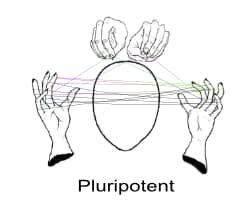
Let’s talk about the dangers of talking among mixed crowds.
This month we’ve asked the questions: Can predators identify us – people with past trauma – as fast food? Answer: yes. Can it occur from psychological clues – like attachment style and ability to emotionally regulate - that our behaviors reveal? Answer: mhm. And can they do it through gait – walking style? Answer: with such specificity that it’s fodder to never walk again.
So with all these physical signs already discussed, today we ask… what about verbal cues? What do our voices and word choices reveal about our pasts and potential prey-ability in the future?
This is the summary of the full research episode for quick learning and gist-taking. If you really like details and curiosity-fulfilling nods to further research you can do yourself, you might want to check out the research-excerpt inclusive version over on that patreon. Patreon.com/traumatizedmotherfuckers. I think we’ve got 10 pages of extra material straight from the scientists’ mouths this week.
Either way, thanks for being here, supporting the show, and learning beyond tiktok.
And now, we start with the paper:
Can perpetrators discern survivors from voice?
Elisa Monti, Wendy D’Andrea, Linda M. Carroll, Katherine Norton, Noga Miron, Olivia Resto, Kayla Toscano, John Williams, David Harris, Laurel Irenee and Anne Maass
European journal of psycho-traumatology
2024
As we all know, recovering from trauma is a complex process. As much effort as we put in, we also need corrective experiences – surprisingly different, positive events and improved circumstances – for our minds to heal. If we can see that trauma occurred but it isn’t mandatory to relive again and again – in fact, other possibilities exist - we can re-open ourselves and redesign our lives. Unfortunately, this doesn’t always happen or happen lastingly. Post-trauma, abuse, and neglect, we have a heightened chance of re-experiencing more of the same. This can convince a brain it was correct to be chronically fearful or stressed about the initial events, sealing us in a prison of the mind where only further evidence of forthcoming trauma is available. But the question is… how are we singled out for this potentially life-devastating, revictimization? As we’ve learned previously, nonverbal cues like walking style and conversational gesturing can indicate victims, dominance, and submissiveness.
So it seems that being targeted or retargeted occurs because predatory individuals can detect and interpret subtle, nuanced signs of wounding through observation, alone. It’s never our fault for being taken advantage of, but it is useful to know what behaviors we might want to become more conscious of. Now that we know the ways our bodies might be giving our deepest secrets away, how about the way we speak?
VOICE
Voice may be an especially potent signal of perceived weakness or strength, prior wounding or vitality, because it contains a wealth of data we can’t hide. It communicates our social standing and our internal condition – how we’ve been raised, among who, how healthy we are physically and psychologically. Emotionality is transferred tonally and identity is communicated through word choice. It also transports information further and more purely than observations of bodily movements or adornments. We can hear each other through walls and doors, and it’s difficult to alter the patterns because they originate so internally. There seem to be biological and evolutionary survival connections to the voice when we consider how it reveals our deepest needs, starting from our cries in infancy. Voice may be one of the most uncorrupted signals of our wellness, in multiple ways.
It’s also possible that, like walking style, voice is affected by trauma or assault. On the verbal front, it’s hypothesized that characteristics like tone, rate, and pitch could reveal emotional information. Slower talkers may be seen as sadder or more disassociated, therefore more likely to be less supported or weaker prey. But beyond mood or presence, the nervous system allows and influences both walking and speaking; if we’re trapped in a sympathetic (fight or flight) or parasympathetic (rest and digest) condition, it will be reflected in our output whether it be bodily or vocal, via physiology. This is related, in part, to the vagus nerve, which vocal nerves are connected to. So, in a very direct way, nervous system activation controls our ability to vocalize beyond what we can consciously control.
Some potential vocal indicators of prior PTSD include more monotoned voices, slower speech, and more irregularity in soundwave during trauma recall. Together, suggesting that voice might be a viable way to detect PTSD history for therapeutic or predatory motives. Once again, psychopaths are the textbook example; their surface-level charisma, ruthlessness, and lack of self-control earn them the reputation of being able to pick victims out of a crowd for preying ease. And so, this study studied the relationship between voice, prey, and predator with a focus on psychopaths and prior perpetration.
METHODS
They used 50 cis women for voice recording in two ways. First, in their normal voice, when asked to spontaneously describe the way they got to the study. Secondly, by reading what’s called the Rainbow Passage – a selection used to diagnose phonological disorders. A sound meter and software for analyzing voice were used for measurement.
Participants then answered a survey to measure childhood trauma exposure. To be sure results weren’t skewed by misrepresentation, a minimization-denial subscale ensured underreporting wasn’t taking place. Speakers also were analyzed for assault history.
From this group, ultimately 18 speakers were used for predator analysis; 9 with and 9 without sexual-physical violence in childhood. For each, a sample of 1) their spontaneous and 2) a selected sentence from the standardized vocalization recording were used for assessment in the experiment.
Two groups of men were then recruited as the Listeners. One group heard the spontaneous recording, the other was exposed to the standardized Rainbow Passage selection. They were then asked to pretend to be sexual predators and choose “good victims” from the participants vocalizations.
These men were analyzed for their own childhood trauma and assault histories, as well as psychopathy and prior sexual assault perpetration experiences.
Finally, listeners’ accuracy in assessing good victims, based on their prior victimization experiences, was determined. Did the person pinpointed as easy prey by voice quality alone have an abusive or neglective past, based on the questionnaires each speaker took?
DISCUSSION
Yes. But surprisingly, psychopathic traits didn’t reflect efficacy in assessing “easy victims” from voice. However, prior sexual assault perpetration history did. “Perpetration was a significant predictor of accuracy. Psychopathy was not.” It’s possible that direct experience as an assault perpetrator caused exposure-based conditioning, so that they intimately knew the characteristics to look out for and how to spot them based on what had worked in the past.
And what’s more, the abused or neglected past of the Listener played a role in their accuracy, as well. The childhood trauma of the potential predators correlated with higher scores in identifying vulnerable victims vocally. It’s hypothesized by the authors that the standardized Rainbow Passage, in particular, allowed possible perpetrators to key in on voice differences between Speakers for heightened precision… and also that their own emotional experience of prior victimization might be recognizable in another. Suggesting something like empathy is used for nefarious purposes in this case, as they identify a fellow victim and use the knowledge for malicious reason.
Overall? This study tells us that prior assault perpetrators and victims are capable of detecting others with past victimization experiences, who might be good choices for future ones, simply through voice quality.
But what they don’t tell us?
Is anything about the voice qualities that are used as indicators of vulnerability.
We heard earlier that “slow speed, monotony, and un-emotionality” might be implicated, as well as “perturbations in soundwave” – none of which is satisfying to me.
And, honestly, it turns out that the foundational studies which laid the groundwork for the one we just covered, which might shed more light on these characteristics… are again hard to get ahold of. We’re waiting on a library request I submitted to my institution to get access.
So I went digging, and pulled up this paper for more usable information in the meantime. Let’s keep it applicable, not just interesting.
The relationship between, language features and PTSDmsymptoms: a systematic mreview and meta-analysis
Zhenyuan Yu, Zixin Gu, Yonghong Shen* and Jingbo Lu
Frontiers in Psychology
2025
The connection between trauma and language usage has been studied. “Trauma thoughts,” for instance, as we call them round these parts, contain things like absolute language that can’t possibly be accurate across all situations or heavily emotionally-slanted words when more neutral options are available or more appropriate. Anecdotally, in this non-research observation, they often point towards trauma-exposed minds that haven’t fully healed yet. i.e. “nothing ever works out for me” (can’t be true) or “he ripped the pen out of my hand” (when he casually reached for it) throw flags on the field with others and serve as excellent points for working with your own psyche when you notice yourself saying them.
But in the literature, it’s been shown that negative words might suggest emotional upset and words relating to death might point towards traumatic memories. Words relating to cognitive processing and discovery, or suggestion of high mental load, might also relate to PTSD.
It’s worth noting that “cognitive processing words” might be solid indicators of the stage of trauma recovery. It seems that more advanced processing includes more phrases about cause-and-effect, meaning-making, and realization surrounding the traumatic events.
As such, it’s worth investigating the link between language and trauma history, for potential screening and treatment improvement.
These authors did a meta-analysis of several already-conducted studies to make sense of them, together. And they found?
RESULTS
Language centering around death, negative feelings, anger, the body, and utilizing high word count were directly related to PTSD symptoms… with death and word count also correlating to intrusive PTSD symptoms. A finding that makes some intuitive sense, if you’ve ever been left dysfunctional and mentally disturbed before. Ending the misery or fear of doom can be chatty squatters in your mental space.
Death is a common feature because of the nature of trauma, itself. Feelings of insecurity or trauma finality are common afterwards. However, this might not be as grave as one would assume; some research suggests that discussing death could be a sign of advanced trauma processing, as avoidance isn’t taking place.
Emotionally negative words and anger correlate with PTSD, as well, likely due to lack of emotional regulation options. Attempting to discuss traumatic experiences kicks up emotional distress, which is translated through word choice before it can be modified. Anger – a reflection of pain or danger – is also prevalent in language, perhaps due to working through traumatic material, hopefully not from wallowing in it.
Interestingly, not all negative emotion words were indicative of PTSD symptoms, though. Sadness and anxiety were NOT predictably correlated – potentially because they’re not at all exclusive to PTSD. Positive word choice was also observed in those afflicted with traumatic stress disorder – potentially because participants were using this language for emotional regulation or reframing. So a chipper attitude may not signify a healthy and hopeful individual authentically.
Using many words to describe traumatic experiences or highly detailed ones might correlate with PTSD symptoms – especially intrusive ones - because the individual is attempting to convey complex emotions and observations. It’s not a time for brevity.
And words relating to the body are also not to be spared. Discussion of bodily sensation is common, probably due to the increased sensitivity of the beholder. Hyperarousal of both the nervous system and brain regions responsible for physical sensation and emotional feelings are not uncommon, creating a – let’s say “vivid” – experience for the individual.
And what wasn’t found in the study?
A connection between self-centered pronouns and PTSD symptoms – something we can all breathe a sigh of relief about, as trauma is commonly thought to create a self-occupation in positive or negative ways. And cognitive processing words also weren’t found connected to PTSD symptomology – this is perhaps because subjects were asked to create a trauma narrative, which would include more time-locked observations than post-active analyses.
So in conclusion?
Language cues like discussions of death, negative emotions, anger, and bodily sensation… especially executed through sizable word counts… could be verbal indicators of PTSD, which could be a signal to past perpetrators that we’re vulnerable to future attack. And this is even more true when combined with currently vaguely described vocal patterns like speaking slowly and exhibiting soundwave perturbations.
Findings we’ll hopefully be expanding upon next time! as those papers become available through my library and we continue discussing surprising physiological impacts of trauma!
Til we speak again, well…
Watch your speed, your tone, and your word choice. If, for no other reason than to determine your own degree of healing and to zero in on potentially unhealed thoughts.
Stay safe out there, not silent.
For the full research episode, hit that patreon.
For the short and sweet summary, you know where to go. The episode description.
Thanks for being here.
And I’ll see you in June.
Bye bye.