summary
In difficult times, it can be a SLEW of all five. Let's explore the distinctions between fear, anxiety, stress, phobia, and paranoia.
Fear is a necessary response to immediate threats, while anxiety involves worry about potential future threats. Stress is described as a response to events that may impact well-being, and phobias are irrational fears that disrupt daily life. Paranoia is characterized by persistent fears of conspiracies against the individual.
It's important to notice these differences to manage your responses effectively. Have a silly metaphor to help with the effort.
takeaways
- Fear is necessary and adaptive for survival.
- Anxiety is a persistent worry about future threats.
- Stress can arise from various life situations.
- Phobias are excessive fears that impact daily life.
- Paranoia involves fears of conspiracies against oneself.
- Fear is a response to immediate danger.
- Anxiety is related to anticipated events.
- Stress can be both short-term and long-term.
- Phobias can lead to avoidance behaviors.
- Understanding these concepts can aid in emotional regulation.
keywords fear, anxiety, stress, phobia, paranoia, mental health, emotional responses, coping strategies, psychological well-being, self-help
transcript
Okay, fuckers. Let's jump in today to add to this FEAR collection in the Choose Your Own SpookVenture series and discuss the difference between fear, anxiety, stress, phobia, and paranoia. We'll also go over a metaphor for differentiating between these five and what to do with this information to help yourself help yourself.
What we need to know is fear isn't a bad thing.
It's necessary and adaptive to keep you alive. Fear is a natural response to a perceived danger or threat. So the trigger is a specific immediate danger or perceived danger, something that is readily observable, an event that is happening or about to be happening identifiably.
Therefore, fear has a short-lived duration, and under non-PTSD circumstances, it subsides once the threat is gone. Example, fear of a loud noise, dog barking, an opponent in a dark alley, a horror movie scenario, or a looming storm that can be seen on the horizon.
This is different from anxiety, which is a persistent worry or apprehension about potential future threats.
Something that could be fearful, but is not observed to be evidentially happening will create anxiety. Anxiety is an anticipation of future events, uncertainty, or a general sense of unease that can affect us cognitively and in the body. We can call it forecasted or preemptive fear without a target to necessarily point at.
The duration. It can be long lasting and it can be present in the absence of any real or specific threat.
"Why are you anxious?" "I don't know." is a pretty common dialogue.
Examples, worrying about relationships, what's happening in a distant or unobserved place, general suffering, physical danger, or humiliation that is anticipated in the future.
Meanwhile, stress is defined as physical, emotional, and or physiological responses to an event or situation that has perceived bearing on one's well-being.
So it's triggered by the recognition of an event or condition that could affect the individual in an assumed negative way.
Stress can be short-term or long-term depending on the presence or knowledge of the stressful influence. Examples of this would be demanding jobs, health changes, deadlines, financial tightropes, relationship issues, changes in life circumstances.
None of these are necessarily negative or lead to imminent physical threat, but they could have negative implications overall on one's happiness. Therefore, they tighten up the mind of the individual.
All three of these, fear, anxiety, and stress, are different from phobias.
These are irrational and excessive fears of a specific object, situation, or activity. They can persist for a long time and often significantly impact a daily life. Phobias are off-base or exaggerated fears that often affect functioning.
Examples Heights Water Spiders Snakes Close relationships Public social situations It makes sense to have a healthy fear of any of these, but when that fear creates undue emotional eruption or life avoidance, is a phobia.
Lastly,
Paranoias are persistent self-triggered fears about unspecific targets that are often conspiring pointedly against the individual.
These tend to be long-lasting and capable of spawning additional paranoias, or networks of paranoias.
Examples. The government is coming after me. Everyone is out to get me. They're always watching, all men or women are trying to assault or take advantage of me. The universe is committed to harming me. The individual is the center point of imagined, undue, perceived, organized attack, which creates stress, anxiety, phobic and fear responses, and often features generalized distrust towards anyone who disagrees with the perception, who then is regularly lumped in with that paranoid network.
So to summarize this, fear is the response to a perceived threat, while anxiety involves a worry about a threat that has not happened yet and may never happen. Stress concerns events that are happening or indicated to be happening, which could have a negative impact on the individual's life. Phobias are exaggerated fear responses to specific stimuli that are not really as hazardous as the response suggests.
A fear typically does not rise to the level of a phobia. And paranoias are networks of fear, anxiety, and stress which create phobias of broad, assumed, interconnected, and organized outside forces.
You may notice that four out of five of these terms are somewhat hypothetical and predictive, illusionary or imagined, rather than being grounded in observable reality and requiring of immediate action.
Fear is, in a way, its own experience of responding to observed events. Anxiety, stress, phobia, and paranoia are more closely related to one another separately as potential fear that becomes real in the mind before it has a clear function in reality. This is due to their shared predilectory nature.
And yet they do not feel that way.
Anxiety, stress, phobia and paranoia feel like fear.
In the article, "Are Fear and Anxiety Truly Distinct Neurobiological Evidence for the Fear-Anxiety Distinction," from 2021, our authors summarize this nicely, saying, "the difference is that fear is related to the presence or imminent presence of the aversive stimulus while anxiety is considered the more protracted state produced by a sustained expectation that the aversive event is likely to occur."
Meaning anxiety is related to the stories that we're telling ourselves, not what we are observing.
Now, let's also wrap this up with a little metaphor.
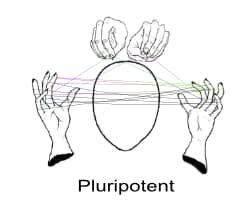
I know it's a strange request, but pretend you are a rope.
Fear. Someone is walking towards me with an axe raised overhead. I am about to be sliced unless I roll away from this obvious physical threat.
Anxiety. Someone could walk into this room with an axe and cut me in half anytime.
Stress. I have a lot of weight to hold up this week. I hope that I can sustain the pressure of being pulled hard in multiple directions.
Phobia. I can't be in the same room as heavy weights or axes or people could who could wield them. They are certainly all going to harm me.
Paranoia. Everyone is trying to cut me apart and stretch me past my breaking point. Together, they're all coming for me. Can't you see it?
Alright, now what to do with this information? When you notice a system activation that you are internally upset in a way that's creating hypervigilance and action potential that you're not sure what to do with, discomfort, realize that you really cannot trust your meat because there isn't a great difference for most of us between our physiological responses to each of these things.
This means we can accidentally categorize anxiety, stress, phobia, and or paranoia as real fear. This puts us in a sustained state of arousal without a behavioral solution. We become trapped in fearful activation. Our cognitive abilities decline, our emotions rise, and we become compulsive, attempting to find an action to take.
I.e. when we see a mountain lion and experience the pure form of fear, it is helpful because we run or we fight it off. Problem solved! But when we believe or carry a story that there must be a mountain lion somewhere, or that mountain lion that was seen three counties over must also have our scent and be showing up one of these days. Then we're trapped in a state of suffering that can't be resolved until that mountain lion or another target that we use as a stand-in shows up.
The brain will begin to seek that target to explain its upset, creating undue emotional and relational problems that can really spiral into something that is worth being stressed about.
So, if you find yourself activated about some information, but you're not sure how to make sense of it, first I recommend using that little rope metaphor.
And I also recommend asking, is the threat absolutely coming at you in observable reality right now?
Is there an action you can take that would logically assist you in getting through this imminent physical threat?
If not, you probably aren't having a fear response. It's likely a premonitory system activation that doesn't have a cut and dry function currently. These hypothetical fear reactions then need to be treated with cognitive behaviors such as critical reasoning.
Use the mind to talk itself back into reality first, using gentle reassurance and comparison of perceived reality versus observed reality, the story you're carrying versus what people could consensually say is going on right around you.
And then, when you gain some cognitive clarity, you can use nervous system grounding and embodiment skills to rebalance the body, to work out that physiological activation, to bring yourself down from a state of fear to a state of more neutral responsiveness in which you are still associated with reality and yourself within reality and therefore you're ready to act. If necessary. But you're not exasperating the fear story or taking action without any specific, accurate target.
For help rebalancing your nervous system and body, please visit the Practical Polyvagal Series, the Preventing PTSD Series, and the Big S Self Collection, contained here within this Patreon.
And that, fuckers, is the difference between fear, anxiety, stress, phobia, and paranoia.
And how to use this knowledge to keep your biology available for reasonable responding that will help you against imminent threat should it become necessary, but not before action has observable utility.
I hope this helps. I'll talk to you soon. And cheers fuckers.