Today we begin talking romance in the apocalypse. Connecting in chaos. Dating in dystopia.
And being episode one, where should we begin?
Attachment. But not like everyone else talks about it because we all know, we can’t change the past, and we want actionable items for right now.
Looking around at the degraded life quality of several generations, the thing we need to watch out for when we have less-than-fulfilling lives and want to relate again?
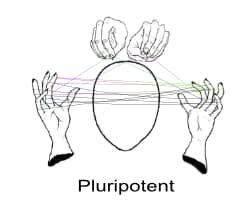
Attachment as a dopamine string.
I mean stream? Like a tasty tap?
No. String.
Because when life isn’t going great, that dope from falling for another person can become a chemical tether that holds you up. Like the rope as you’re scaling a mountain.
You’ve fallen off the side, perhaps. Life has slipped away or is in a free fall. Maybe it’s just stagnant – you don’t know how to get off this precarious placement.
Then a relationship comes along. Or the idea of one. Or the avoidance of one. (We’ll talk about it all)
And consumes your feel-good center.
This is the only thing supporting you from falling into depths of sadness, hopelessness, grief. It’s like a mental bungee that holds you in place. Upright.
Something for the mind to look forward to, always. To rely on for a bump, at all times.
It’s harsh to say, “a substitute for fulfillment in the rest of life.”
Maybe more accurate to say “a drizzle on top of life that completely hides the flavor of the thing underneath, so it can carry a lot of “off-tastes” while going unnoticed.”
It fulfills enough of your important needs that the rest can be ignored. The chemical high sufficient to create a manic state that pushes those other concerns farrrr away from the foreground of your vision.
Meaning, right now, dating in dystopia, when everything is quite hard and basic needs are a struggle to meet, it’s an elevated risk… To become tethered to someone as a lifeline. OR tethered to an idea that allows you to be connected to NO ONE. Without noticing who that someone really is. Who you really are. Or considering the impact that the attachment is having on your brain and the rest of your life.
Because attachment?
Yeah, whatever, we can talk about how it begins as a baby, seeking comfort. Our parents couldn’t love us unconditionally or meet our needs. We know. You can check out that past episode(s) called Connection Addicts and Family Brain Hijinx for more information.
But as an adult which is where we are now, the pattern can be linked to conscious concerns and logical actions.
Overenthusiastic, hypervigilant, obsessive attachment – you can call it anxious if you want - comes down to discrepancy and deprivation. If we’re alone, we don’t have what we need to be happy. We’re chemically deprived. If we’re in a relationship, we estimate that will change. We shoot up on that theory.
Overdismissive, aloof, protective attachment – you can say avoidant if you prefer – is about imagined threats (from ourselves or others) and imagined comforts alone. If we’re with someone we estimate we don’t have what we need to be happy or to make them happy.
So in each case it comes down to the stark contrast between “life without” and “life imagined with” that keeps us acting like love, relationship, sex, and connection addicts or lepers.
Key words being “imagined with.”
Because so much of attachment – and the dopamine drop behind it - is made up.
It’s our daydreams. Hopes and assumption. Inferences. Taking what we know about the stranger to be true and expanding upon it. Taking what we know to be true about OTHER people (including ourselves) and applying it to the stranger.
Often, including “what it means about us” to be with the imaginary person we’re extrapolating into our emotional existence.
Who are WE to be with someone so great? Our ego does a little dance, reappraising itself with this new image.
And our potential life unfolds as we consider what that means about our success on earth, now that we’re with someone we imagine is so fantastic.
And. Maybe they are.
But we rely on stories – mental wanderings and reasonable expectations and desired anticipations – to hold us up, safely, distanced from whatever misery we usually live in. Away from the emptiness. The darkness. The dank moist underbelly of our emotional basements. The hunger. The deprivation states.
We need a lifeline. We meet someone. We make one.
So the reality of who they are? Isn’t usually what we’re feasting on. Filling our minds and hearts and genitals with.
You know, that’s why almost everyone gets out of a relationship and has some recalculating to do about who they were with and why. What they were focusing on. What they weren’t seeing or were explaining away.
Because the story was better than the truth. The mind, unconsciously, chose the more rewarding option.
The dopamine string.
That feeds the brain little bites of congratulations every time it interacts with the real or imagined person.
A text message or face to face or intimate exchange is awesome! It makes your head very happy when otherwise it may be 24/7 lamentations.
…
But so is a completely falsified daydream about the person, your next interaction, your future, all the vacations you can go on, what people will think of you as a couple, and maybe all the way into family rearing and old age….
The mind is also plenty happy to gobble THOSE dope nuggets up. As if they are based on real facts.
Because it doesn’t know any better.
Our brains do not know the difference between what we observe, what we think we’ve observed, and what we hope we will observe. They’re all just thoughts. Equally real.
And it feels so… fucking… good… to self-stimulate like this, to a brain that’s otherwise quite depleted of feeling good.
It’s emotional masturbation.
And that is what, for me, drives anxious attachment.
Taking a tiny bit of inspiration from the outside world… and self-stimulating with it in the mind to elicit pleasurable emotions. It’s stroking one out, with no hands, no social damnings. Creating fantasies that please the mind while they tell the brain “you’re doing a good job, keep this up! This is working! This is what success feels like!”
So that we start to associate the person with success. With safety. With self-validation.
And really consider the phrase “self-stimulation” from a psychology framework. We are bolstering our own idea of us, in the human world. Through imagined relationships, we also mythologize our futures. We feel better about a false version of self that could be unlocked IF ONLY things go a particular way with this individual.
(On top of all the stomach-flipping romance scenes we’ve imagined, of course. Who doesn’t like a little pocket rocket rollercoaster ride?)
And in this way, the hopeful what-if stories we began telling ourselves so innocently in the beginning grow… and become habitual… and transform into those tethers that keep us upright. Chemical rips from imagining the present and future become coping measures. Crutches. Our relationship daydreams start to have more functionality in supporting our minds than we realize.
Then we MUST achieve what we’ve been tricking ourselves into believing was already happening, or else?
We have to suffer a true loss – a grief - response. When those things don’t happen. As if they are real, promised events or material belongings that are slipping through our fingers, rendering us alone, failed, and destroyed.
When in fact none of those things ever were real to be lost.
Only hope is.
Only… dope is.
Which unfortunately feels like everything is destroyed and pointless.
The thing is, and I’m sure we’ve heard this before, falling for the idea of someone doesn’t work. And attachment is a lot of ideating upon what can be very little, very trivial, information.
It’s not too far from having a crush. Being in relationship with the fantasy of someone you barely know. A flame is suddenly ignited inside of you. Your heart is lifted. There’s a reason to sing.
Again. The drugs.
It’s nice. But it’s the wrong pattern of thinking and feeling to perpetuate if you don’t want to be anxiously aye’d. One translates into the other. Consistent, persistent, attention and processing, predicting and anticipating… just at different stages of knowing each other.
And figure, this had survival utility at one point. It’s not your fault if this is what your brain defaults to. It doesn’t make you a creep. It makes you someone who survived unsatiating times that were probably quite depressing.
Especially when life is otherwise bleak, boring, somehow emotionally unfulfilling, we learn to dope with fantasy escapism. It begins early. It might be a lifelong habit that helped get through rough childhoods and adolescences when we couldn’t make changes in our lives… but we could think about having different lives, entirely.
Did you daydream?
Have a fake life you pretended to live out?
Or begin romantic fantasizing early on?
It continues in adulthood. Maybe not always. But at times, it returns. Especially once it gets “jumpstarted” by something enticing.
Like manna from the sky, but the sky is your brain, self-stimulating for a dope snack feeds you when the world does not. Everything else is out of your control, lacking in reward… but with no or minimal participation from the object of your attention… you can trick your self into rewarding your self.
Whenever you need a hit.
And it can sustain you, like a high functioning coping skill. Filling the stomach void. Scratching an itch inside of you. Nourishing you like water after a mighty thirst. Giving you a reason to get up every day.
This is how we can end up being love addicts.
Or “the idea of love” addicts.
Delusion addicts. Limerencers.
Heart dopers.
Bleeding hearts who choose rotten partners over and over again.
Comedically tragic anxious attachers.
And, I know, talking about love and sex addiction makes some roll eyes. But think about it this way…
How powerful can this reliance on self-stimulating emotional masturbation get? On the need for being in love, or convincing oneself that they are? Well, it can be self-rewarding enough that a person will literally lose sleep, preferring the brain drops from making up stories about a person or situation, instead.
Like cocaine addicted rats, we hit that lever. Delivering ourselves a bite of pleasure. Over and over again.
Again, in a way, it’s brilliant. It’s adaptable.
And also it comes with the negative repercussion of…
- Our brain believing that our story is real. Firstly. So, we can actually be heartbroken by a situation that never happened. By a person that we do not know. We construct false realities that feel as real as anything else when they end.
- Setting ourselves up for failure even if the relationship IS real. Secondly. Because you know who knows your most intimate wants, needs, desires, fantasies? You do. You make the perfect version of your perfect partner, mentally. They cannot achieve this, in actuality. Setting them up to fail. Setting every person up to fail.
- And if you are serving the best version of them to yourself on a mental platter all day, every day, whenever you’re a little low or unoccupied…. Is that special someone else ever going to be able to compete with that so they are not disappointing? That consistency? That on-demandness? That accuracy and never-ickness? No. That is impossible.
By imagining our best versions of romance, we destroy the possibility that any romance or romantic partner is ever good enough. And we destroy ourselves imagining someone who is, so that our mind is wrecked when the situation that never existed is somehow no longer fantasizable. When we’re turned down. When they partner up. Etc.
Our ideas don’t compete with their realities. Which eventually catches up to everyone.
But we will be quite taken aback by the reemergence of perceived reality when it happens.
Again, remember dopamine’s function. To tell a person “you’re on the right track.”
So all along, you’ve been getting green lights. You’ve been certain of your direction.
Then suddenly that constant feeling of “I’m doing okay, I am okay, I’m succeeding, things are good.” Is lost. Without warning. All self-confidence, gone.
That ability to text someone for a hit on demand, gone.
That capacity to dream up another fantastic scenario when they’re not reachable and still elicit the same pleasing internal response, over.
The tether – the dopamine string – disappears. We are, in fact, only ourselves in our circumstances again. And we plummet back down to the life we were avoiding.
Leaving the individual feeling empty. Unable to find anything rewarding through behavioral attempts. Unable to find anything rewarding in their mind, except maybe dreaming of getting back together with the fake person who was not really lost because they were never really had. Or dreaming of getting back AT them.
Of course heartbreak is linked with depression.
We lose our boo or love interest, we lose our fix. The drug that was supporting us through existing. Numbing some of the pain. Rewarding us for our real and fake encounters.
An opiate, on demand, suddenly disappears. And the cold, hard, reality of life, sober and alone, bored and riddled with feelings, or passively slipping back into a cold, unpleasant, numbness, returns.
“Ah, yeah, that’s what I was doing before I dreamed up some alternate reality that relied entirely on this person whom I probably didn’t actually know very well or maybe even like very much….”
It feels pathetic, afterwards, to realize you created an illusion. Fell for the illusion. And then have to mourn the loss of the illusion. Which feels worse than before you encountered it.
But, hey, don’t get on a high horse if you’re avoidantly attached. It’s all the same thing but reversed.
A brain tells its owner that it was successful when it moves AWAY from the idea of a person, rather than towards.
“There was a threat, and now it is over. You’re on the right track.”
With avoidant attachment, doped up stories are still being told, but they flip into negatives. The drug is released when the danger of this falsified person has been neutralized. Removed.
In behavioral science, it’s negative reinforcement.
“Being alone is correct! It is safe!” a person feels, because the mind imagined – extrapolated – a risk. And the brain believed it to be real. Hitting itself with that sweet d in response.
And THAT story holds up the brain beholder, similarly, like a tether from the sky so they don’t have to tread in material reality… every time they disconnect from someone or the idea of someone.
Some of us get ourselves off thinking about being together. Some of us, moving apart.
So, attachment comes down to doping.
Self-stimulating by tricking the brain into releasing chemicals for us to subsist on, when our real circumstances are not filling us. When “healthy relationships” are not within reach or do not provide the same dopamine feedback because we’ve not learned to associate those patterns with positive outcomes.
It’s problematic because we reward ourselves for unhealthy relating behaviors and treatments, in line with all the other unhealthy behaviors and treatments we’ve received before. Our idea of love, validation, and care can be locked up in those stories we told ourselves… and then we continue to tell them… and confirm that they are “good.”
i.e. big dramatic love displays after a drag-out fight. Goosh. But really, terrible thing to tell the mind is “the goal.”
AND it’s problematic because doping with emotional masturbation encourages us to spend more time with our stories of hope or terror than with the person in question. Which is a constraint of physical reality, also, right?
We can’t possibly spend as much time with another human as we can spend in our own brains, during which we might be flicking our emotional beans continually. So, the stories are pre-determined, unavoidable, spontaneous products of the condition of two separate people with endogenous opiate labs relating to each other.
It’s not anyone’s fault. It’s the cosmic joke of being bound by meat in time-space.
But in both cases, anxious or avoidant, I’m sure you heard… the self-validation trap that we set for ourselves.
Our minds make up a reality (a daydream) and our brains tell us that it is correct (with drugs) – and then give us a high five for being correct that makes us exponentially more likely to try to be correct that way again in the future (creating a habit).
Self-stimulating is a habitual confirmation bias and self-congratulations pattern, with little regard for checking stories against facts. And if we did, we’d see what we wanted to see, anyways. The confirmation bias and limitations of perspectives gating perceptions… endure.
We would simply NOT observe what we hadn’t already dreamed we would.
And in this way, we end up with jackasses and cuntwaffles, seeing none of it until it is too late and being SHOCKED at what we notice afterwards.
A problem.
It’s also problematic, because to connect… we have to disconnect; relationship is both.
We have to be separate from each other. To be persons, ourselves.
And then reunite, reconnect, to bring those two persons together.
That is a relationship.
Not this muddied, constant, “we breathe together” bullshit. That’s merging, not relating.
We have to ebb and flow. Come together and move apart. To be in relationship.
If we’re avoidant – obviously we’re not reconnecting. Oh, we’ll move apart. But we’re unwilling to come back together because it delegitimizes the beliefs of the mind… that relationships are dangerous. We’re not rewarded for attempts at relating, our brains punish us as they anticipate harm coming our way. So the reconnection bit is not rewarding and doesn’t occur.
And.
If we’re anxious – we’re not disconnecting. Unwilling to separate because it leaves us without a source of d. We’re not rewarded for attempts at being a stand-alone human, we’re thrown into the terrors of a presumed dopamine-less future as the tether snaps. Tales of an empty, meaningless, life. Because we’ve imagined (and confirmed with endogenous chemicals) that some person gives life meaning. Directly, through bolstering the self/ego, or through other resources that they may provide that signal “met needs.”
And that’s really an empowering thing to realize. As embarrassing as it might be.
Because we spend so much time talking about attachment patterns rooted in childhood. And that’s correct, infancy is where the programs start to be developed.
But to blame it on our shitty parents when we were babies doesn’t give us anything to do about it except to practice and fail a lot of times with myriad partners for most of our lives until we maybe, possibly, but probably don’t, get it right, and blame mom and dad.
It’s bleak and dope-less to consider.
We can’t tell ourselves to “just knock it off” or halt the behavior. One, it’s been there forever, we literally don’t know another way. But two, to do so leaves us only the option of withdrawing – becoming non-relational, so we can’t be lured by the draw of the dopamine string. Raw-dog life, loveless and bored, less physically healthy, and depriving oneself of the only real reason to be alive here in this misery factory.
(I’ve done it. I don’t recommend it. )
Instead, if we can notice the FUNCTION of the behavior, we can find a way to change it.
What does emotional masturbation accomplish for you?
What do you escape from by daydreaming about events that haven’t happened?
Or by dismissing people from your life?
Are you saved from mundane reality, through imagining romances that change your life? Maybe it’s codependent, but it’s exciting.
Or saved from dastardly romances by choosing “self” in mundane reality? Maybe it’s alone, but it’s controllable.
In either case, exactly what are you saving yourself from? Get specific. The mind will try to be vague. That is useless. List out, in detail, what you image as the worst case scenarios in either case if action isn’t taken. If the dopamine string isn’t held onto.
Maybe you don’t feel equipped to “do life alone.” The idea of another brain and set of hands opens your mind to things that otherwise feel impossible for you, by you individually.
Maybe you don’t feel equipped to “do life together.” The idea of another brain and set of hands makes your stomach turn as you consider all the dangers it could bring - compromising, trusting, relying on another.
In what ways? Get granular. What can’t you do alone, behavior by behavior? What can’t you do in a partnership, same thing?
When you catch yourself self-stimulating… eliciting pleasant emotions with thoughts that are expansions of material reality… taking a piece of information and turning it into a whole story… taking a word and believing it to be infallible truth that can be held in the chest, wrapped in cotton, and used for warmth – then expanding that warmth until it burns hotter than the original word ever could…
Or, less romantically, dreaming of the other party getting the fuck away from you so you can go back to safe, predictable, life as an island… hypothesizing about all THOSE options and the negatives that assumedly would be missed…
Ask yourself why.
Why are you doing that?
Here’s how you find the answer.
Move towards the anti-dope. The things that make you feel depleted.
What AREN’T you paying attention to, by instead choosing to tap this dopamine spigot and engorge yourself?
If one option is “feel successful and like everything is okay” – the emotional masturbation – what’s the other option?
If you weren’t doing that, what would you feel, instead?
You might get to the answer “sadness” and just stop there.
Or you might ask yourself… because we know that sadness comes from unmet needs… about what?
What needs AREN’T being fulfilled by your life, as it is…
So that the brain is imagining direct or alternative routes to fulfillment involving a partner?
i.e. maybe all your relationships aren’t going well, so you hold on to the fantasy of one that offsets all the rest. A direct fulfillment. Or maybe work isn’t going well, so you latch onto the idea of a relationship to get needs filled another way. An indirect fulfillment.
You might also need to ask… what needs aren’t I allowed to have? So that a relationship begins to appear like a substitute for the things you can’t even look at. A way to plug holes without observing them.
(Check out the Secondary Needs episode in the NVC series for more information on that concept and how to work with it.)
And if you have no idea how to answer these questions… start where it all began.
As a child did you fantasize about a golden relationship and what it would mean about you? Maybe a fantastical wedding and family story? Becoming pillars of a community, together, as a power couple? Or perhaps a ride or die partnership of adventure that would suggest a badass counterculture identity?
Or did you dream about leaving people in your life behind and what THAT would mean about you? Like a shittyass family or betraying friends. Did you have hopes of being a small town girl leaving behind a lonely world on a midnight train going anywhere, so suckit you bastards?
OR did you turn avoidant attachment around on its head – YOU were the terrible one, and you were doing everyone a service by ending your connections? In which case, it’s very simple to self-validate the idea afterwards. You act like an asshole. Then leave. Then say “see, it’s better without me.”
Do any of these fit?
And do you see how a chemical bonus comes from them?
What kind of stories have you been telling yourself, always?
How could they relate to the relationship patterns you find yourself in, today?
It’s deep work. It’ll take years. During which it’s a good idea to experiment with having and not having romantic relationships. That will let you spot the mental patterns, as you notice the difference between conditions.
Just don’t be hard on yourself as you do it. Attachment doesn’t make you a loser. It’ll just make you feel like you are one whenever that brain drug isn’t available again.
And… look… here’s the thing. We can get really down on ourselves for having this habit of self-stimulating. A vivid imagination that returns pleasing feelings, let’s call it.
But let’s also realize that it’s not our fault. The storytelling we speak of? That only leads to a false sense of reality and intimacy… and then disappointment?
Is automatic. It’s adaptive. It’s your mind trying to make sense of someone new, as quickly as it can. And it’s simple brain operations. Really, about as rudimentary as they come.
Your hippocampus recognizes something about the person in question that reminds it of someone else. Simple pattern recognition.
Let’s acknowledge all of us have “types.” That’s what this is. The brain sees something it has seen before – or close enough – and it has a positive response based on what it has experienced (or imagined experiencing) before.
Boom, you get that lightening bolt attraction.
It’s because of your neural networks; your relationship schemas with similar-enough-people… lighting up. Vast expanses of brain cells, containing encoded memories of all sorts of information about this person or type of person, get powered up at once. A flood of nostalgia, emotions, unfulfilled hopes, and ideas about who you’ll be if you’re with this type of person comes tsunami-ing your insides. It. Is. Stimulating. Info overload.
And in this moment? Your mind has already started lying to you.
Because this guy or gal has some similar characteristic to so-and-so, they have now been copy-pasted into the story about so-and-so. Some unrelated human that has no bearing on what the future holds with this new one.
And. It’s not YOU doing this. Jumping from A to Z. So no shame spirals about being pathetic or silly if you’re suddenly imagining vacations and wedding proposals like a cling wrapper after making eye contact with someone.
That’s not it. It’s not you. It is the immediate reaction of the brain trying to make sense of this new person. And the hootenanny of your neural networks filling your head with what-could-be-but-isn’t relevant information.
From there, from this immediate reaction, you are doomed to make assumptions and guesses and hopeful wishes about this individual. Because you are not neutrally observing them, now, as novel information. You are observing them through the past. As additions and addendums to people you’ve known before. And in the future, as you automatically anticipate what they’ll do next. As all brains are wanton to do.
The people who are “your type” or “any type you’ve encountered before” don’t come with a clean slate.
They come with baggage – good and bad – collected from similar-enough other people. That you cannot erase from your perceptions, thoughts, decision making, or emotions, no matter how you try.
It happens so fast. And it can make you feel immature. Embarrassing. Humiliated. To realize you’ve been living in a teenage fantasy, middle aged, that led you into making regrettable decisions and/or re-experiencing heartache. Again.
Which brings me to my next point.
Speaking of dopamine strings or streams and the disappointing nature of reality…
Doesn’t this mean our romantic stories and attachments are actually more pleasing to us than real relationships?
Considering it from a neurobiological and behavioral standpoint.. yeah.
As far as consistency and likelihood of being rewarded with inner chemicals… Emotional masturbation is our best bet.
And therefore doesn’t that incentivize us to KEEP our relationships somewhat imaginary? So we can never be disappointed?
And therefore aren’t we essentially all most doped up – best mooded - via a series of limerences? Imaginary partnerships? Parasocial relationships?
And therefore… isn’t it extra super convenient that we can do this, 24/7, with people we can view and solely communicate with through our phones? Keeping real relationships at an arm’s length, while we make up stories in our heads?
And therefore… aren’t we all – when we go out dating – competing with not only every other person on the apps and in real life… but every other person on the whole internet?
Every date you attend, figure that the other party has a guaranteed lay in their back pocket, in case things don’t work out. And, actually, even if things do work out. That other party can please them in ways you won’t match. At all times of every day. Not because you’re inferior. Because that person can be 1% real, on Instagram, 99% imagined, in the mind you’re trying to get to know.
Doesn’t that say a lot about the global loneliness epidemic and difficulty in partnering down?
We have this over-choice conundrum. The paradigm of having access to too great a selection of REAL PEOPLE to settle down and pick one.
And we also have the “we’ve all learned to self-stimulate, which is now 1000% enabled by our phones, including through fake internet relationships that we can carry with us, deviceless, in only our minds, whenever we need a bump of darling dopamine” problem to contend with.
We’ve all learned:
Real relationships… hard.
Fucking around on a screen all day… awesome.
And these self-stimulating, imagined, slightly or entirely parasocial relationships are highly compatible with phone-doping in every other way. They’re synchronistic behaviors.
Why have a needy, distracting, sometimes upsetting or absent girlfriend or boyfriend at all… which takes you away from the dope device… when you can just get all your fixes in one place ON the dope device?
And only sortof realize that you’re living in a dream. You know, the times that you come-to, look away from the screen, want to do something in real life, and realize that you are alone.
Find that horrific and sad, and return to the screen again.
Avoidant attachment for real relationships.
Anxious attachment for fake ones.
Thanks… to the dopamine string.
So. Talk about Dating in Dystopia. Our species is literally competing with 1s and 0s. And losing.
It’s no wonder that there are serial app-users who say they want a relationship but actually keep swiping, preferentially. Or people who ruin it all for parasocial thirst traps. Or folks who choose games over girlfriends (or boyfriends).
We no longer need to seek social opportunities the way we once did. Because we are no longer bored and alone without other people. And even when we are, we can convince our brains otherwise.
Which, for some, is good. We don’t have to maintain lackluster associations just so we’re not staring at a wall.
And also, has allowed the human race to de-prioritize in-person relationships.
Which, for some, is good. We’re not locked into geographic locations or bad relationships.
And for others, it has resulted in a reliance on imaginary or non-human need fulfillment. Which is so much safer, easier, constant, and potentially more powerful than trying to do it with other people… why bother?
Maybe this is the explicit narrative they state. “I don’t really care about relationships because I can always jerk it to the internet.”
Maybe this is subconscious. It’s a reason for avoidant attachment patterns that hasn’t been processed. Lower risk, higher reward, always know what to expect… don’t call that bitch back, just dope up on onlyfans. Don’t return that guy’s call, emotionally self-stimulate with fantasies of your favorite streamer instead.
Either way.
Isn’t that… sortof comforting to hear?
It’s not you.
It’s the dopamine distribution system and subsequent addiction of the 2000s.
That is probably stopping a lot of folks from trying to work on relationship differences or misunderstandings.
Or matches from continuing the conversation.
Or dates from ever happening in the first place.
It’s that the stories and success chemicals are so free-flowing, so powerful, so unquestionable, so riskless… (you will not end up screenshotted and shared on reddit for withdrawing into your own emotional masturbation session – reaching out to see if a new fling is interested in hanging out? Another story.)…
That, bioscientifically and logically speaking, why WOULD a brain choose real, threatening, potentially unfulfilling humans… over the guarantee of pleasure, through digital and mental self-stimulation that produces a similar or better dopamine result?
It wouldn’t.
Take some comfort in hearing that. And applying it to so many of life’s greatest “wait, what, where the fuck did they go?” mysteries.
Back into the dopamine portal, probably. Not just their phone, but the reality they’re choosing to imagine to get through the misery, stress, and sadness that is every day, undoped.
It’s as impersonal and not-about-you as it comes.
It’s about stories that have nothing to do with you. Even if the other party thinks that they’re all about you.
The same way we think in a self-stimulating fashion and call it about other people.
Don’t get anxious or avoidant about someone else being anxious or avoidant. In some ways, it’s focusing too much on complex assumptions about the past when the reality is annoyingly simple and rooted in the present.
We’re all kindof miserable as a part of being alive. We can trick ourselves into reducing the suffering. And most of us will without understanding what it’s doing to us or others. It’s that simple.
And… the other intended takeaway message of this sode? Of course? As much as you can… try to refrain from emotional masturbation. From ruminating. Daydreaming. Expanding on or creating stories.
Is it fun? Hell yeah!
Does it help get through down and dumpy days? You betcha!
Is it automatic upon meeting someone new? Definitely!
And is there a point when you’re allowing it or promoting its continuation? When you’re making the decision to enter a dreamland instead of focusing on what’s in front of you, and only that? When you’re mayyyybe using it to get fucking high, setting yourself and the other person up for mutual failure by opting for the on-demand stomach jumps, sense of peace, and excitement… instead of objectively taking notes about your observations and finding out what could actually be?
Yeah, unfortunately, yes.
But, oh, how good it feels before the fall.
While that dopamine string is still holding you upright, suspended, like a tether above the reality that isn’t providing the same buzz.
No matter how you attach?
Be mindful of the way your brain is delivering pleasure – what stories it rewards you for (both anxious and avoidant) – and consider how that might shape your own experience thus far…
Dating. In dystopia.