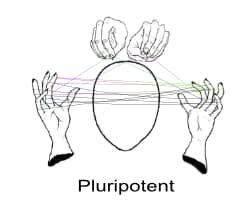
Twould be remiss not to take a tangential turn and talk about suppression (shutting the face up to save the ass). Let's sprint through 4 articles on the influences and outcomes of suppression.
summary
This conversation explores the theme of emotional suppression in various contexts, including its necessity in today's world, the impact of authoritarian leadership, social and cognitive consequences, the effects of parental suppression on children, and the wreckage of our health. The discussion highlights the detrimental effects of suppression on relationships, cognitive function, and physical health, emphasizing the need for awareness and change in societal attitudes towards expression.
takeaways
Suppression is often seen as a necessary strategy for resource protection.
Authoritarian leadership fosters a climate of emotional suppression, leading to team dysfunction.
Emotional suppression has significant social costs, particularly during transitional life phases like college.
Cognitive load increases with emotional suppression, impairing memory and attention.
Parental suppression negatively impacts both parents and children's emotional well-being.
Suppression can lead to chronic health issues due to sustained stress responses.
The effects of suppression can be transferred from parents to children, affecting their social skills.
Living in a suppressive environment can diminish human connectivity and problem-solving abilities.
Chronic activation of the nervous system due to suppression can lead to serious health problems.
Awareness of the implications of suppression is crucial for improving mental and emotional health.
keywords
suppression, emotional health, authoritarian leadership, cognitive load, parenting, social interaction, mental health, emotional expression, societal impact, emotional intelligence
Okay, fuckers.
In light of the trash fire that is the world, there’s a glaring omission in the paper we were going to talk about next.
I actually have that episode ALLLL ready to go for ya… but, you know, the times call for responsiveness. That article didn’t discuss the ass-saving tactic that everyone – public figure or not – is being forced into for sake of resource protection right now.
So we’ll do it here and circle back later.
When we’re not sure who or how to be. When there are too many people to please. When an ego gets too large to “work around” with authenticity. When they’re always looking for SOMETHING to throw a fit about. When our life literally depends on keeping someone or another happy.
OR when we’re too anxious, depressed, disintegrated, or disassociated to have the energy or cognitive ability for monitoring, predicting, editing, behaving, monitoring results, and starting all over again….
What is the least risky impression management strategy we can viably turn to?
Suppression.
Or “shutting the fuck up.”
Because you can always say a thing later, if or when it seems safe. But you can’t roll back the consequences AFTER you speak a truth. And if you’re just not sure what IS safe to say…. Or you’re well aware that there are MANY particular things which have suddenly been deemed unacceptable to say…. The least resource-risking thing you can do (an individual might believe) is to stop speaking. Or stop speaking honestly.
And what are the results?
This is one of those topics where there are too many findings to cover in as much detail as we normally do.
Today we’re going to roll through many papers to paint the picture, dipping into four research snippets in quick succession on suppression.
Here we go!
We have emotions but can't show them! Authoritarian leadership, emotion suppression climate, and team performance.
Published in:Human Relations, Jul2021,CINAHL Ultimate
By:Chiang, Jack Ting-Ju;Chen, Xiao-Ping;Liu, Haiyang;Akutsu, Satoshi;Wang, Zheng
Defining authoritarian leadership as an ambient, demanding, and controlling leadership style, we conducted a survey study of 252 leaders and 765 subordinates matched in 227 work teams in three large public Japanese organizations. The results indicate that authoritarian leaders are more likely to create a team climate of emotion suppression, which induces a higher level of team emotional exhaustion that negatively impacts team performance. Furthermore, we found that authoritarian leaders' own emotion suppression enhances the above sequential mediation effects, i.e. the more emotion suppression the authoritarian leader him/herself exercises, the stronger the team climate of emotion suppression, the higher the level of team emotional exhaustion, and the lower the team performance. These findings suggest that leadership effectiveness may be improved if leaders can reduce their authoritarian behaviors and identify appropriate channels for employees to release emotions in the workplace.
Finding: emotional exhaustion and decreased performance are the results. And suppression appears to be transferable, from the top, down, creating an environment of suffering for everyone that interferes with effective functionality.
The Social Costs of Emotional Suppression: A Prospective Study of the Transition to College
Sanjay Srivastava 1, Maya Tamir 2, Kelly M McGonigal 3, Oliver P John 4, James J Gross 5
J Pers Soc Psychol. 2009
The present study examined expressive suppression (which involves inhibiting the overt expression of emotion) and how it affects one critical domain of adaptation, social functioning. This investigation focused on the transition to college, a time that presents a variety of emotional and social challenges.
The present results are consistent with the proposition that suppression has meaningful, diverse, and persistent social consequences in an important real-world context.
We offer three possible mechanisms by which suppression may disrupt social functioning. First, to the extent that suppression is successful, it will dissociate an individual’s internal emotional experience from the information available to that individual’s social partners. A number of important social processes rely on others knowing about an individual’s internal emotional states: for example, displays of distress elicit sympathy from others (Eisenberg et al., 1989; Labott et al., 1991), and shared positive and negative experiences can facilitate social bonding (Collins & Miller, 1994; Kowalski, 1996). A second possibility, consistent with the concept of emotional “leakage” (Ekman & Friesen, 1969), is that individuals who attempt to suppress their expressive behavior are only partially successful. If social partners correctly infer that an individual is suppressing, they may perceive a suppressor as being uninterested in intimacy or even inauthentic in a social interaction. A third possibility involves the cognitive consequences of suppression. Experimental studies have shown that suppression imposes a cognitive load (Richards, Butler, & Gross, 2003; Richards & Gross, 2000). To the extent that certain relationship processes demand cognitive resources like attention (Tickle-Degnan & Rosenthal, 1990), individuals who are preoccupied with regulating their emotions might have difficulty fully engaging and responding to others in social interactions.
Findings: suppression decreases quality of relationships, sense of connection, and social satisfaction. It also increases likelihood of being identified “a faker” which worsens all of the above aspects. And it creates a higher cognitive load, which affects an individual in every area of life, when they lack faculties in the areas of memory, attention, accurate perception, discernment, decision making, and planning.
For more on that, let’s check out:
Composure at Any Cost? The Cognitive Consequences of Emotion Suppression
Jane M. Richards and James J. Gross
Personality and social psychology bulletin 1999
We frequently try to appear less emotional than we really are, such as when we are angry with our spouse at a dinner party, disgusted by a boss’s sexist comments during a meeting, or amused by a friend’s embarrassing faux pas in public. Attempts at emotion suppression doubtless have social benefits. However, suppression may do more than change how we look: It also may change how we think. Two studies tested the hypothesis that emotion suppression has cognitive consequences. Study 1 showed that suppression impaired incidental memory for information presented during the suppression period. Study 2 replicated this finding and further showed that suppression increased cardiovascular activation. Mediational analyses indicated that physiological and cognitive effects were independent. Overall, findings suggest that emotion suppression is a cognitively demanding form of self-regulation.
Findings: suppression impairs memory. We don’t absorb information in real time (sending it to our recollective bank) when we’re diverting attention to suppression. It also increases cardiovascular activation, suggesting a state of physiological stress through the very act of suppression.
And I think we can all assume, none of these aforementioned results bode well for how we socialize in the most sensitive of conditions. As parents.
Let’s dip into one final paper to better understand how impression management through suppression can negatively affect us, our families, our shared futures as both parents and one-day-adults, as well as our bodies, before we wrap on this impromptu episode.
Not in front of the kids: Effects of parental suppression on socialization behaviors during cooperative parent-child interactions
Helena Rose Karnilowicz 1, Sara F Waters 2, Wendy Berry Mendes 3
Emotion 2018
Suppression is often associated with negative physiological, social, and cognitive outcomes (John & Gross, 2004). While suppression effectively decreases negative emotional expressions, suppression leaves negative emotional experiences intact (Gross & Levenson, 1993), decreases memory (Richards & Gross, 2000), and increases sympathetic nervous system activation (Gross & Levenson, 1997). The negative outcomes associated with suppression may be particularly significant in the context of the parent-child relationship because parents often feel the need to shield children from their negative emotions (Le & Impett, 2016). (and, my words: when we have a childlike government, perhaps “same”) In the present study, we experimentally manipulated parents’ use of suppression during a cooperative parent-child interaction and examined the consequences of parents’ suppression on parents’ socialization and children’s behaviors.
Effects of Suppression
Intrapersonal effects.
Because suppression occurs relatively late in the emotion generative process, after an emotional experience has begun to unfold, it is hypothesized to be effortful to implement (Gross, 1998). Previous studies have found that suppression used in the context of emotional film clips or images increases sympathetic nervous system activation (Gross & Levenson, 1993; Gross & Levenson, 1997; Gross, 1998) and reduces memory (Richards & Gross, 1999; Richards & Gross, 2000). These results indicate that suppression leads to greater stress and taxes individuals’ cognitive resources, which may have important implications for social interactions.
Interpersonal effects.
The costs of suppression may be pronounced in social contexts, where emotion regulation is most likely to take place (Gross, Richards, & John, 2006). Consistent with previous research showing that suppression can impair memory, participants in (an experimentally facilitated) suppression condition remembered less conversational utterances than those in the control condition. However, they recalled more feelings, and this effect was partially mediated by self-monitoring, indicating that suppression may increase self-focus. These findings suggest that suppression may have downstream consequences for social interactions because suppressors may miss important social cues by their partners.
NOTE: under suppressive conditions we might not remember as much about external events, but we have a higher recollection of emotions, ironically, after shutting them down. They mentioned a heightened self-focus, AKA internal monitoring behavior, which leads to sustaining and increasing the feelings that we’re not allowing ourselves to express. Thus, it’s not a stretch to hypothesize that suppression is correlated with reduced emotional processing – increased volatility, and dysfunction.
And as for the rest of their findings, which really includes a point that’s just interesting to note for all the parents out there:
Summary
We found that not only did suppression decrease parents’ positive mood, responsiveness, warmth, and guidance, but it also had negative effects on children’s positive mood, responsiveness, and warmth and decreased the overall quality of the interaction. However, parent sex played a significant role in moderating these effects. Fathers were less responsive and warm when suppressing their emotions, though their children did not exhibit decrements in their responsiveness or warmth. In contrast, children of suppressing mothers appeared less warm than children of mothers in the control condition, though their mothers did not exhibit decrements in their warmth or responsiveness.
Finding: In conditions of impression management using suppression, parenting outcomes are worse for everyone. Making it a more stressful and less satisfying experience for adults and children, alike.
Also, children may not notice when dad is suppressing his feelings – which says a lot about how men are socialized. But they WILL demonstrate decreased socializing warmth, themselves, if their mothers are emotional suppressors. Meaning, again, it is transferable. It can be “trained” into us. And we likely gain a majority of our emotional modelling from maternal sources, whereas dads provide guidance differently.
In short: if our moms are shutting the fuck up, we struggle more with human connection in our own social efforts.
Something to note in patriarchal, women’s rights diminishing, societies.
*cough*
But with that little bonus point, lettuce:
WRAP
We could keep going, the research is vast, but you get the picture. To summarize:
Suppression affects relationship quality including loneliness, peer, workplace, and parenting outcomes. It decreases cognitive ability including memory and attentional capacities. Leads to INCREASED emotions and emotional memories. And declines in physical health linked with cardiovascular and sympathetic nervous system activation.
We’re more likely to suppress when it is instructed from the “higher ups,” downward. And even if we “hide” our suppression, it can be transferred to children. Teaching THEM to use this impression management technique with their peers. Then, when they get to an environment such as college, they face the social consequences of reduced connectivity which impacts an individual in myriad ways.
Pulling it all together, living in a climate of suppression – of mandated FOCs and impression management – can cause humans to raise less connective children, to have less mental capacity to apply to solving complex problems or remember important details (let alone integrating them), and to have physical health failures.
And here’s your bi-monthly reminder that chronic nervous system activation leads to chronic exhaustion and inflammation, both of which create compensatory system reactions as our bodies find alternate ways to function through non-normative means, and in this way, cause nearly every disease known to man. When our HPA axis goes down… when our cortisol is perpetually “up”… we are a short hop-skip away from debilitating lifelong illnesses.
And with that… I’m going to share another paper, next time, on the “spiral of silence” in the United States. The rising climate of enforced suppression. Circa 2023.
Meaning… We’re becoming a sicker society, in every way. And many of the influences are more difficult to spot than putting an idiot in charge of the nation’s health.
Such as this ever-worsening environment of mandated suppression.
I’ll talk to you in a few days!
Take care til then.
With as little suppression as possible.
For sake of your health, your family, and your functionality.
Cheers y’all.