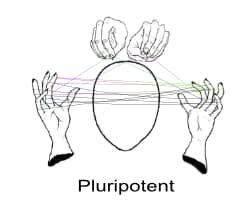
Abusive supervision leads to strategies for resource preservation... ironically, depleting us of our most crucial resources. What happens when we create Facades of Conformity (FOCs)?
summary
We delve into the concept of 'Facades of Conformity' in the context of abusive supervision - a feature of many relationships and communities. Individuals suppress their authentic selves to fit into oppressive environments for self preservation, leading to negative consequences for mental health, physical health, and overall well-being. The discussion highlights the importance of recognizing these patterns in various relationships and encourages self-authenticity despite perrsonal, professional, and societal pressures.
takeaways
- Facades of Conformity (FOX) are strategies to fit in under oppressive conditions.
- The pressure to conform can stem from various hierarchical systems, not just workplaces.
- Abusive supervision leads to inauthentic behavior and emotional exhaustion.
- Employees often suppress their true values to avoid conflict and retain resources.
- Ironically, maintaining a facade can lead to significant resource loss, including emotional well-being.
- Emotional exhaustion is a common outcome of inauthentic behavior.
- Recognizing the impact of FOCs can help in navigating personal relationships.
- Challenging societal norms is essential for personal well-being.
keywords
facades of conformity, abusive supervision, emotional exhaustion, inauthentic behavior, self-enhancement motives, workplace dynamics, mental health, authenticity, resource loss, relationships
Today, we begin talking about something that sounds like a pretty rad punk band.
Facades of Conformity.
But, indeed, it is rooted in research.
The paper?
Creating facades of conformity in the face of abusive supervision and emotional exhaustion….
I will tell you the rest of the title later.
Muhammad Waheed Akhtar · Thomas Garavan · Chunhui Huo · Muhammad Asrar ul Haq · Muhammad Kashif Aslam
2022
They ask and answer the questions:
What’s the cost of being in relationships are oppressive? Opinionated in a way that doesn’t allow for other views? Rejection-filled?
What happens when surrounded by a culture that doesn’t align with your own beliefs… but you must fit into to survive?
Now, this research takes place in the workplace. But of course can be applied elsewhere. To any hierarchical system that determines one’s ability to thrive. Such as the family home, friend groups, neighborhoods, romantic relationships, the family systems OF those romantic relationships, and communities, in general.
So every time you hear “supervisor” or “employee,” simply open your mind to all power-imbalanced relationships. Such as a domineering family or other social grouping.
And I think you’ll also get a lot out of this paper.
They say:
Abusive supervision (AS) is a subjective evaluation based on the “subordinates’ perceptions of the extent to which supervisors engage in the sustained display of hostile verbal and nonverbal behavior excluding physical contact” in the workplace.
According to (Fischer et al., 2021), AS continues to be a major problem for employees in organizations worldwide and the extensive literature conceptualizes employees as passive actors who experience negative outcomes, including job insecurity neglect, job insecurity, undermining and turnover intentions from the experience of AS.
There is some evidence that employees subject to AS will engage in a variety of impression management behaviors to influence supervisors’ performance ratings.
Given the significant negative consequences associated with AS, including feelings of hostility (Lian et al., 2014), organizational cynicism (Ali et al., 2020) and relational conflict (Tepper et al., 2011), employees may indulge in inauthentic conducts to demonstrate their fit with the team and/ or organization.
… Evidence indicates that when employees behave in an inauthentic manner, this can lead to negative consequences, including poor subjective wellbeing (Ampofo, 2021), poor work performance (Liao et al., 2021) and questions about intention to stay with the organization (Sheldon et al., 1997).
In this study, we examined the association between AS and employees’ demonstration of inauthentic behavior through creating facades of conformity (FOC) (Hewlin, 2009).
FOC are defined as situations in which employees suppress their divergent views and values, in addition to pretending that they embrace organizational values (Stormer & Devine, 2008).
A significant question not yet definitively answered in the context of the creation of FOC focuses on whether such a pretense has negative consequences for health, including emotional exhaustion EE.
It is something of a paradox that the use of an impression management strategy to ameliorate the negative consequences of AS may be counterproductive regarding an employee’s health.
Read: in our attempts to not rock the boat in so many situations – familial, romantic, communal, career, and beyond – the way we attempt to fit in to reduce our suffering and increase safety…… might be doing exactly the opposite, to the detriment of our own health.
Why is emotional exhaustion an outcome of FOCs? Because we’re working doubly to monitor and edit ourselves and then monitor again for “the right result.” So we’re running through triple duty behind everything we say and do.
Additionally, this includes suppressing our real feelings and presenting false ones. Which is a very complex task, especially when it’s engaged for a significant period of time, daily.
And… it’s unlikely that we’re ONLY creating a FOC in a work environment, assuming that is where it’s taking place. If this performative “Fitting in for safety” is our instinct and we don’t have resources to leave the uncomfortable position…. There’s a significant chance that the pattern is also being conducted elsewhere.
We might not even realize that there’s any other way to be, besides “aiming for what people want from us, all the time.”
What increases the risk of this disingenuous half-life-style?
Prior studies have investigated some antecedents of FOC (i.e., self-monitoring, subjective organizational reward systems, supervisor ostracism, collectivism, non-participatory work environment, leader integrity, minority status, the desire to gain acceptance, and belongingness).
Prior research also highlights that employees use FOC when their work environment is intolerant of different views and when they consider themselves to hold a minority position within the organization.
Did you hear the crossover with the most PTSD-at-risk groups? Minorities and those who consider themselves less empowered within the organization are most likely to feel pressured into FOCs?
Hm. Sounds stressful, at a baseline level, and thereby promoting of survival behaviors. Like guarding resources.
Hobfoll (1989) states that employees possess four different types of resources (personal, object, energy, and condition).
When AS behave rudely and criticize employees publicly, this diminishes employees’ self-efficacy and self-esteem. Prior studies indicate that when employees perceive a threat of resource loss under AS they are likely to find ways to minimize this threat.
To gain acceptance, they engage in behavior that reduces the threat, and they suppress their personal values and create a pretense suggesting that they embrace the organizational values and its strategy.
Employees behave in ways that help them minimize and or not provoke future abuse (Detert & Edmondson, 2011), including silence through the adoption of avoidance behavior (read: anxiety-avoiding passive consent), and suppress any views that could compromise their ability to fit in or otherwise gain acceptance.
Under AS, employees have value incongruity (cognitive and emotional dissonance via misalignments), and they practice/express their values according to their supervisors’ values.
We conceptualize this as the use of a personal resource (integrity and authenticity) implemented to prevent resource loss.
Now onto the second part of the title.
What factor within the personality of the individual increases the chances of using this strategy? Of engaging in Facades of Conformity?
Creating facades of conformity in the face of abusive supervision and emotional exhaustion; the boundary role of self‑enhancement motives
Continuing to apply these words to all organizations that could contain a sense of supervisory abuse, let’s consider when they say:
An important and still unanswered question concerns whether there are specific personal or individual characteristics that make employees more prone to creating FOC against AS.
To explore this unanswered question, we utilize Self-Enhancement Motives SEM as boundary condition in the AS-FOC relationship.
SEM consist of “an individual employee’s sensitivity to other people’s perception of him or her and his or her level of motivation to adapt his or her behavior in order to project a good self-image to others” (Yun et al., 2007, p. 749).
When an abusive supervisor behaves in a hostile manner by withholding reinforcement/rewards employees will camouflage their values and adopt the values of supervisors (i.e., facades of conformity) to maintain a good image.
SEM focuses on the idea that individuals desire to have a positive image around others (Yun et al., 2007). We propose that when employees experience a resource draining work context such as AS, SEM becomes more salient (Choi et al., 2019) and that high-SEM employees are more motivated to create FOCs when they experience AS, driven by their motive to sustain a positive image of themselves. In contrast, employees with low SEM do not focus on image building, even around their supervisors.
And I think that’s a wonderful place to pause and consider the overlap with CPTSD and resulting disorders. Low esteem, high self-rejection, high self-editing… and RSD.
Do you think that rejection sensitive dysphoria could be considered a predisposing condition of heightened self-enhancement motives?
Could the punishment of rejection – both from the other person and then from ourselves onto ourselves – be a powerful reason to care what others think? A reason to attempt to conform to expectations? To have SEMs that promote FOCs?
And, coming from high ACE scores that include family upsets and financial weaknesses… how do you think SEMs are tapped into the ring when we realize ain’t nobody going to shield us from AS? And our lives depend on securing resources – financial, social, and supportive – on our own?
If you’re told that your self isn’t correct or good enough, and you rely on acceptance to eat and put a roof over your head in some manner, the subsequent options are self-enhancement or withdrawal from the species.
Assuming you MUST work to support yourself, or MUST be in a certain relationship, or MUST rely on your family for some reason, then…. Their abuse doesn’t matter. the only choice is to be who you have to be, in order to fit in. In order to survive.
A Façade of Conformity is your best bet.
And the result is?
I’m sure you saw this coming.
We propose that employees who experience AS leverage FOC as an important personal resource to address the resource loss caused by AS. However, what emerges as particularly ironic and self-defeating is that the use of FOC leads to EE (Akhtar et al., 2021a).
Therefore, in an employee’s efforts to leverage personal resources to address a resource loss situation, the very need to sustain a facade of conformity becomes a resource loss situation that leads to emotional exhaustion. When employees are inauthentic, it will lead to negative consequences.
So when we feel suppressed or oppressed and realize that our ability to thrive is connected to avoiding this force, humans who have nowhere else to turn or the drive to overcome the threat, forfeit perhaps their greatest personal resource – authenticity and integrity – to attempt to lessen the likelihood of opposition and punishment.
And what happens instead?
They exhaust themselves of another resource. Emotional wellbeing.
Which has more consequences than this paper is going to discuss. Mental and physical health failures, substance use to numb the discomfort, declining performance in every aspect of life - including relationship health across the board, increased likelihood of burnout, and taken together, deteriorated life quality.
FOCs not only rob us of our individuality, but… of our lives.
Those of us who aren’t privileged enough not to give a fuck what the people around us – our employers, partners, family members, communities, (ahem) governments – think of us, because we rely on their acceptance to be allowed to live…
AND those of us who’ve been touched by RSD, low-esteem, fragmented personalities, etc so we intrinsically do not know how to loudly and proudly be ourselves in the face of relational tension, because the self-imparted consequences are too great….
Are likely to experience life-negative outcomes. In our mere attempts to be allowed to exist.
Trapped between many rocks and hard places, experiencing heightened anxiety with every social interaction, and becoming ground down through emotional exhaustion that corrupts our capacity to do anything else.
How to use this paper in understanding your own life?
Apply this information to every oppressive relationship you’ve ever had, not only your professional ones. And to the current politically polarized landscape many of us are navigating.
Trace the line from self-enhancement motives (i.e. the desire to survive in a trying environment) to the consequences you’ve personally received.
For me? A complete loss of personal fortitude and – honestly – will to live – has been the result.
Which unfortunately sets an individual up for even greater attempts at self-enhancement. Unless they choose to pull out of the race entirely. To give up.
And what that, I ask… how’s that for an environ-mental illness? One that’s consumed the globe.
With so many of us are polarized against each other and the folks “at the top” tend to have emphatic views that cannot be disagreed with – not only are we experiencing this on career and interpersonal fronts that state “my way or the high way.”
But increasingly in our schools, neighborhoods, and states.
With RSD, it can be involuntary to try to fit in. To please others. To demonstrate acceptability.
With being a member of the human race… same.
But it will only perpetuate our own misery if we trade our real values for those that are required by a person in power or a communal crowd.
Which is why I encourage us all to create a new mantra.
No FOCs to give. Politically, personally, and in all areas of life.
Remember – though terrifying to “try to be your best self and see if it’s allowed,” this is the greatest disempowering result of CPTSD.
And remaining locked in FOCs won’t save you. It will only ruin your life from the inside, out. In response to someone trying to ruin your life from the outside, in.
Stand tall. And hold strong, Fuckers. With your values tightly in-fist, and your real self steering your life.
Challenge that RSD. That loss of self. That instinct to mesh with the herd so they stop kickin.
And don’t let systems of environmental illness be the nail in your coffin.
Cheers y’all.