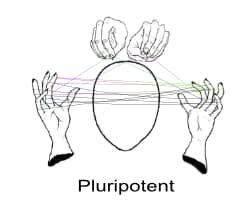
"Peer Pressure is a high school problem." Or is it? Let's talk about adult brains drunk on social influence through the illusions and purposeful manipulations of the internet.
summary
The conversation explores the pervasive effects of internet influence and peer pressure on society, highlighting how these factors have radicalized identities and impacted human psychology. Algorithms are particularly implicated as the highly corruptive "third party affiliations" that we don't directly choose, which then keep us locked within social groups and cliques. The human need to conform for safety yet also establish a unique identity within the constraints of that similarity is driving personalities to aggressive extremes.
takeaways
- The same factors that promote peer pressure in adolescence are being experienced by adults on the internet.
- PP has become an age indiscriminate phenomenon that has radicalized identities and contributed to ruining the world by hijacking human psychology.
- The internet has returned us all to a high school social experience of self-definition and seeking identity options.
- Popular figures are especially influential due to illusion of proximity and desire for similar social reward.
- Conformity is required to remain within social groups, often necessitating "third party affiliations" to stay aligned.
- One-on-one relationships value authenticity; clique relationships value similarity of behavior.
- Algorithms force us into designated groups, which then corrupt the mind to conform without conscious decision.
- Mechanized manipulation has taken over the human species, from the top-down.
- The social brain is programmed to conform yet also establish a unique identity - driving group ideals to new extremes as a personal brand.
keywords
social influence, peer pressure, identity, psychology, societal change, social aggression, algorithms, manipulation, mind control, identity corruption, group think
This month in the private stream (found at patreon.com/traumatizedmotherfuckers, where you can check out all the research and recording we’ve done for the past 5 years), we’ve been talking about….. Peer pressure.
But before you skip this episode, thinking, “I’m not 14, this doesn’t apply, I’m out,” hold up.
Because that’s the point. None of us are seeing the sneaky social influence, while wondering with great bafflement what in the fuck is happening to this apparently batshit society that encapsulates us. Peer pressure is affecting the masses. Or at least that’s my theory.
We’ve been talking about how PP has become an age-indiscriminate phenomenon that has radicalized identities (and contributed to ruining the world) by hijacking human psychology, returning us all to a high school social experience well after most of us would believe we’ve “graduated past it.”
And have used this article:
Toward understanding the functions of peer influence: A summary and synthesis of recent empirical research
Brett Laursen, Rene Veenstra
JOURNAL OF RESEARCH ON ADOLESCENCE, 2021
As the central discussion for our argument.
From their literature review, we learned that peer pressure is at its peak when:
- The structures around us are in transition, we have new rules and roles to figure out, and there isn’t step by step instructional guidance for how to do it
- There are bountiful social options and opportunities for mobility, engaging with new individuals and groups outside of what was previously familiar causes our minds to seek clues about acceptability from people around us
- Because of this, identity is in flux. We know ourselves through relationship with others; when novel others are suddenly introduced, our self-understanding shifts and we transition into a new person, unfettered by previous restrictions caused by social limitations
- We encounter uncertain tasks with uncertain outcomes, and turn to others for behavioral examples about how and who to be within the ambiguity
- In those uncertain tasks and outcomes, there’s what’s known as a “maturity gap.” We’re able to behave in ways and access newly opened doors that we aren’t emotionally or cognitively equipped for, so again, we turn to others for information
All of these contribute to the influence of peer pressure. And if that doesn’t all sound like the internet to you….
Let’s continue to spin this story.
- Peer pressure is also heightened when we align with a group or groups. Relationship dyads or cliques highlight the importance of similarity in behavior, so that the crowd stays organized and prepared to mobilize. Outliers are often ostracized for their potential threat to the group mentality and success. Any group membership suggests that difference is dangerous
- This is true to such an extent that third-party affiliations are often required within cliques. As in, subscribing to a particular belief system or following specific public figures to demonstrate conformity that makes the other group members feel safe
- And when we see others succeeding, their actions are especially convincing. They are especially attractive. We mimic and emote their behaviors especially hard. The popularity of the people we follow is what makes them leaders. When we see people gaining social reward for their assumed identity, human brains copy those identities to try to benefit similarly
- Yet, every human wants to feel unique due to the existence of the ego. So the authors say that we strive to be similar-enough to maintain friends, while being different-enough that we feel special. We’re always seeking a niche to fill; perhaps that means taking a group identity to a more extreme presentation, to satisfy the “same, but spicy” requirement
- And lastly, it’s found that aggressive popular people encourage aggression down below. Prosocial popular people influence the opposite. So violence is one of the characteristics that can be exemplified and exponentially increased, as a means to “showing how individualistic a person can be”
Hm.
Taking all these research findings together, let’s extrapolate a bit and say…
Your average person was given access to the internet without the social or emotional maturity required for abrupt communication with the population of the whole world. There were no rules in this place, only other people to study and emulate. And from all those new social options and access to opinions and lifestyle awarenesses… the average person’s sense of self went through a large transition while they also re-aligned with newly-available social circles that were previously out of reach.
In those social circles, similarity is king. Especially similarity with the charismatic influencers who’ve become leaders of the groups; the popular people who appear to be benefitting from their social standing on the web. These people feel so within reach due to the illusions of the internet that it feels possible to affiliate with them directly, which adds an extra layer of peer pressure and identity conformity onto the pile. And yet, as we said, no one wants to feel unoriginal… so individuals have become caricatures of the people they follow – taking their behaviors to more extreme lengths to “show off” to the rest of the group while remaining safely conformist to the ideals of the crew, so as not to be exiled. Whilst those behaviors being taken to the next level or ten? Might be rather antisocial.
And meanwhile…. The real kicker…
We don’t have a choice in the matter.
None of this is a discussion of weakness or lack of character. It’s the story of social minds being taken over, predictably - with planning, coordination, and psychological understanding, leveraged against average citizens across the globe.
Because… by design… algorithms determine the group and the third party affiliation that we must maintain to stay safely in a squad.
Algorithms decide who our peer groups are. What popular people are presented to us to follow and mirror. What behavioral and belief system examples we have, and have to fall in line with to feel safe or strive for social success.
Algorithms, controlled by the people who own us, control who we feel we’re allowed to be… AND the logical way we feel we can “stand out” WITHIN the group, without being kicked out of the club.
Algorithms… have become identity factories, pushing us to extreme presentations of a limited selection of human being templates.
Algorithms are continual, constant, unseeable, addictive, manipulation machines that have made corruptive peer influence an insidious and automatic part of daily life. One that we can’t escape from. And therefore can’t consciously fight against, no matter how “mature beyond peer pressure” we consider ourselves to be. Because algorithms and the social world they present to us are the only “reality” we can know, when we’re living through our phones and social bubbles.
So, Fuckers.
Peer pressure is not exclusively a strongarm of middle and high school.
It’s been reignited in all of our lives through the internet. And then used against us through the sorting and subscription process contained within algorithms. Which determine what social groups we unconsciously conform with and what ways we take that shared identity to the next degree. Exemplifying what’s modelled for us, what appears “successful,” and what feels like it will keep us safe.
And if all that doesn’t help to explain the lunacy of modern society – the aggressive, unthinking, extremity that’s on display from the most popular figures, downward, all the way to the people they trounce upon who still want to emulate their actions - I don’t know what will.
But if you engage with social media, I doubt you’ll find a peer pressureless answer on the internet.
Those got. Damn. Need to be outlawed because they’re psychological control agents. Algorithms.
Alright, y’all, that’s it.
Come check out the three part series deep diving into this peer pressure research if you’re interested in social dynamics examined through relational cognitive psychology. The details are… wow.
Stay sane out there. Hint: the remedy is to get off the internet and determine your own reality.
Happy Halloween, the best time of the year.
And I’ll talk to you next month. Kicking off the worst time of the year.
Cheers