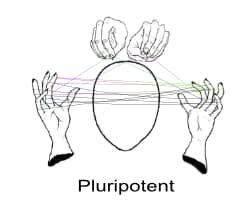
Today, while we’re talking about fear… we’re going to dive into my greatest ongoing neuroticism inextricably connected to the risky nature of being in my skin….
Time.
Especially when your mind has been t-worded, time is scary because it:
Represents “experience” which has been pervasively dick-kicking. When life has been hard, time appears to be an agent of impending doom and imprisonment.
Ushers in unknown events and suggests we have things to be doing for our own good / safety to offset looming challenges
Is inconsistent between individuals, causing more relational issues.
Is limited. Or way too expansive. Life appears too short and too long. Not enough time to do what you want to do… too much time to deal with all the things you wish you could have avoided…
It is, as we keep saying, philosophically, a travesty, to know that life = time… but time is taken up by so many things that the individual doesn’t want in their life. So that time is both desired (theoretically) and despised (in practical reality). Like an abusive relationship we can’t end.
Until we do. Naturally or because we can’t stand the torment anymore. (not to be dark again)
Time!
We want it. But only when conditions are right.
And for most of us here… conditions have not been great.
Plus, you know. “2026.”
So, let’s dive in.
I recently said “I was left without feelings, and only with my stupid fucking brain to rely on, which is a very bad position for someone like myself to be in.”
To clarify, it is possible to run on your SFB, but it’s inefficient. And also very discombobulating. Because the brain is here for external information. Consuming it. Using it to keep you alive.
Unfortunately, not everything outside of us is “as it seems.” And we can run ourselves ragged when we run our lives by solely keeping up with outside data and demands.
The mind, for instance… falls for illusions.
And creates illusions.
We spoke about time distortions four years ago now… and I was never happy with how that series turned out. But I didn’t have the time to do it differently.
We talked about past and future time orientations as the thieves of joy. Ruminating and catastrophizing highly implicated within.
….
But that is a tiny portion of traumatic time distortion.
And, look, there are the obvious problems:
Upsetting memories and depression – suck you backwards.
Anxious predictions and attempts at control – launch you forwards.
Disassociation into personality parts can fragment / compartmentalize experiences of time. You might not remember things you did or need to do. So piecing together a cohesive timeline of where you’ve been – recently and distantly – can be impossible. And planning and implementation can be very difficult. With fragmentation of the personality, time feels “lost” because it’s not centrally experienced in the personality – it’s observed and recalled in pockets that are accessible at different times, under different emotional states.
This is further troubled by faulty DMN connections. Default Mode Network linkages. When we’re resting, the mind should be storing memories into our autobiography. Stitching them into our ongoing story. But with traumatic backgrounds (and I would say that also speaks to the surroundings we’re living in – the scenery of 2026), we, instead, tend to be thrown INTO disjointed memories as though they’re still taking place. Rather than settling them up into our past.
When you don’t remember the rest of your lifetime… that, itself, creates time distortions. Because you have no “scale.” Prior experiences of time are missing, so there’s no example to use for generalized understanding. “What does a year feel like? Idk, can’t really remember those.”
This gives Groundhog’s Day results of feeling trapped IN A time, maybe forever. Not a progressive continuum where today adds onto the pile of past experiences. Every event, every time period, feels larger and more infinite than it really is, without the background context of “the past 35 years I’ve been alive” – for example.
The DMN, it can make us get stuck in highly arousing memories and time periods, while we lose track of the context of time we’ve already lived.
On top of that, we can also have generalized memories, especially when depressed… as one might be after that last statement. Recollections that haunt us, without necessarily understanding why we’re revisiting them. They aren’t necessarily highly arousing like other intrusive memories – but something about them is unsettled. The SUBC keeps returning back there. We keep returning to the past, without obvious reason.
Additionally, figure that stimulation extremes distort time. The CPTSD crew often has overstimulation problems OR numbing problems. Both corrupt the mind’s ability to track time. Both – sensing too much or too little information from the environment - can feel very fast or very slow, depending on the surrounding conditions. Stuck in a room, overstimulated? Time is very slow. Overstimulated and presented with great opportunity for movement? Time is probably quite fast.
And altogether, when thinking of problems that go hand in hand with trauma… we can just say that overall emotional experiences are slow. Manic mental experiences are fast.
If you’re bogged with feelings, in a parasympathetic state, time tends to crawl. If you’re amped up, chasing compulsions, figuring out how to fix life or surviving, acting mentally and physically, typically time flies.
The experience of suffering in the body – IN TIME, because time is linked to materially existing - is very slow.
Disassociation - which is ditching the body, ditching material information, thus ditching the medium of time - is very fast.
Traumatized states tend to be back and forths of these experiences. High emotions, high mental activity. High suffering, high disassociation.
Skewing the sense of time, depending on which is taking place. Creating wormholes and Velcro traps. Maybe months of one condition and then months of the opposite. So that looking back, some years are lost. Some years are hyper-vivid. Some are both, back and forth.
When, of course, floating through days in depression / trauma shutdown makes time flow together. Time feels lost without distinction between units. It can make days feel long when you’re in them, but incredibly short looking back. Because what happened? Nothing. And the mind sortof glazes over how excruciating that was minute by minute. Erasing the memories – perhaps for self-protection, perhaps because there are rarely very unique, notable moments within misery.
(though they do happen and we remember those acute experiences quite intensely)
Furthermore, because of these indistinct time experiences where days meld together, we get illusions when estimating non-present times…
Past events seem closer than they were.
Future events seem closer than they are.
Since every day lacks boundaries between others, it feels like events that have already transpired “just took place.” When, in fact, the mind may just be skipping over 6 months or 6 years of unexciting, suffering, times in between.
And future events feel like they could either be 2 years away or pop up unexpectedly tomorrow. You can blink and find yourself tee-ed up for an experience you were painfully waiting for, seemingly forever. It still feels like you have so much time to spare or prepare, but… nope! It’s here! As if it’s a complete surprise. Time to go.
It is dizzying.
Now throw in the attentional issues, and jesus christ. We know what time it is… now, but maybe not two hours from now when the mind has gotten completely sidetracked.
With attentional challenges we poorly estimate how long it takes to complete tasks. Especially because of the procrastinations and sidequests that pop up. So that time, again, feels lost. It just goes missing.
But. We can also get hyperfocused on time. SO aware of it passing that it slows and stagnates. Suddenly all we HAVE is time. Which can be painful.
And also sets us up for failure when, suddenly, we’ve gotten distracted and misplaced all those moments, once more.
Overall, the experience of time is relative to the experience of the beholder. And a spicy mind that’s been through significant trauma can mean those experiences drag on or change very quickly.
Or, really… both, creating hallucinatory-like relationships with time.
Time uncertainty. Time insecurity. Time drowning AND time scarcity. Without the ability to predict or understand it. Which, once more, is akin to not being able to predict or understand material reality. To navigate through it consistently and efficiently.
And for all these reasons… yeah, no wonder, a motherfucker can start to get a little “time fearful” after a lifetime of this.
Ps- what lifetime? How long has it really been?
The Fear
My point is, time is supposed to be a standardized, measurable experience and a grid for planning life… but with a trauma brain keeping the beat, it’s anything but.
And – here’s the real problem:
That means you’re living in a different universe than the rest of humanity. On a different material planet that you’re not privy to.
They don’t have illusions of time extending forever or disappearing. They’re all able to trust, navigate, and utilize time… next week means “next week” to them. They can accurately plan for it, because they have a homogeneous experience of time passing.
Meanwhile, what will we be doing next Tuesday?
When I’m all mindfully fucked up, I could never tell you. I could wake up, seemingly tomorrow, and find that the day has come. Or it could feel like three months from now by the time the date arrives.
And what state will I be in by then? Who knows!
My volatility makes it impossible to predict.
Hell, my rightful mental-emotional volatility in the context of the state of the world makes it impossible to predict.
Which is fearful when taken together.
To realize that to some perceptual extent you’re living a different “timeline” than everyone else. But in reality, you’re playing the same game. You just can’t see the squares and dice clearly.
That means everyone else, will have some upper hand… some clarity and structure in their existence… some measure… some metronome of life… that you’re simply unable to recreate yourself, consistently.
Maybe keeping time just fine this month when things are relatively okay. But when will something trigger that t-brain, so you watch all sense of time go out the window? We never know!
It means you live in two different realities compared to the people around you.
And their reality seems to be… realer… than yours. Because the rest of the world is in agreement.
None of this helps the prevailing traumatic fears “Am I a crazy person? Am I broken? Am I just incapable?” and the sense of time-fear becomes correlated with self-fear, as a result. The corresponding personal and practical issues don’t help.
Because you and your social associates can both realize that this time experience incongruence exists.
But nothing either of you can say will help the other to jump onto the same track. To “sync up.” To “handle time the same way.” No, they can’t and you can’t “JUST get on the same page. JUST have the same experience of time and strategy for using it.”
Because the experiences are not comprehendible from the alternative position. This time confusion isn’t a choice; it’s locked into our perceptions. All the involuntary mind behaviors that are creating this chasm prevent “just knocking it off and getting with the times.”
Which is sortof the point to tap into to cut out the terror of time.
What to do
All of this considered? What’s the golden move?
We need to delegate time-keeping to the body, not the mind.
Remember, (I guess I wasn’t done saying it last time) time is a function of material reality. We only know time is passing because things grow, things change, things break, die, and decay.
So the answer is to use your material reality – your meat prison – to keep time. As usual, the answer is “get out of your head and into your guttural space.”
Here’s what I mean… the mind is obsessed with what’s happening outside of us, because it needs to understand those variables to provide direction to the rest of your being.
But the problem is, paying attention to those outside events and instructing oneself from there will create time illusions.
External sources of time management cause inconsistent time experiences. Because external events happen at different paces, unpredictably, and the nature of them is also a complete crapshoot.
Sometimes events outside of you will cause a rapid internal and external response, and sometimes a painfully slow one. Sometimes they are very extreme and quick – sometimes very extreme and slow. Sometimes, they are dull – void of information - and lasting, seemingly, forever.
If an event takes place that causes a physical or mental reaction? Time will move quickly.
If an event takes place that causes an emotional one? Time will slow down.
If nothing happens, you’ll probably return to your own “default time signature” in between events. Manic or depressive? That’s up to you.
Example:
Someone runs into the office – there’s a fire in the stockroom. Physically, move quickly to get out of there. Mentally, move quickly to determine what needs to be saved first. Together, time flies. It’s suddenly two hours later. The rest of the night is spent communicating about the event with friends – it, too, goes by in a flash.
OR
Someone runs into the office – there’s been a fire in the stockroom of the building next door and there are casualties. People that you knew. You’re struck by grief and disbelief. Emotionally, things start to move very slowly. Time crawls as you finish out the day. You can’t believe it’s only fucking 5pm when you finally leave. The rest of the night feels like three days, combined. The week is like a month.
OR
No fire takes place. You return to your default depresso-anxious mood, WAITING for something to happen, and time halts. Or, perhaps, moves very quickly because you’re disassociated from the discomfort – again, in a bit of a purgatory, waiting for demands to re-associated you.
The point is…
When we’re directed by outside events – when we’re mentally reactive without pause and live our lives this way, collecting information from outside and jumping into gear depending on its nature – the experience of time becomes uncalibrated. Unstandardized. We’re tossed into hyperdrive or halted, and in between when we’re lacking stimulation, we fall back into “holding state” patterns.
We become pawns of our surroundings and whatever brain activities our heads hop into, without our executive control.
And these days, with all the global events happening or being hinted at before not-happening… living this way means time is continually getting bigger and smaller, depending on the moment. So much to frantically try to accomplish for safety… so much to slowly grieve through and wait for… back and forth. Back and forth.
With the result of humans winding up on different timelines – as if they weren’t already living in different tech-created worlds – throughout. Causing even greater disconnects and increasing the sense of isolation on planet earth. Because everyone is living on different beat. And that beat is changing, often. There’s no coordination in the choir.
It’s like they’ve created a funhouse for all of us. Everything distorted, down to the minutes that tick away between batshit headlines.
So the answer?
Is we each need our own internal pace car to escape from the sensation of battling unpredictable whirlwinds and puddles of quicksand.
And, yes, this is another one of those incredibly annoying episodes where the answer is essentially “diet and exercise.” It’s not flashy. It’s not a 2 second life hack on tiktok. It’s doing the hard work we all know we need to do to keep ourselves sane and healthy. Which is so MUCH harder to do when time is slippery or stabby.
To regulate time…
We have to return to the body. To the guts. To find a consistent, predictable, experience of it. And our own pace. The speed with which we process and move.
When these are out of sync? Time is moving slow but our brains and bodies tend to move very fast? Or vice versa?
It’s a tense, sandpaper, stressful experience. Playing notes at the wrong time. Feeling rushed or weighed down. Out of time, with time.
But getting into the bod and becoming intimately acquainted with how time feels inside of you – how you feel inside of time… amends this.
With practice, you start to learn “THIS is how time moves for me. How slowly information passes through my body. How long it takes for decisions to feel correct. How quickly I move within material information.”
And it becomes accepted knowledge. Not inconvenient information that won’t be good enough for the demands of the world… but data that is integrated into waking up, getting ready, processing news, working out, reading, working, preparing for social events, and every other area of life.
So that, over time, we understand how much time we really have. So we don’t have to panic about running out of it OR drowning in it. And begin to set our own pace, via the confidence that it is allowed and accurate.. not a shortcoming or an illusion.
We are allowed to move in response to our own readiness and best benefit – for instance, not forcing oneself to make a decision before feeling confident in the determination or walking too quickly to maintain a proper form because some looming sense of pending danger is causing you to hurry up naw.
But the traumatized system has to relearn this.
Has to refind its own pacing, rather than marching to the drum of prior trauma. The demands of survival. The dictations of mental reactions.
The process
So, we have to rip the bandaid off and experience time from inside. Undistracted. Associated. Feeling. Embodied. Time.
(If you can’t feel, don’t worry, you’ll start to.)
To re-standardize it without the jarring illusions created by all the aforementioned conditions.
So the answer is, as I said, annoying.
Here are the quick hits you don’t want to hear. Then the real point we’ll linger on.
Less time on screens. Where do all the hours go? Disassociated into the ether while scrolling. This is the number one way to change the relationship with time. Take it back from the corporations that own the internet.
Less noise. It fills the time with decoration. Making you pay attention to one, but not the other.
Less multi-tasking. How can you measure time when you’re split between ten different tasks, sortof managing all of them? You can’t.
Less routine. Sure, in a way, it standardizes the experience of a day. And also, it puts you on autopilot so you’re not really observing time. You’re floating through it.
Less socializing. Because it always makes time faster? Hell nah. Hold eye contact with someone, watch time stop. Relating is a time trip, manipulating perception in both directions.
And finally…
Sitting still, more.
Not at work or in front of a screen. But sitting inside yourself. Imagining you, inside of you, like Russian dolls. And paying attention to those findings. That information inside of your material body. Not the information outside of it that creates the illusions.
Sitting still and paying attention to your self? Is very hard.
But doesn’t have to be 8 hours straight. And it doesn’t have to be uncomfortable. You can do this wrapped in a blanket, laying in bed, or looking at your favorite scenery.
The point is to consistently try not to move, for several minutes a day, spread throughout the day. While staying aware of how the body feels.
… which, quite honestly, is still a lot to ask.
If you’ve been on the fast-track, heart racing like a hummingbird, you might not be able to sit still for that long, even. Too much to do, too many valid distractions, too much survival to attend to, too much fear stored up in the body to withstand the pain of those nerve endings that are screaming “fire!”
I feel you. I live in this state if I’m not careful. I’m coming back from it, AGAIN, after ’25 got the best of me and I returned to ancient survival strategies.
So, knowing this pattern is deep in your bones…
Instead of giving yourself an unwinnable goal?
Start with 30 seconds.
Sit, still, and conscious of your inner sensations… for half of one minute. You know my tricks “drop your energy out of your head and into your body, imagine it moving down and use outbreaths to allow it to get into that space where air is normally filling.” And “feel into the bottoms of your feet.” And “pretend you have a paintbrush running up and down the inside of your chest cavity, feel where the bristles touch.” And “imagine your inner events like swirls of colors, sit with them, move them around, practice gathering up the clouds and releasing them again.”
Find an emotional, embodying practice that works for you. It doesn’t have to be “breathing.”
Then do it for 30 seconds.
And again, let’s say 2 more times that day.
Then a total of 4 times a few days later.
Then 5 times.
Before extending the 30 seconds to minutes, and dialing back the number of trials to begin getting comfortable with that exposure duration again.
And see how you also start to build a tolerance for being in your body, against the ever-present threat of time. See if you start ENJOYING the process… because it provides, for once, a quiet moment of clarity. A chance for regrouping and also for recalibrating the internal metronome so that it matches time, accordingly.
We talk about taking little adult “time outs” – but this is the real utility of them.
It reframes upcoming time and the stressors within before having to deal with any of it. So that whatever you have to deal with next feels less strenuous, less crapshooty, less time-corrupted, less flailing.
When you notice these results… you’ll naturally start sitting with time for longer. Time won’t torture you. You might start to find ways to enjoy it. You’ll start procrastinating a little. Luxuriating in the experience of sitting inside yourself a few times a day.
Pretty soon you might find that you’ve accidentally sat for an hour, staring off and feeling in silence. In your feelings. In time.
When that’s the case, then reflect on that hour. Start to seal the experience into your bones. THIS is how long an hour actually is, in MY system. In MY experience.
Then try to recreate it. Repeat the experiment to continue getting a grasp on “the feeling of an hour” or however long it may be.
And then keep expanding the time experiencing. You might even get up to spending days or weekends alone, in quiet, observing yourself in time. And deeply reprogramming fears around spending time alone, silence, boredom… indications of time passing that normally drive a brain batty.
To work up to that goal,
When it becomes possible? Start extending this outside of designated windows of practice. As you go through your day, take a beat to reconnect with the body and measure how long time is in all different circumstances.
Eventually, coming to some semi-regular answer. Some somewhat standardized experience of time, across conditions.
Try walking or driving or cleaning without other distraction, while trying to stay in the meat jacket. Learning “under various conditions, even if I’m moving or accomplishing, if I’m in my body and paying attention… THIS is how an hour feels.”
And as you keep practicing, you’ll work up to having the realization “oh shit, THIS is how long a day really is.”
This is the span of a week.
This is a month.
And time won’t feel so demanding, so tenuous, so unpredictable, so disconnective as it becomes homogenized, abundant, and synced up with the rest of your life.
Finding resources
For those of us who suffer with time scarcity or time-shame (aka you should always be doing something if the clock reads a time), you’ll start to learn that it’s OKAY TO HAVE YOUR OWN TIME. To be IN TIME. To EXIST. Without feeling like something is wrong or you’re fucking up.
You’ll start to realize you do HAVE TIME.
In fact, plenty of it. As much as you need. If you’re moving at your own pace, there are no limitations. There’s as much time as you require for you to operate. The universe provides.
And, you’ll come to realize that time is roughly the only thing in this world that you absolutely, unquestionably, deserve… because it is the medium of life. Being here, being alive, guarantees that you have time. To use. For you.
How much? We don’t know.
But every day you wake up? Is yours. Time is a resource that you have, inherently, upon birth.
It’s why I don’t believe in hourly pay – that is literally selling your LIFE. And your time IS a finite resource when it’s being sourced by other people.
When, again, it is bottomless when used for you, by you, at your pace, from the inside-out.
Time is abundant – but that’s something you can ONLY find out through challenging old patterning and behaving to the rhythm of your own innards.
You just need to understand how time moves. Versus how you move. Versus how the world and your history of trauma try to force you to move…. To make the most of it. To standardize it. To use it predictably, efficiently, and calmly.
To be on the same timeline as the rest of the human world – using the same grids to navigate material reality - even if you’re driving at different speeds.
WRAP
Get into your guts, get a grasp on time as it flows through them, get a new pacekeeper for your life.
It’s you.
Not the speed of survival.
Not everyone and everything around you, making demands.
But the core of your biological being. Moving through the material information that constitutes “reality.” At whatever speed it needs.
Cheers.