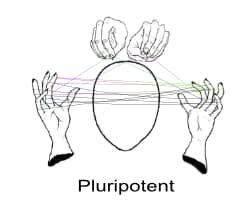
In 2020, 46% of Americans felt unable to speak their minds - up from <13% in the Red Scare 1954. So what the fuck has happened? These authors have 3 theories. All of them feel adorable in 2025.
summary
This conversation delves into the phenomenon of self-censorship in the United States, exploring its rise in a polarized political climate. The discussion hits on the historical context of free speech, the impact of political polarization, and the theories behind self-censorship, including perceptions of political repression and the protection of civil liberties. The implications for democracy and the future of free expression are critically examined, emphasizing the need for open discourse to have a healthy democratic society.
takeaways
Self-censorship has tripled since the era of McCarthyism.
46% of Americans feel less free to express their opinions than before.
Political polarization on a macro level did contribute to increased self-censorship in 2020.
Protection of civil liberties did not contribute to increased self-censorship in 2020.
Fear of government punishment did not contribute to increased self-censorship in 2020.
Fear of judgement by close relationships is a significant factor for shutting up.
Self-censorship is prevalent across all education levels.
Strength of belief does not correlate with opinion expression.
Conditions have radically changed in the short time since this study was conducted.
Macro political divisions have become micro.
Support is available for all opinions online, reducing need for suppression in some.
The spiral of silence theory explains the dynamics of self-censorship and forthcoming results.
Dissent is essential for democracy.
keywords
self-censorship, political climate, free speech, democracy, polarization, emotional suppression, social media, political discourse, authoritarian leadership, spiral of silence
SPIRALLING SILENCE
So how bout a paper that probably won’t exist on the internet for too much longer? Just kidding. (not kidding)
Keeping Your Mouth Shut: Spiraling Self-Censorship in the United States
James L. Gibson1,* and Joseph L. Sutherland2
Political Science Quarterly 2023
A paper in which they, now adorably, were NOT talking about government-required facades of conformity or opinion suppression. But peer-related environments of silence in a polarized political climate.
Oh, how those problems seem so small now.
But before we hit this new paper, remember as we learned last time, in:
We have emotions but can't show them! Authoritarian leadership, emotion suppression climate, and team performance.
Published in:Human Relations, Jul2021,CINAHL Ultimate
By:Chiang, Jack Ting-Ju;Chen, Xiao-Ping;Liu, Haiyang;Akutsu, Satoshi;Wang, Zheng
They said:
Defining authoritarian leadership as an ambient, demanding, and controlling leadership style, results indicate that authoritarian leaders are more likely to create a team climate of emotion suppression, which induces a higher level of team emotional exhaustion that negatively impacts team performance. Furthermore, we found that authoritarian leaders' own emotion suppression enhances the above sequential mediation effects, i.e. the more emotion suppression the authoritarian leader him/herself exercises, the stronger the team climate of emotion suppression, the higher the level of team emotional exhaustion, and the lower the team performance.
Suppression from the top-down increases suppression for all. Especially under ambient, demanding, and controlling authoritarian leadership.
So, considering how cooks have crumbled, we can expect that the findings from our paper today?
May be more severe than what these authors originally determined. And likely have different causations and implications than what our national environment suggested a few short years ago.
That caveat “the world in 2025 isn’t what it was in 2020 (when they conducted the survey) or 2023 (when the paper was published)” aside… Let’s get into it, in a socio-psycho-political conversation.
I’m going to say very little and let them do the reporting. But after nearly every line, please know that my brain is chortling “ha, how cute, if only these fuckers had any idea what was coming.”
Anyways, back then, they said:
Over the period from the heyday of McCarthyism to the present, the percentage of the American people not feeling free to express their views has tripled. In 2020, more than four in ten people engaged in self-censorship.
There can be little doubt that Americans today are deeply divided on their ideological and partisan attachments, many issue preferences, and even their values.1 Indeed, these divisions can go so far as to extend to the question of whom—or what kind of person—their children should marry!2
A concomitant of these divisions is that political discourse has become coarse, abrasive, divisive, and intense. When it comes to politics today, it is increasingly likely that even an innocent but misspoken opinion will cause a kerfuffle to break out.
It should not be unexpected, therefore, to find that a large segment of the American people engages in self-censorship when it comes to expressing its views.
We define self-censorship as “intentionally and voluntarily withholding information from others in [the] absence of formal obstacles.”3 In an influential study, Michael MacKuen refers to this more simply as deciding to “talk” or “clam.”
In a nationally representative survey we conducted in 2020 (see Appendix A online), we asked a question about self-censorship that Samuel Stouffer first put to the American people in 1954: “What about you personally? Do you or don’t you feel as free to speak your mind as you used to?”
The 2020 results are sobering: fully 46 percent of the American people today reported being less free to speak their minds than they used to.10
In comparison, a widely noticed, contemporaneous 2020 poll by the Cato Institute produced a considerably higher estimate of levels of self-censorship, using responses to the statement “The political climate these days prevents me from saying things I believe because others might find them offensive.” The author concludes: “Nearly two-thirds—62 percent—of Americans say the political climate these days prevents them from saying things they believe because others might find them offensive.
The share of Americans who self-censor has risen several points since 2017 when 58 percent of Americans agreed with this statement.”11
What may be even more unnerving, however, is the steady change in levels of self-censorship over the past 70 or so years. At the height of the 1950s Red Scare, when a circumstantial miscue could land a person in jail, Stouffer12 discovered that only 13.4 percent of the American people felt less free to “speak their minds” than they used to; fully 84.7 percent said they did feel free to speak their minds.13 During an era in which many perhaps should have been fearful of speaking their minds, in fact very few Americans seemed to have personally felt the heavy hand of the Republican senator from Wisconsin and his many allies and followers.
NOTE FOR ME: it’s because of the internet. Private thoughts are no longer private. And censorship accountability is now very high because of AI.
Using a collection of surveys in which the Stouffer question was asked, these data reveal an overall steady erosion of levels of perceived freedom, although there seems to be two points of significant decline—2005 to 2007 and 2011 to 2013.
But perceptions of the unavailability of individual-level perceived freedom increased rather dramatically from 1954 to 2020.
While some might understand these data to indicate that those with “bad” views are no longer free to express themselves (AKA they’re probably referring to racists sexists, and other bigots), which may be a good thing, we have no means of discerning whether the speech lost is “good” or “bad” speech.
What accounts for this remarkable loss of perceived freedom in the United States? How is it that four in ten of the American people do not feel free to express themselves today? Is this loss of free speech a function of fear of being misunderstood by friends and colleagues, or are the causes more systemic, such as government surveillance of social media, telephone, and email discussions?15
Our purpose in this article is to explore several hypotheses about the correlates of self-censorship at the aggregate and individual levels. Our analysis here is assuredly not comprehensive or definitive, but in light of the presumed importance of unbridled political discourse for the health of democracies, our findings raise many troubling issues for American democracy.
Affective Polarization
Carlson and Settle conjecture that change in levels of self-censorship may be related to increasing levels of polarization. Because people so dislike each other and detest each other’s views and values, they may perceive a great cost associated with sharing their opinions publicly, for little or no reward. Therefore, they keep their mouths shut and refrain from expressing their true opinions.
21 Perhaps a “saving grace” is that people tend to live in politically homogenous silos or “echo chambers,”22 and, therefore, are most likely to encounter mainly like-minded folks.
NOTE: used to be the case. Again, insert “the internet” and this is no longer true.
Nevertheless, unless one can completely isolate oneself from the toxic political environment of contemporary America, it could be prudent to withhold one’s views, at least in certain contexts. Free speech has never been free, but the cost of such speech today seems to have skyrocketed—and, to some, the cost may have become exorbitant and out of reach.
As polarization has increased, so too has self-censorship. It seems unlikely to us that levels of self-censorship have caused levels of polarization, because we cannot see how silence—“keeping one’s mouth shut”—would contribute to increases in political differences and animosity.
Those who are more polarized do not withhold their views more. There may be several reasons for the lack of relationship, but the best explanations most likely have to do with how friends and associates of people react to polarization, rather than the degree of one’s own polarization itself. That the relationship is insignificant also suggests that some who hold polarized views might seek out likeminded friends and, therefore, feel free to express themselves (“as in echo chambers”), but that others holding such views do not (or are not able to do so) and, therefore, do not feel free.
Once more, we find no relationship between the degree of partisan polarization in the county and levels of individual self-censorship. Whatever causes people to withhold their views no doubt takes place at a much more intimate level than at the level of the county.
Support for Civil Liberties
Polarization is sometimes narratively associated with unwillingness to recognize the civil liberties of all, especially one’s despicable opponents; therefore, a reasonable hypothesis to account for the dramatic increase in self-censorship in the United States is that people feel less free because reluctance to grant civil liberties to everyone has increased in the country.
As it turns out, that does not seem to be so.
(note: that as of 2023, again, an adorable time to be alive, comparatively. Not to skip over this whole section, but, um… I do believe most of us can agree that there’s less support for many people’s civil liberties in 2025. See the deportations, unlawful detentions, loss of autonomous speech, potential redaction of gay marriage, lack of bodily freedoms, and so on. So, to jump ahead, they say:)
From this analysis, it seems entirely clear that a community’s political intolerance is not a factor driving people to engage in self-censorship, most likely because, for most, the metropolitan area is a much too large definition of the environment of the individual.
Very true, in that a “city” versus “rural” place is not reflective of an individual’s personal environment and does not correlate unquestionably with their views of civil liberties. Something else is at play.
And with that, onto the next hypothesis.
Perceived Political Repression
It appears that the intolerance of ordinary citizens as a whole is not an important factor influencing self-censorship. Perhaps, instead, it is perceptions that the government would attempt to prohibit certain types of speech.
In essence, this hypothesis posits that one source of self-censorship is fear of governmental efforts to quash unpopular speech.
Following Gibson, we asked the respondents whether they thought the government would allow them to engage in certain types of political activity (see Appendix E).31
In 2020, approximately 68 percent of the American people said they felt the government would prohibit none of these activities; about 13 percent said the government would prohibit all these forms of political action.
Those (relatively few) asserting that the government would allow none of the activities engaged in significantly more self-censorship. We need not make any inference here about the direction of the causal flow. We only conclude that people who self-censor more tend, to some degree, to view their governments as unwilling to allow various form of political expression.
Note: hahahahahahaha. Now where in the world would those perceptions and suppressive behaviors come from? *Points to the last two weeks of being alive.*
Summary and Discussion
We readily accept, and perhaps even embrace, the charge that this article raises as many questions as it resolves.
Frankly, we did not expect to find that self censorship is as widespread as it is in the United States, and we were even more nonplussed to discover how it has increased over time.
That macro affective polarization is perhaps part of the explanation of our data seems quite reasonable, but our failure to draw a connection between unwillingness to recognize civil liberties for all and self-censorship is, while not unprecedented in the literature, a fecund and not-entirely-expected finding.
With the exception of the all-pervasive and much-discussed climate of political polarization, one’s macro political environment seems not to be the main source of pressures to censor one’s views.
It is also noteworthy, and perhaps unexpected, that those who engage in self censorship are not those with the most limited political resources: self-censorship is no more common among the poorly educated and less knowledgeable than it is among the better educated and more informed. And to the extent that level of education is a sign of greater political sophistication and more extensive socialization to dominant social norms, we might have expected the better educated to engage in more self-censorship.
That seems not to be so.
This analysis has not been very successful in discovering which “deviant” political views are most subject to social disapproval. We note that Carlson and Settle find that the topic under consideration actually has little effect on tendencies toward self-censorship.36
So, perhaps it doesn’t matter what the subject of discourse is… it’s a personal or environmental trait if you feel permitted to speak or not, regardless of topic.
In our data, those who describe themselves as “born again” do not engage in more self-censorship, nor do strong partisans (although we find a weak relationship among strong ideologues). It seems likely that what constitutes unacceptable political views is highly idiosyncratic to specific contexts. For instance, in certain circumstances, those who favor abortion keep their mouths shut; in other contexts, those who oppose abortion keep their mouths shut.
Context-dependent patterns are generally difficult to discern and analyze with survey data such as these.
These findings have important potential consequences for the health of democracy in the United States. As Diana Mutz has written: “Exposure to dissimilar views has been deemed a central element of the kind of political dialogue that is needed to maintain a democratic citizenry.”37
But if those holding dissimilar views keep their mouths shut, then the unbridled discourse about which Mutz writes may become a thing of the past.
And with that, let’s summarize
WRAP
We learned today: self-suppression or censorship was not related to macro political environments a few years ago. Nor was it reflective of desires to take away liberties from disliked groups. Nor was it correlated with REAL governmental oppression – though it did have correlates with PERCEIVED government censorship.
So what the fuck is going on with self-censorship increasing so massively in 2 to 5 years?
I think most of us would agree… macro environments HAVE become influences for expression or suppression. Conversations about serious topics like civil liberties HAVE become reasons for shutting up and keeping ones head down or speaking up and shouting from the rooftops. And government punishment for speaking freely HAS become a reality.
Since this paper was written, we’ve seen macro environments become micro. Political beliefs aren’t something we support or dissent from, in an ambient way. Through radicalization, they’re now in our faces, 24/7. Political leanings have become parts of personal identities. Don’t tread on anyone’s self-concept or you’re trouncing on their liberties.
But only their liberties matter.
Because it was more difficult to proudly state unpopular beliefs such as stripping individuals of their rights in 2020. There wasn’t a great deal of support for abusive group rhetoric in public spaces at that time. This has all changed with the internet providing support to EVERY opinion that exists. Allowing folks to create their own opinion-aligned environments, even if their closest friends and family members dissent.
And lastly, at that point, there wasn’t real government censorship. There was fear of it. There was outrage over political correctness. But any actual punishments came from the hands of consumers. Today, we have evidence that this has changed.
So while this paper was damning and the authors were concerned several years ago… we’ve now seen the spiral of silence tighten.
Because of? The internet, giving those who’ve always been able to shout the loudest infinite platforms to do so. Resulting in top-down suppressive influences that have wrecked us as individuals and as teams. Teaching our children to do the same thing and fostering family environments of mandated conformity, negativity, and social coldness.
There used to be such a thing as “shame” – now those who never learned the meaning of the word have less reason than ever to suppress themselves, while insisting on the suppression of everyone else, because they’ve been empowered by similarly minded individuals – perhaps far outside their immediate environment - and government encouragement to do so.
And to wrap up for today, as far as where things are headed?
They say:
Next Steps: A Spiral of Silence?
In Elisabeth Noelle-Neumann’s terms, self-censorship is the driving mechanism in the “Spiral of Silence.”38 In a nutshell, the theory hypothesizes that “opinion climate perceptions are related to the willingness to speak out.”39 That is, the fear of being socially isolated owing to holding minority viewpoints encourages people to keep their mouths shut.
Over time, people test whether their views are acceptable to others; when they find they are not, they shut up.
My words: If they find that their president also has psychopathic thoughts, which are then reflected by the people around them who weirdly call that public figure “daddy,” without noticing his own suppressive tendencies… they do not.
Creating an environment of silence for everyone who disagrees with them, not realizing that they, themselves, are not permitted to have real free speech, either.
With reinforcement that they should scream at everyone else to shut up, they perpetuate the very environment that they believe they’re fighting against. Less freedom. More oppression. For all.
Without reinforcement, more people remain quiet, with the consequence that orthodox views are established and ascend into a perhaps undeserved domination.
The Spiral of Silence theory is not a theory of government repression; rather, it is a social theory. It is not the officials who are the source of disapproval; rather, it is one’s friends, family, and neighbors.
But those people became empowered to express their approving opinions from the top-down. Bringing the macro into the micro, and making political battles into personal wars. Without many folks recognizing that they are mere soldiers for commanders. And ultimately will have far less freedom of expression at the expense of everyone else’s than they believe.
In terms of the spiral of silence, this means that disagreement with friends and family may lead to a higher state of fear of social isolation as compared with strangers.40
That fear, we hypothesize, is what drives self-censorship.
So, as social control grows, it’s increasingly likely that we have intimate relationships with will continue to adopt mandated views, and from fear of interpersonal rejection, self-suppression will increase so as not to threaten those ships.
Facades of conformity and impression management strategies of suppression may become more popular than any of us can currently fathom. Especially considering how quickly things have changed since this poll in 2020 or this paper in 2023. For each of us, I fear that deepening social disconnection, increased human need, and declining health lie round the corner.
And, as if any of us needed to be reminded, they say:
Finding ways to lower the costs of expressing dissenting views should be a priority for those who favor the liberal democratic form of governance. After all, dissent is the essence of democracy.
As Chief Justice Earl Warren wrote: “Mere unorthodoxy or dissent from the prevailing mores is not to be condemned. The absence of such voices would be a symptom of grave illness to our society.”