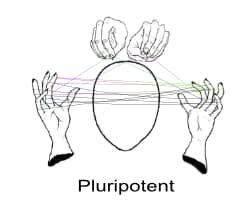
The ironic results of impression management are... receiving the exact opposite of what one intends. Let's revisit our article and discuss the ways imp-manning creates negative outcomes.
summary
We explore the complexities and pitfalls of impression management, emphasizing how efforts to create a favorable social image can lead to loneliness, unmet needs, and a lack of authentic connections. If you don't appear in-need, you don't get your needs met. The discussion highlights the risks associated with trying to conform to societal expectations and the importance of embracing one's true self to foster genuine relationships and personal satisfaction.
takeaways
Impression management often leads to negative outcomes.
People misinterpret efforts to manage impressions as inauthentic.
Social support is less likely for those who appear self-sufficient.
Impression management can create a facade that isolates individuals.
Authenticity is crucial for meaningful connections.
The effort to maintain a false image is exhausting.
Loneliness can be exacerbated by hiding one's true self, creating strangers.
The cycle of impression management and personal vulnerability feeds into each other.
Being true to oneself is essential for long-term satisfaction.
keywords
impression management, authenticity, social support, mental health, loneliness, self-image, social interaction, vulnerability, deception, personal growth
Hellooooo. What a batshit time to be alive. And who knew that mandated Facades of Conformity to prevent resource loss would be such a point of the news cycle SO quickly and to such an extent, so soon after beginning this series.
Holy shit, most of us assumed that neighbors and institutions would start to turn on individuals to save their own asses, but who knew that it would happen so blatantly, like, last week. Guess I expected corruption was a little more nuanced and subtle than all this.
But back to impression management.
I, as usual, have more to say about our last topic.
Today I’m going to highlight an important point that I tried to exclude from our last episode so we could discuss it without distraction.
Imp Manning: It backfires.
Impression management doesn’t mean impression success. It means impression effort. And potentially negative outcomes in exchange.
Before we get into the new part, let’s remember and remark upon these three points that we breezed over last time about why impression management is often a losing strategy:
First, impression management is difficult. For employees who are not politically skilled, the more impression management work they conduct, the more undesirable social images they make in their supervisors’ eyes. In some cases, … individuals who aim to be regarded as friendly or capable through impression management turn out to be taken as flatterers or boasters, respectively
So our efforts can make things worse, if we aren’t good at what we’re doing or take it too far.
Second, impression management is full of uncertainties. People have contrasting standards in evaluating what is good or bad. Certain behavior in line with the norm in one’s view is regarded as inappropriate by others. As a result, people are unable to know whether they have effectively built positive images, as the results are completely determined by others.
So we also don’t know if we’re even trying to create the right image. “Appropriateness” depends wholly on the expectations and preferences of every individual we interact with. That creates a complex requirement for constant impression management, tailored without knowledge or certainty, to everyone we meet.
Third, impression management is risky. Impression management is usually associated with deception and faking behavior, which embed the risk of being exposed. People who engage in impression management are aware that if others notice their deception or faking behavior, impression management work will backfire and their social images can be even worse. Therefore, even if impression management is successful in the short term, one is still concerned about how long the ideal result can last.
So we might be “found out as fake” in trying to please others, which is stressful to live with. And this result in and of itself becomes… displeasing. We can earn a negative evaluation while attempting to force a positive one, FOR trying to force the positive one. And we’re at risk of this FOREVER AFTER imp manning has begun. Meaning, if we’re good at impression management… it actually works against us in creating continual work that we have to uphold.
Something that we’ll speak about further in a moment.
But here’s the real sticking point, which is worth a great deal of consideration, in my own experience anyways.
Impression management actually can lead to….
Having MORE unmet needs, ZERO social support, and LOSING resources.
They say:
Furthermore, impression management can make people feel lonely. We draw on theory of social support to justify this notion.
According to this theory, social support serves as a type of social resources supplied by one’s networks.
Providing social support is considered as prosocial because the providers do not take this action as a deal and thus seek for no exchange in this social interaction.
As a result, people tend to offer social support to others who are in need.
However, individuals who manage their social impressions are unwilling to show their hardships and struggles to others. In reverse, impression managers tend to display positive social images (e.g., high competence, resource abundance) to create more desirable impressions.9,44
Therefore, their friends and colleagues are less likely to give them support as they observe little need.
Let’s recap this.
If we’re bad at it, impression management is fairly likely to create negative returns as far as how much others like or trust us.
AND
Through Imp Manning, we’re also fairly likely to present ourselves to be in better circumstances than is true, which, if successful at it, then fucks us over when we actually need social support.
So we lose either way.
Let’s speak to that second point.
Because we know that other people appreciate golden retriever humans – folks who are happy go lucky, secure, stable, prospering in life, un-needy and asking nothing from them…. Many people try very hard to present this image.
But when we’re actually struggling, in need, requiring assistance, economically disparate, lonely or otherwise challenged by unmet needs…. This is acting against us.
We can logically believe that if we’re likeable, we’re in a better position for being seen and for receiving help.
The reality?
We put ourselves in a category “does not need anything from me.”
AKA “they fine.”
“They don’t need resources, they don’t need assistance, they don’t need social connection…. They’re happy! They’re healthy! They present well. They have everything under control.”
When, in fact, that motherfucker is feeling the exact opposite, which is the reason WHY they’re impression managing or creating facades of conforming to hide it in the first place.
Loneliness, loss of control, lack of satisfaction, loss of resources… drive the behavior. And then the behavior says to external onlookers “at least I’m not lonely, out of control, dissatisfied, or lacking resources. I’m all good!”
And the loneliness is perpetuated.
Here’s the part that sucks the most.
Then, after all that, if you DO reveal yourself to have needs and problems and connection voids… if you DO put down the charade and get vulnerable…. THAT’S what people think you’re lying about.
THAT’S what they identify as a façade. An attempt at manipulation or coercion that seemingly comes out of left field.
When, in fact, it’s the court an individual has been standing on, all along. While hiding it, for the comfort of others; for the chance at presenting an easily acceptable image.
Which is such a mental-illness-masking-typical problem… whether it be depression, anxiety, trauma, ADHD… we mask our issues and can make things worse in doing so. When we believe we’re “wrong,” we don’t necessarily create beneficial situations pretending with all our might to be “right.”
Meaning… The ole sentiment “at least they’re trying” may not exist.
Trying with sheer willpower to overcome adversity, through hiding ailments and obtaining social mobility, so that better circumstances can be created…. Isn’t necessarily smiled upon. Because it might be done incorrectly for that particular audience. Because it must be maintained, forever, and it is an exhausting behavior. And because it sets off people’s alarm bells.
AND EVEN IF YOU ARE SUCCESSFUL at impression management. If you do it all correctly and present yourself in a more favorable light than the dankness of your reality….
Then you face the challenge of having everyone know a version of you that isn’t authentic, and that doesn’t reflect your needs. And therefore, they aren’t going to be met.
And if you later attempt to get your needs met through any of these social avenues, perhaps falling into such a state of desperation that you’re willing to toss aside the FOCs and false faces because there’s nothing left to give… then upon your big reveal, those people you’ve Imp-Manned at are likely to be confused, thrown off, and even suspicious. Un-understanding. Hostile.
Because you’re not who you led them to believe you were.
Because you didn’t feel as though you were allowed to be yourself.
So now that self is a stranger to everyone.
And your reality – your REAL reality, not the one that was manufactured through intention or omission – is doubted.
As you struggle through it alone. Perhaps more lonely than ever. And unable to find real connection, now that you’ve led with a false, survival-based, persona which was intended to HELP with resource loss… but actually can contribute to greater lack than ever.
SO when it comes to striking out and socializing, remember….
“A for effort?” Is likely to be interpreted more like “F for Faker.”
No matter the positive “just let me part of humanity please, I’ll work very hard to do it correctly!” intentions behind it.
Damned if you do, damned if you don’t.
If we whitewash who we are for others’ ease of consumption…
The result can be shallow, unfulfilling, disconnected relationships that still fail to improve loneliness, sense of control, resources, and overall life satisfaction.
As they stated in our paper:
Our findings are consistent with a larger body of research indicating that a good impression manager does not necessarily have a good life.
So what’s the solution, considering impression management IS necessary, for almost everyone, at least sometimes?
I would say “keep it to a minimum.” And be sure to let glimmers of yourself peek through the surface, from the start.
Especially with a mentally ill or traumatized background, which creates the very experiences correlated with socially faking it. Loneliness, loss of resource, life dissatisfaction.
What comes first, the personal vulnerabilities or the impression management? Answer: I think it’s a circle, not a straight line.
But my point today is: You actually don’t want to be highly skilled or highly dependent on adjusting your self image.
It won’t create a positive long-term experience.
It WILL create a persona that becomes a prison.
Because being found out won’t make you friends.
Because hiding forever doesn’t satisfy what’s truly lacking.
And because bravely revealing yourself after hiding yourself can contribute to greater loss of resources than whatever originally inspired the façade to be created in the first place.
With that…
Sorry for all the bad news! But I hope it saves some effort, exhaustion, perpetually unmet needs, and later rejective heartbreak.
As much as possible, just be your fucking self. The research says that you’ll regret it any other way. In a big explosive way, or slowly, every day.
Cheers y’all!