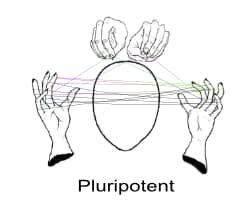
FOCs aren't the same as "making compromises" or "being a part of society." And it's not a personal flaw to automatically use them or struggle with your real values. Let's talk about the connection between CPTSD, Environments of Conformity, and the automatic reflex of creating FOCs.
summary
This episode explores how environments of conformity shape our values and behaviors, often leading to involuntary self-abandonment. The concept of "Facades of Conformity" and its roots in complex trauma. We talk about how family dynamics contribute to conformity and self-perception, the challenges of breaking free from ingrained patterns and discovering true values, and a few personal anecdotes and reflections on navigating environments that demand conformity.
key points
- Involuntary Conformity: Many individuals unconsciously adopt facades of conformity as a survival mechanism, often rooted in environments that discourage individuality and promote uniformity.
- Impact of Complex Trauma: Facades of conformity are closely linked with complex PTSD, where individuals are not permitted to healthily differentiate from their families and communities.
- Family Influence: Due to loss of self, enmeshment, and ego issues, children are often expected to mirror the values and behaviors of their parents, leading to a lack of permitted identity.
- Cost of Conformity: The continuous effort to conform can be exhausting and detrimental, leading to a loss of self and hindering personal growth and authenticity.
- Impression Management: The need to manage impressions and conform to societal expectations can lead to a perpetual cycle of self-editing and suppression of true identity.
keywords Facades of conformity, Impression management, Complex trauma, CPTSD, Self-preservation, Family dynamics, Personal values, Conformity challenges, Authentic living, Generational trauma
Greetings again, friends.
Today, I wanted to address something that came up for me while thinking about these “facades of conformity” before we dive a little deeper and hit a paper on the outcomes of “impression management.”
A comment that was recently received also slapped at this point.
Essentially, yeah, FOCs are problems. But I don’t even know when I’m doing it or what my real values are.
What about when we’re SO accustomed to living in FOCs that it’s first-nature to engage with them? If you’re not certain your values, because you’ve been so un-permitted to explore or embody them… how are we supposed to self-assess about that?
If this pertains to you, I can redirect you to the Misalignments episode. And then validate that it probably means you’ve grown up in what I’m here to describe as…
Environments of Conformity
Counterarguments against FOCs
And, as per usual, let’s answer the Q: how do these E’s of C’s relate back to CPTSD, so that we’re uniquely likely to struggle with Facades of Conformity and cannot “just knock it off and be ourselves” when facing outside pressure?
Because, please do not make the mistake of thinking that you’re weak of brain or character for being challenged by these FOC forces. You’re adaptive. You’re skilled and experienced in surviving. And that means you fall back into those survival skills easier (and less voluntarily) than others.
Lettuce start today’s talk by addressing the counter arguments against FOCs being a distinct and particularly troublesome issue. In case you attempt to speak to someone about this paper, this topic, or this struggle… and find that they push back.
They MIGHT say “work JUST IS a place where you have to be what’s asked of you, what’s needed, what’s expected by the higher ups and customers and coworkers. Get over it.”
“We ALL have to conform – that’s society – that’s maintaining order – and on a lesser scale, that’s the nice thing to do.”
They might say “every relationship is a series of compromised behaviors and personalities – sorry that it’s SO EXHAUSTIVE to YOU, snowflake.”
And to all of that… to some extent… yes. There’s a nugget of validity and then a mountain of shame piled on top rather than comprehension.
Because, when talking about FOCs we’re not talking about sequestering your desires to be violent, aggressive, offensive, antisocial, filthy, or otherwise outside of reasonable social or moral norms.
We’re talking about giving up WHO YOU ARE, what you deeply believe and hold true - and in a false manner that serves to keep others from unjustly targeting you.
Involuntary, self-preservation-based, Facades of Conformity go deep.
Some of us carry… let’s say “instincts of conformity” that are handicapping. That are automatic reactions to perceived rejection, perceived danger, perceived disapproval.
They are default modes of existence.
They are akin to being a chronic fawner or people pleaser to the extent of sacrificing your personality and experiences – which amount to forfeiting your life.
They are extremely costly.
And I’d like to propose a theory about where that involuntary instinct to FOC off – to self-abandon without necessarily even realizing you’re doing it - comes from.
And why it is so linked with CPTSD that, as usual, it’s difficult to tell where one starts and the other stops.
CPTSD, explained more concisely than ever before
So today we engage with a thought I’ve been having for about… oh… three years that explains complex trauma, perhaps, more concisely than any other description of origins of the disorder.
Ready?
Here is my speech.
Some families welcome newcomers – tiny behbehs – with wonder and awe.
As they grow from useless potatoes into real, functioning, humans and develop personalities, interests, and preferences of their own, they are studied fondly. Welcomed. Celebrated.
Every day is a delight. Every behavior is something to behold, encourage, healthily welcome.
The differences between the toddler or small child from their originating kin? Are studied - warmly. Heralded. Spoken about with love and delight. Supported. Bolstered.
To get all gay about it…
Each member of the family is seen as a unique and beautiful part of the larger mosaic. There’s recognition of the strengths that are present, separately and then together, through the diversity of each person. Each characteristic is an addition to the whole of the family system. Each personality is fostered and encouraged with enthusiasm, with love, with genuine, non-abusive, care.
… and in some families…
None of that.
Families with ego issues
If you found yourself sighing deeply at this description of life, maybe imagining friends you’ve had, partners you couldn’t see eye to eye with, or even strangers’ children you’ve observed in public while feeling wistful, mournful, and/or perhaps a bit jealous…
Same! And we don’t have to talk about abuse or unfairness at all. Just how children’s brains are formed to understand the impact of this.
In some families the members are not fully or not at all differentiated. They aren’t individuated from one another.
They either lack understanding of boundaries between persons; truly having no root understanding that individuals are individuals. They have no theory of mind. They cannot realistically separate the emotions, thoughts, beliefs, or behaviors of one person from their own. And therefore, the people around them HAVE TO CONFORM to what they feel, think, value, and do… or else it is seen as a baffling and offensive event, because it does not align with their experience and they can’t imagine it’s possible to be any other way. To be okay being any other way. Each person is a direct representation of the whole. More specifically, of the leader of the “whole.” And this means there’s no room for discrepancies or differences in conduct. In belief. In personality.
No boundaries and therefore unhealthily small egos can lead to environments of conformity.
OR, alternatively, in these families that don’t allow for authenticity, it’s because the boundaries perceived between individuals are SO thick – egos are SO LARGE - that they’re threatened by anyone being unlike themselves. If you’re not EXACTLY LIKE THEM it means you’re NOT LIKE THEM AT ALL, just like the rest of the race. They cannot relate to humans on a baseline human level. They only know themselves to be valid and anyone outside of that “permitted party of one” is a blasphemy. Hint: under the surface this is because every single person who isn’t exactly like them is a reminder of their own insecurities, which are hidden behind attitudes of self-perfection, unquestionable greatness, and grandiosity. To maintain their sense of being okay, they must be the best. And to honestly believe they are the best, sustainably, for a lifetime… no one can challenge those thoughts or observations with evidence that they’re doing quite alright – or even better – themselves.
The boundaries between self and other are SO LARGE that, again, an environment of conformity (as long as it doesn’t threaten their sense of specialness) is created.
In either case…
Whether there are no boundaries whatsoever; the child is seen as a continuation of the parents, so they MUST act in accordance in every single way or else they’re an insult to the constitution of the adult…
Or whether the line between the child and parent is SO THICK; the child is seen as a foreign threat, so they must try to prove that they’re not a danger to the validity of the parent by demonstrating their similarity as much as possible…
The result is the same.
Displaying differences is a risk.
They’re unseen or unappreciated, at best.
They’re taken as affronts to god (the parent and the entire life experience of the parent), in more severe situations.
The real personalities, preferences, and beliefs of the child are punished. The “permitted, family-imparted personality, preferences, and beliefs” are reinforced. Either, directly, through instruction and reward – through modelling - or through negative reinforcement, which simply means “avoiding some of the abuse that befalls them for acting ‘the wrong way.’”
So, this is characteristic of complexly traumatized families, because the parents lack appropriate understanding of themselves versus others.
Because THEY lack healthy senses of self. And it gets passed along.
Generally speaking, THEY were treated as less than individuals…. Or else SO individual that they had to try to comprehend the distance between themselves and others by seeing no similarities at all.
Family systems with ego issues
Now, take this another step deeper. If “it’s a family environment” problem, then all the players will do the same thing. Not only will parents punish the child for perceived differences… but so will the other children. So will the extended family. So will any friends or communities the clan belongs to.
Altogether, it creates an environment of mandatory conformity. And this is the basis – the foundation - of life experience for the individual. From having an unformed playdough brain, onward, into adulthood, where that clay has been hardened and now cannot be easily reformed.
Result? The child has no sense of self, no healthy sense of separateness, no idea that they’re ALLOWED to be those things. They do not develop their own… anything… because it hasn’t been permitted, let alone encouraged, let alone, as we said, celebrated.
And these become hindrances to ever realizing we CAN X or Z or any other letter. On our own or in the presence of others.
How to identify FOCs and family values
How do you identify the ways you’ve been forced into a particular shape by family members who insisted upon conformity?
Personally, I noticed that my family will only positively recognize certain qualities of mine. And they will disparage or disregard anything else.
These are the “family values” that I learned. That then went on to become perpetual facades of conformity in my world, regardless of what environment I fell into.
On top of that, the “learned enmeshment by default” problem means I became very porous to the specific conformity demands of new environments and began whittling my personality down even further, depending on what was newly allowed or enforced.
Thus, I’m a “hard worker til I run myself into the ground” in every environment. I was taught that I could be attractive and intelligent. By my family. I carried these values, with unrealistic and unquestioned importance, until recently.
And depending on what work environment, I would gradually become more masculine or feminine, depending on whether I was working in an office or in a male dominated industry like craft beer, for instance. Hiding or flaunting my “alternativeness” via bandshirts, piercings, tattoos was another common conformational point.
The list goes on, but we’re here to talk about you.
What I can say is, unconsciously and to my detriment… I’ve worked very hard to hide anything about me that doesn’t align with the environment’s desires and perceptions. I’ve learned to shut the fuck up, to detect what’s expected, and to be those things… which, fortunately or unfortunately, generally align nicely with what my family also permitted.
Being attractive, being smart-enough, and working myself past my breaking point… are things that most situations will welcome, for their own purposes. You might realize the same.
By accident. By default. And without realizing that you were doing it.
Facades of conformity that dictate your personality and comfort level in your own life…
They’re born, involuntarily, from an environment of conformity that perhaps also taught you to chameleon yourself rather than to be yourself fully.
Before we get out of here… You know we love a metaphor.
A metaphor for the family of conformity and later self-abuse
Here’s another way to put it.
Like a hyperactivated immune system, the traumatized family seeks what “doesn’t match itself,” isolates, and tries to destroy or limit the growth of those qualities.
So that, like the viruses we’re treated as by them, we learn to hide ourselves. To wear the markers of the host. And to rapidly adapt to any new environments by doing the same thing.
Observing, replicating, and presenting the characteristics of “the host” (our environment). So that we’re not identified, marked as a danger, and exterminated.
If you do it enough and it works well enough to keep surviving? It becomes automatic. A reflexive reaction to being around other people.
An instantaneous and unconscious way of moving through the world that “seems to work,” so there’s no awareness of the pattern or reason to ever notice it.
But it is very costly.
Especially when it’s continuous. When it involves so many processes to observe, self-edit, observe again, and keep going. Forever. And when it implies “badness” to be any other way, besides a camouflaging vessel of conformity.
Ps – this assumption of “wrongness,” as we know, turns US into our own macrophages – our own immune system soldiers– seeking signs of what’s not allowed or safe and shutting them down, per all the abusive supervision we’ve experienced before.
We become environments of conformity, from the inside out.
Disallowing aspects of our real selves. Punishing ourselves for them.
And falsely amplifying the markers of the people around us. Pretending these masks we wear are our own faces. Which look eerily similar to, yes, our modern day environments… but in the unhealed CPTSDer, also remarkably similar to the system of conformity that raised us.
Wrap
And that’s… what I needed to say before we jump into our next paper and start talking about the (less dramatically named) costs of impression management.
So once more?
Easier said than done. You’ll have to understand where your supposed values and behaviors come from to unravel and rewrite them. But… as possible and with great personal awareness over time…
Give no FOCs, my friends.
They’re often outdated, involuntary, artifacts of surviving amongst unhealthily ego-ed, generationally traumatized, families… that rob you of your real life experience and cost you exactly that, indefinitely. Until you individuate with balance and learn who you really are. Through the courageous experience of living unedited.
You know, within reason.
Yes, some basic code of conduct is required, no matter who we are… and also, that’s not the same as obsessively being “who is allowed” from the uterus to the grave. In ever-developing and suffocating…
Environments of conformity.
And I’ll talk to you soon.
Fucker out.