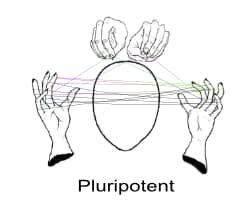
Howdy folks, and here we are continuing on our self-spook venture in the scariest of seasons, family holiday time. Returning again today to our goal of being able to spend time with ourselves without falling apart or tearing ourselves apart as we get to reacquainted with us and stoke some self-acceptance, compassion,
and care to enable real recovery. And if you're doing this work, there's a very good chance that you've actually found near continual attempts at re-disassociation. The constant efforts of your consciousness or core energy or soul thing to ditch this bitch.
and leave you an empty shell. Yes, it's the dis-ass problem. Let's talk it through. Let's start with the definition and choice of terminology. So yes, I choose the word disassociation, not dissociation. This is true throughout the history of this podcast. And why this preference? Because
Disassociation is the behavior of your consciousness uncoupling, degrouping, disassociating from your brain or body or both. It's worth the extra syllable in my book. Second thing second, let's recall that we work with the concept of having a three-party system.
Each of us has brain, body, and the soul, spirit, consciousness thing making up our being. And this consciousness thing can move between the brain and the body, or it can leave them completely, each creating a different taste, a different experience of disassociation.
Jess (02:28.566)
Now let's talk about those three conditions. First of all, if you're body dominant, if you're leaving the brain for the meat suit, a person can ditch their brain and focus only on their physical being and those sensations, exiting their higher thought state and existing through chastened feelings and low thought biological dopamine rewards.
So yeah, that can be kind of a hedonistic manner of getting through life. If a person is only doing what feels nice without any oversight, sure, things can spiral. But it can also be a very physically demanding method of escapism. If, say, exercise and bodily perfection are the chosen methods of being in the body. And also,
leaving the brain behind. it can be a horribly painful experience of getting lost in the feelings without having a higher consciousness to reframe the emotions or to suggest appropriate actions or next steps. Being uncoupled from the higher mind can be very stagnating and drowning.
From my theorizing, this is what happens to people who are sympathetic nervous system dominant. They fall into the body and it sort of collapses around them. It's possible to get lost in resting and digesting and feeling without your brain being there to say, all right, fucking time's up, let's get going again.
Alternatively, the body can be abandoned in a brain dominant disassociation pattern. You can completely leave your meat entering your headspace and getting stuck there in your thoughts with a very little awareness of your meat still existing at all. Those of us who have physical or sexual trauma are often body ditchers.
Jess (04:44.242)
and those of us who operate in thinking industries or who have been tasked with great responsibility in planning and strategizing and managing life as ways to survive might also be prone to this heady state of existing. Our bodies are dangers and inconveniences, so let's just forget that they are here. This leaves a person
ungrounded as we say. There's no recognition of material existence, which is symbolized by Earth, ground. And therefore, we become ungrounded in our disembodiment. We can get turned around and lost in our thoughts without a tether back to physical reality. When we do come back to material life, it fucking hurts.
because of all of the damage that the body has accrued, unsupervised while we were up in the brain. And lastly, we can disassociate entirely from our brains and our bodies, pushing our consciousnesses out of ourselves completely. Fuck this, everything hurts. There is no safe place within my being. All of these options suck. I am out.
Off into the ether I go!
This is when we take a vacation to our worry-free planet in an alternate dimension, as we discussed in the Stress Venture episode. Our consciousness is not associated with this earth or existence in any way. Not our thoughts, not our feelings, not our material conditions. We are not playing along with the reality that everyone else lives in. We might do this
Jess (06:46.274)
full disassociation all at once, entirely leaving us behind in one fell swoop of ourselves. Or we might do it stepwise. We could first leave the brain or body and secondarily ditch the other when it also proves unpleasant or overwhelming. I think that this is the trauma-borne disassociation that most of us think of.
Not because it is the most prevalent form of disassociation, but because it is the most extreme and obvious form. It's clear that something has been awry when it happens and there are greater consequences. Figure that we can develop lives around disassociating mentally or physically. Our patterns can become, quote, adaptive and routine ways that we exist.
short term, if conditions are supporting us. Become a dancer, become a scientist. There are routes to succeed with a brain or body dominant system. But if we leave our brains and bodies behind, we're a lot less likely to be effective in life because we're not tuned into it in either way. We're not really existing in ourselves.
our lives, our relationships, or shared consensus reality. And we're a lot more likely to be disoriented, powerless, and confused when we do try to function on Earth, which encourages more disassociation from that reality. We can also call this depersonalization and eventually derealization.
people who seem to live on another planet all the time, they might be stuck in this disassociation pattern chronically. So to disassociate from some or all of your life happens because you are leaving behind some discomfort and finding what feels like success through another means of centralizing your consciousness.
Jess (09:10.73)
It is an adaptive skill for self-preservation, short term, that usually becomes a long-term maladaptive problem due to the compartmentalized neglect that it inspires. But we might not identify this tendency for disassociation in ourselves at all because it is such a standard way of getting through the day and we've probably been doing it for much of our lives.
On a societal scale, figure that this association is encouraged. Someone has to sit in a cubicle all day, letting their body rot, operating from stress centers, while filling out spreadsheets. Most of us are detached from our meat to do this variety of work, hence all the collective health problems. And can we also say,
general insanity that's ripping through the world. Yeah, we can. And what do we do about any of it? We stay in our own lane and we pay attention to take care of our motherfucking selves, which requires us to be associated, to work with yourself, to learn to keep yourself associated despite the default nature of your disassociation.
It takes practice and effort so you don't have to do all of this self-reacquainting work again and again. And it's also worth the effort because it prevents you from accidentally becoming another dick-slapper unto this planet in a disassociated, not really all there in reality state. So how do we do this disassociation?
management work. Well, as usual, I've got some easy steps for you and let's break them down. I suggest that you first identify your initial style of disassociation. You go into the brain or into the body, then observe and name the early signals of that disassociation pattern. What can you notice so you recognize that it's happening?
Jess (11:35.116)
Then develop your re-grounding and re-centering skills. We'll talk about what that means. And then identify what often causes the disassociation, really naming out that pattern so you can prepare for and prevent those triggers in the future. And also learn to pull your consciousness back into place as needed. From all of those amendments,
You might end up changing your daily living pattern entirely, which will change your life entirely. Okay, let's go through each of these bullets in turn. On that first point, identify which way do you disassociate? Let's talk about what it feels like to get into the brain or the body. Now,
As always, our trauma adaptations go in these contrasting extreme directions. Entering the body, leaving the higher thought of you behind either feels like taking a sleeping pill or putting your body on overdrive. All awareness is in the body, so the experience separate from brain activities that might stoke overriding, anxious,
high energy or depressive low energy sort of depends on whether that protein suit itself likes to rest or if it likes to sweat. We've all learned to use our bodies differently. So if a body likes to eat sweet salty treats for comfort while snuggled in a warm blanket or likes a sense of perfectionistic control, cleanliness,
continual work and efficiency to feel safe, it's really up to the individual's body memory. Leaving the brain behind can also feel like overwhelming physical anxiety that really just can't be reasoned with. All energy is focused on the stomach aches, shakes, pounding heart, nausea, et cetera. And there's no critical cognitive skills to bring those sensations into perspective.
Jess (14:00.864)
On the other hand, if you are brain dominant and forget about the body, it can also present in oppositional extreme ways, such as a person going into overdrive mode, driven into continual action from frantic thoughts that keep them above feeling their protein reality. Or they might go into a full halt.
stopped in their tracks from having too much or too little brain activity without a body resource to make sense of the thoughts with emotional information. Either way, for me, the overactivity of the brain is palpable. Being centralized up in the skull is something to notice sensory-wise. The frenzied energy can make a brain hot.
and feel pressurized or so jam-packed full that it becomes foggy. The noggin can feel like a shaken snow globe with all the thoughts whirling at one time when provoked. It can also feel like having a laser beamed into the brain, a pointed focus on one thing that burns and fizzles and smolders with intensity. And the body?
won't really feel like anything. Hey, remember how you wanted to pee like two hours ago? Remember how sitting that way was uncomfortable all day and you never once repositioned yourself anyways? Look how easily you can ignore yourself minute by minute, being only in your brain. This is the experience of being body avoidant and brain dominant.
At least for some of us. And lastly, do you leave the brain and the body entirely? Do you do the full exit? This feels like sweet, sweet dreaming relief. Initially, it can feel like a switch flipping, overwhelm, overwhelm, overwhelm, and then nothing. Like everything quiets, the eye of the storm, everything goes blank.
Jess (16:23.542)
A sense of being in a dream is very common. A sensation of observing you detached from the experience. It's an astral projection-esque pattern of disassociation. Maybe you are aware of you from an outside perspective, or maybe you're really not sure where you go at all. The degree of fog clouding awareness of reality varies.
And the presentation can be manic, huzzah, we're fucking free, pinballing through space. Or it can be highly depressive. We are nowhere. We do not exist. We are nothing.
Again, a sense of being in a dream is very, very highly reported. And I think many people also have seen themselves making many mistakes that feel as though they're actually more so in a nightmare.
So what is your style of disassociation? Point number one. Keep in mind your default mode can change over time and circumstance. Maybe your body really hurts this month and you have a lot to do. So you are brain bound. Maybe your head is full of nightmares and uncontrollable concerns. So you leap into the body next month.
Maybe the holiday season is spent careening through the outer dimensions to not have to be in this one. Notice it, name it, and keep your self-knowledge current. Are you brain dominant, body dominant, or do you go for the full untethering?
Jess (18:17.292)
And then number two, identify the early signs of your disassociation. And as we keep saying, it helps to look for physical, material signals that you can begin noticing, obvious clues from material reality so that you notice them whether you are in the brain or the body. For instance, when I get stuck
Up in my head, I start dropping shit. My environment will be spill central water all over the floor. I'll also start running my body into things like door frames and corners. These accidents and bruises get pretty hard to ignore eventually. And my home, it's going to get all grimy. There's no time to clean when you're existing in your brain panicked. I don't even notice the disorder.
until one day I realize, my god, my life is filth. and any routine belongings that I need? no, no, not in my hands, nor my pockets like they should be, when they should be. My brain is over here, the things that I need, like my phone and keys, no clue. Look, material representations.
of how disconnected from my physical being I have become. Tis shit to pay attention to, not to speed by. These are signs that I use to make myself slow down, change my behaviors, even though it feels like I cannot. I can. Calm my thoughts and then work to re-associate with my body and material existence.
If I don't, everything just keeps getting worse. So maybe these hints will point some things out in your world and help you too. On the other hand, the other option, when I get stuck in my body, leaving my brain behind, the greatest and most rapid material signal is changes to the food that somehow finds its way into my hands. The never ending parade of snacks.
Jess (20:41.986)
that flow into my gullet and the overwhelming instinct to rest, heedless of consequences. What consequences? No brain, no recognition of future pain. Just leave me here to stretch my aches and replenish my action emaciated frame. Is the couch gathering a new dent? Yeah, that's me and that's a sign.
and here comes the peanut butter, which I literally do not have the overseeing power to stop consuming. See that jar nearly empty after one day of owning it? That's a clue. And there's a rapid 10 pound weight gain to act as the final flag waving in my own face. Yes, this seems like definitive evidence that my mind has been elsewhere. How did this happen?
my higher brain wasn't babysitting my lower brain or bod. And I went into starvation hibernation mode. Got it. How about you? Hear anything that's sounding familiar? It takes self-practice, but I encourage you to pay attention to your patterns to figure out what behavioral changes and material changes are demonstrative.
of changes to the centralization of your consciousness, how your attention shifts the way that you act and your impact on your environment. This disassociation knowledge might help you to understand some of your more baffling and upsetting and, judgeable behaviors. And then, step three, learn to reground.
and re-center in a way that actually works for your system. And then practice becoming skilled, efficient at it. So let's say again that re-grounding is getting your consciousness to recognize the body and the material aspects of life. Your feet stuck to earth via gravity, the sensations around you.
Jess (23:04.258)
the feeling and awareness of being in a warm, biological encasement. And re-centering is bringing your thoughts to a more adaptable, holistic, homeostatic state. Perhaps your consciousness has been out of your mind entirely, or perhaps it's been spinning around in some lesser thought options. In trance-like, small-perspectived,
extreme thought patterns rather than your highest and broadest and most honest potential.
How will you accomplish these goals of re-grounding and re-centering? To put this into the simplest terms possible, if you're stuck in your brain, you need to learn to drop your consciousness down, to stop your automatic ever-moving brain activities for just a second, the slightest pause, and to dip your attention into your body after having a thought.
doing a quick scan of the guts especially before sending your consciousness back up to your thought machinery. Imagine a figure eight but turned vertical, thoughts into the head, feelings down into the body and back up. You have a thought, you dip into your core, you return to the thought.
This starts to reconnect your mental and physical worlds, to re-establish the link between thought and feeling. So you aren't stranded in your, let's face it, sometimes flawed thoughts, no offense, without the emotional wherewithal to identify that something is awry, something is misaligned, and vice versa. If you're body-bound, you need to learn to loop
Jess (25:11.466)
your consciousness up into your brain while having your emotions and physical experiences. So you need to pause your behaving if you're running non-stop. Alternatively, remember that sitting around, laying around, staring at a wall is also behaving as long as you are breathing. So pause any stagnant behavior too.
either by moving in your body or relocating and repositioning. And then try to sort of launch what you can grasp of your energy out of your guts, up into your throat and into the front of your head. Feel your forehead, imagine it warming and pressurizing. You might also imagine siphoning your attention up
to the top of your skull using, I'm sorry, honest recognition of stress as the capillary force to draw your consciousness into your head. Now, don't aim for overwhelming reminders of stress, but do think of kind of small to-dos that you can accomplish, which can start to bring you back into your conscious thought.
your awareness and your ability for planning. So again, imagine that figure eight, circling from brain to guts. What do you think about the most recent or most rousing thing you observed? Yes, you feel about it, but pause. What do you think about what you feel about it?
Again, this starts to reconnect your thoughts with your physical state. So you can do more than just experience a dazed cloud of physical sensation. You can interpret, organize, and strategize around your feelings, putting them into action, taking action to care for you in the ways that they suggest are needed. Of course.
Jess (27:30.434)
I have to give you the advice that we have all heard 10,000 times and ignored 10,000 times because it continues to be true and also persists in being difficult to take seriously. Use the motherfucking breath. It is the connection between your thoughts, brain and your sensations, body. On the in-breath,
Imagine all the energy flowing to your brain as you sit taller and straighter, reaching your skull towards the sky, as your belly and your chest fill with air. And on the out-breath, imagine that energy moving down into the space that the air is vacating. Slouch and make your stomach concave to help your attention get down there.
to bring focus to your lower abdomen, to add awareness to your emotional space that's contained there. And keep breathing like a needle sewing your brain and body together using the thread of your consciousness. Breathe in, into the head, out, down into the guts, in, into the head again.
Remember the vertical figure eight. So if you can sit in a comfortable, secure place, do a quick conceptual scrimmage here with me. If you're head bound, imagine that you drop your energy down, focus lower and lower in your being, observe the sensations inside of your back and your chest, organs, hip bones, thighs.
and down into your toes. Bring the energy back up into your thoughts and then down again and keep looping, checking in with your guttural chemical signaling in between your synapses firing. If you're body trapped, push your energy up, engage your thoughts, visualize a hot spot at the front of your brain growing red.
Jess (29:53.698)
burning. Then roll that warm point backwards, frontwards, side to side. Make it do circles, moving your eyes as necessary and getting a real feel of your brain. Remember something important to you. Remember your life. Remember that it's going to end one day and you won't have to think ever again. Are any thoughts coming up? Any points of stress?
that you can use? Do you feel any connections forged between emotion and cognitive action?
Learn to reground and recenter. Practice integrating both aspects of you, mind and meet. And remember, it is a practice. It is not automatic. It will be hard and near impossible sometimes, but it will get easier with time. You will become proficient. And then step four.
Now that you can bring yourself back into your fuller being with your fuller investigative powers or alongside developing those skills because it will take a while. You'll want to figure out what causes you to disassociate, however you tend to do it. What are your triggers? The times that you're likely to run out the fire escape. And you'll want to learn to catch your consciousness
as it's trying to flee and to bring it back into your being, preferably before it's already out to the window and around several blocks.
Jess (31:41.976)
To do this, you'll need to observe and integrate information. You now know what the signs of your disassociation are from an earlier step. So when it occurs, you need to pause and then you need to do some critical thinking. Connect to that disassociative event to something that just took place in your environment or in yourself and start to comprehend the story that's being told.
Maybe you ditch your body when it's in pain, when it's sad in there, when you're judging your physical appearance, when you feel unsafe, or when you just have too many things to worry about, too many damn things to do. Maybe it's more explicit than that. A particular person, time, place, or behavioral event pushes you right out of your protein with clear predictability.
Maybe it's stress, anxiety, or fear that signals, yo, I'm about to dip.
And maybe you abandoned your brain for similar reasons. When it's overly active, when it's obsessive, attentionally torturous, becoming way too critical, speaking to you in the voices of your past abusers, when it's been processing and analyzing until your eyes cross. Maybe there's a sensation in your head that indicates it's been fun, but
I'm about to get out of here though. Get a grip on your dis-ass patterns so you're prepared to handle them. If you're not on the lookout for your self-ditching, you probably won't notice it. Prime the pump with self-knowledge. Then when you do notice whatever trigger, whatever indicator of a forthcoming or half happened,
Jess (33:48.29)
disassociation event, you use the method of re-grounding or re-centering that works for you from our prior step. I will share mine in case they might help. So for me, I'm sorry to say that catching my consciousness as it is fleeing and re-associating usually starts with that goddamn breath.
I've said it before, it is the out-breath for me. I'm a default body abandoner, I never feel safe in my body, and my brain is responsible for too many duties. So I've learned that as I feel my consciousness trying to fly out the top of my head, which is usually coupled with my heart starting to beat out of control, a generalized shaky sensation of the organs, I can use this
very slow, intentional, prolonged out-breath to help me pull my attention, my consciousness, my soul thing back down. I empty my insides from my breath and I hold it out. This recouples breath and heart rate eventually.
and it sustains a void in my lungs and guts that creates what feels like kind of a vacuum and pulls that attention back into place. When I get body-bound, this happens after prolonged periods of extreme mental effort, when I've been working for survival or I've been deep in trauma processing. And a particular brand of movement is what helps. Stressful movement.
like moving my hand across a to-do list or moving my body across the earth for functional reasons like errands. Beginning to re-remember what needs to be accomplished via this amino acid cosplay in the way only a prefrontal cortex can organize and taking those small steps for me does the trick. But before that step even,
Jess (36:13.354)
It helps for me to leave the house, to be active in a public place. That's because it requires the brain to become engaged rapidly via some social stress. The knowledge of being seen by others, it restokes the mind within the body, at least for me. So be with yourself and do the opposite
of what your strongest impulses dictate. And you'll probably start to pick up on these patterns of how you've been disassociating for deep comfort. Then you can figure out how to change your behaviors for your own good, rather than following that usual pattern which lands you deeper and deeper into your dis-ass. Use these new awarenesses and abilities that you're developing
to predict and prevent and treat your disassociations. Then when you recognize what your triggers are and what helps you to come back into your full self, I recommend step four, sorry, step five. Take those findings and apply them to your daily schedule. Figure out how your day-to-day routine might be encouraging disassociation.
For instance, as a person with a brain heavy job-s and over-responsible life demands, I have to work physical integration behaviors into my day. Here's a list of items that help and more. Add stretch breaks. Get outside at least once every day. Go somewhere.
Split up exercise into several small bouts rather than one big effort. Create time for having feelings and protect it. Set mandatory health goals like closing that loop every day. And add stimulatory enjoyment to encourage you to be in your body like nice hot showers and fuzzy blankets and clean.
Jess (38:31.848)
nice smelling clothing. These very easy to forget or neglect or dismiss task items, they make a big difference. And if you have a body dominant daily experience, how can you do the opposite? To start bringing more conscious thought into your daily operations. Again, here is a list of ideas. Add to-do lists into your daily schedule.
Do organization journaling in the mornings and evenings to plot out your day and keep track of how you're doing. Add in consumable micro stress breaks. All right, this is when I check my email. This is when I remember my upcoming errands. Put in bouts of social pressure, like being seen or speaking to strangers.
Add in mandatory cognitive goals, like plans being made or all emails being read today. And again, add stimulatory enjoyment, such as puzzle games, cerebral media consumption, or intellectual discussions. Encourage you to get into your brain in easy, pleasurable ways.
And if there is a particular person, place or thing that you realize creates a disassociation event predictably, you might want to consider how it could represent a misalignment that shoots your consciousness right out of the arena. Of course, as long as they aren't violent or unsafe stimulatory events, we do always want to try to lessen or alter our reactions to them.
before we cut things out of our lives unnecessarily. Fight and flight and avoidance, these are not the things of trauma recovery. So first consider, is this something that can be reprogrammed in your head as a lesser threat so you don't try to flee from it via disassociation? And two, if not,
Jess (40:51.798)
And if it doesn't create avoidance-based issues long term, can this stimulus be removed from your daily life? These are big adjustments to consider over the long term as you work with being with yourself and reducing the tension that you feel day by day. And on the topic of big adjustments, let's go back to our third type of disassociation here and discuss the full exit.
quickly. If you are a full system disassociator, or it has acutely happened, you've been detached from both brain and body. You feel depersonalized, derealized. What is life? You don't know where or who you've been. Well, all the same steps apply for getting back into a state of re-association and keeping yourself there.
before you can identify your early signs or learn to regroup or identify and prepare for your triggers, you will have to re-remember first that you are a human, that you have a brain and body.
For me, what has helped with this is a slow and gentle reintroduction to safe human contact. Safe humans, as in people who don't have abuse tendencies, who can help you return to earth, body, and brain without strain. So preferably try to do this with humans who have known you for a while. They spark memories.
and emotions. They act as a reminder of your life when they're reciting your shared experiences. They allow you to feel again in a positive way, and they help you recollect your own history. All of these activities help to engage the brain and the body, to bring your consciousness back to your own timeline, and to place you in your body again, which others
Jess (43:07.714)
have observed and are currently observing, and you have sensed also on that timeline and maybe increasingly in the time that you're around them. Even a single conversation with a safe human, who I've shared some time with, can drastically assist with re-personalization and then the rest of the re-association process that we've been discussing.
Realize also though that perhaps you haven't been alone. So this advice seems like it doesn't apply to you. But have you been around people who really see you? See you today in your current form? Are they people who you've truly always been comfortable around? And can they see that you are yourself?
and how you've grown and evolved. If not, their rejection of your modern, real, authentic, grown self might encourage your rejection of your own experience. And boom, you're not consciously a part of this planet anymore as you both pretend that you do not really exist in this form. In this case, new people
might be required as your safe social contacts. They can see who you really are now because they don't have all of these past memories fogging their views. That can help encourage you to do the same. Another point of excellent news is if you're associated while finding new friends, the people who you attract and drive with will be associated as their full selves too.
which will make your relationship much more connective and honest and authentic.
Jess (45:14.156)
So to wrap up this little social complications discussion and our episode overall, who you socialize with and how is very influential. It can push you into the brain or the body or into nothingness. Your social environment has a big impact on your ability to engage with the process of re-associating and to stay tethered to yourself in every direction.
daily. We're going to talk about this further, but do mind your relationships as they relate to disassociation. Don't stay in them just because they already exist. They might be the seed of your dis-ass habits. And once more, that process of re-associating and staying that way is identifying your disassociation style.
brain or body or full exit. Name early signs of disassociation, especially focusing on material signals that you can see in your environment. Develop re-grounding and re-centering skills and then practice them so you become proficient. Identify your triggers, learn to prevent your disassociation, and prepare for future instances however you can.
This might result in overall adjusting your lifestyle to be more associated by adding more aligned patterns and relationships that help to keep your system integrated. And if you are fully untethered from brain and body before any of those steps, first and cyclically throughout the whole process, you might need to remember that you are human.
via re-socializing safely. A task which is only possible through doing work with your self, rather than what may have become a daily pattern that you've been living by. Continual attempts to ditch this bitch in one way or another. Through the brain, the body, or entirely. That's it y'all.
Jess (47:38.424)
Thanks for running through this dis-ass discussion with me, and thank you for being here. Next time we meet up, we will talk about vicious cases of the what's next, running your time and yourself into the ground, pushing you into patterns of externalized hypervigilance and hijacking your every thought. I'll see you then, and until then, cheers, y'all.