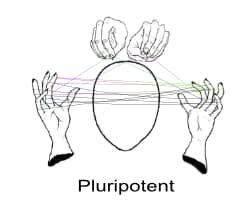
Is non-chemical depression a choice or a cognitive weakness? Let's explore the research to find out what causes the recurrent depressive spells 50-66% of the previously-depressed population can expect this year. Starting with the shenanigans of neural networks.
summary
The conversation delves into the complexities of depression, particularly how singular events can trigger a resurgence of emotional memories and expectations rooted in past experiences. It highlights the interplay between associative neural networks, modern day environmental triggers, and the emotional weight of our life stories, emphasizing the challenges of owning a stupid fucking human brain.
takeaways
- Once clinically depressed, recurrent spells are devastatingly prevalent.
- Evidence suggests up to 70% of sufferers may have cognitive (not chemical) depression.
- Interpersonal relationships may suggest depression is a choice or a personal weakness.
- Concentration and attention are skewed towards emotional material in depressive individuals.
- Unoccupied minds return to emotional contents when they aren't fully engaged in a task.
- Due to associative neural networks, emotional memories and expectations can resurface easily.
- Thanks to the "all or nothing" activation of neural networks, singular events can have profound impact on emotions.
- Thoughts and memories associated with negatively valanced emotion are activated and elaborated upon under duress.
- Each depressive spell adds activation nodes to our associative networks, increasing chances of environmental triggering.
- Understanding and having compassion for the difficulties of having a brain are required for depression recovery..
keywords
depression, emotional memories, environmental triggers, depression recurrence, mental health, psychological insights, depressive stories, neural networks
Let’s talk about environment leading directly to PTSD symptoms without chemical or neurophysiological changes being required.
Today, looking at the cognitive basis of depression.
Because sometimes depression is a neurotransmitter problem. About 30% of SSRI users say that medication helps. And also, that leaves another 70% who are unresponsive to chemical intervention.
Because sometimes you look around to see nothing inspiring, life has been empty, everything has been rough for a while, the future is objectively… let’s say “bleak”… and your thoughts are (I would argue) rightfully stormy. Which pulls a curtain over your eyes, shrouding life in dull hues, accurately reflective of what’s being observed.
Yet, under those circumstances, social pressure might say “stop being such a bummer, just look on the bright side, why are you making life so difficult for yourself.” Suggesting that “a cognitive (rather than chemical) basis of depression” means “the choice to have shit thoughts and stew in them for every meal.”
Which causes us (assumedly, folks who’ve touched base with depression a few times before) to wonder… what am I doing wrong? Why is my brain unable to float above it all? Why do I focus on the negative? DO I focus on the negative? And what does it suggest about the powers of my mind? Am I just weak?
Or… is the cognitive basis of depression the act of honestly and accurately assessing our environments, leading to long-lasting, dysfunctional, chronically down days?
For this series, we examine these papers to find out how voluntary and “weak minded” depressional spells really are.
Cognition and Depression: Current Status and Future Directions
Ian H. Gotlib, Jutta Joormann
Annu Rev Clin Psychol. 2010
Rumination as a Mechanism Linking Stressful Life Events to Symptoms of Depression and Anxiety: Longitudinal Evidence in Early Adolescents and Adults
Louisa C. Michl, Katie A. McLaughlin, Kathrine Shepherd, Susan Nolen-Hoeksema
J Abnorm Psychol. 2013
Starting, today, with Gotlib and Joormann.
On the viability of routinely-depressed minds, they say:
… the rates of depression are so high that the World Health Organization Global Burden of Disease Study ranked depression as the single most burdensome disease in the world in terms of total disability-adjusted years among people in the middle years of life (Murray & Lopez 1996).
Interruption: that was in 1996. If anyone is not currently aware, the rate of depression in individuals under the age of 30 has doubled in only the last eight years to be nearly 30%. Something to keep in mind. They continue.
Depression is frequently comorbid with other mental and physical difficulties, most often with anxiety disorders, but also with cardiac problems and smoking (e.g., Carney & Freedland 2009). There is also mounting evidence that depression adversely affects the quality of interpersonal relationships and, in particular, relationships with spouses and children. Not only is the rate of divorce higher among depressed than among nondepressed individuals (e.g., Wade & Cairney 2000), but children of depressed parents have also been found to be at elevated risk for psychopathology (Joorman et al. 2008).
Which might make you think about your childhood home.
Importantly, depression is a highly recurrent disorder. More than 75% of depressed patients have more than one depressive episode, often relapsing within two years of recovery from a depressive episode (Boland & Keller 2009). Indeed, between one-half and two-thirds of people who have ever been clinically depressed will be in an episode in any given year over the remainder of their lives (Kessler & Wang 2009). This high recurrence rate in depression suggests that there are specific factors that increase people’s risk for developing repeated episodes of this disorder. In this review, we focus on one such factor: cognitive functioning and cognitive biases in the processing of emotional information.
Cognitive theories of depression posit that people’s thoughts, inferences, attitudes, and interpretations, and the way in which they attend to and recall events, can increase their risk for the development and recurrence of depressive episodes…. most cognitive theories propose vulnerability-stress hypotheses that posit that the onset of this disorder is due to the interaction of a psychological vulnerability (e.g., certain cognitions or particular ways of processing information) and a precipitating stressor (e.g., a negative life event or some other environmental factor).
Despite the early promise of cognitive theories of depression, important questions remain. The proposition that both depression and anxiety are characterized by biases in all aspects of information processing, for example, has received little support.
So those of us with depression and or anxiety might be shrugging our shoulders. Yeah, it's not that we're walking around looking for things to be negative, seeing it everywhere that we turn.
Maybe cognitive depression doesn't emerge from an obsession with what's wrong across the board, a total lack of gratitude or void of resilience or ability to imagine things optimistically.
But we do have to ask…. if there isn't research evidence to support that old view, then does depression come instead from a lack of mental discipline and control?
Is it all about “cognitive deficit”?
Two distinct patterns of cognitive correlates of depression and dysphoria are frequently cited. First, depressed people report experiencing broad difficulties involving concentration and memory (Burt et al. 1995). Depressed people often complain of concentration difficulties (Watts & Sharrock 1985); indeed, “difficulty concentrating” is a symptom of a major depressive episode in DSM-IV. Second, despite these difficulties, they report easily concentrating on negative self-focused thoughts, and they exhibit enhanced recall of mood-congruent (i.e., negatively valenced) material (Mathews & MacLeod 2005).
So here they discuss what I like to phrase as becoming self-obsessed in the bad way. When we're depressed, it's very easy for us to elaborate on thoughts and narratives about how we are the fucking worst. And it is easy for things to glob onto that emotional state, which we then notice and continue to elaborate with more thoughts.
… the resource-allocation hypothesis postulates that because their cognitive capacity is reduced, depressed individuals have deficits in remembering and in engaging in other effortful cognitive processes (e.g., Ellis & Ashbrook 1988). The general assumptions are that the amount of resources available for cognitive operations is limited and that depression either occupies or functionally reduces these resources, for example, because resources are used by task-irrelevant emotional processing.
Meaning it's possible that depression seems to be worse or the symptoms of it increase when we don't have enough things keeping us completely mentally occupied, when our minds can wander, when they end up in emotional landscapes, and when we require cognitively blocking out our emotions to work on a task, but the task is not demanding enough to really light us up from the inside out.
This might explain why boredom and depression seem to go hand in hand in hand.
Similarly, the affective interference hypothesis posits that because depressed persons are preoccupied with the processing of emotional material, their performance on tasks that require them to process emotional aspects of stimuli will be fine, but will suffer on tasks that require them to ignore emotional aspects of the stimuli and respond to other aspects of the material (Siegle et al. 2002).
Overall, studies conducted thus far provide evidence that depression is associated with greater memory impairment in contexts in which (a) attention is not constrained by the task (e.g., Hertel & Rude 1991); (b) increased cognitive effort is required (see review by Hartlage et al. 1993); and (c) attention is easily allocated to personal concerns and other thoughts that are irrelevant to the task (Ellis & Ashbrook 1988).
These results suggest that, at least with respect to memory deficits, depressed people might have the ability to perform at the level of nondepressed people in structured situations but have problems doing this on their own initiative in unconstrained situations (Hertel 2004). Moreover, these results suggest that eliminating the opportunity to ruminate also eliminated the impairment in the memory task, a result that might explain why unconstrained tasks lead to impaired performance in the depressed group.
Consistent with these findings, Egeland et al. (2003) concluded from the results of their study that reduced performance on WM tasks in depression is due not to a specific deficit in executive functioning, but to a nonspecific reduction in speed and to a loss of vigilance that is consistent with a lack of effort. Grant et al. (2001) administered a battery of cognitive tasks to 123 depressed outpatients and noted the surprising absence of cognitive deficits in their sample. The only indications of deficits were fewer completed categories, increased perseveration, and impaired maintenance of set on the Wisconsin Card Sorting Task (WCST), a widely used measure of executive control and cognitive flexibility. These results suggest the operation of depression-related deficits in the generation and maintenance of problem-solving strategies and difficulties in set switching (see also Harvey et al. 2004).
… however, that there is significant variability in the extent to which studies report deficits and that this variability is due to the subtype of depression (with deficits being most prominent in psychotic depression) and to the age of the participants (with deficits being most prominent in older depressed adults).
It is also important to keep in mind that it can be difficult to differentiate between cognitive deficits and a lack of motivation that often characterizes depressed patients (Scheurich et al. 2008).
Here we can offer the sentiment that when everything appears to be awful and you estimate that nothing is going to work out, yes, it is very easy to become demotivated.
But no, it doesn't seem likely that brains being lazy are the cause of depression from these research findings. A deficit or weakness of the mind is not supported by their studies.
Where else can we search for clues about the cog basis of dep?
Maybe… depression comes from highly connected structures in our brains?
It’s been a while, but we’re going back to a traumatized motherfucker favorite. Neural networks.
Is depression all about shitty stories and neural networks bottlenecking our perceptions?
Beck (1976) postulated that existing memory representations, or schemas, lead individuals to filter stimuli from the environment such that their attention is directed toward information that is congruent with their schemas. Beck theorized that the schemas of depressed persons include themes of loss, separation, failure, worthlessness, and rejection; consequently, depressed individuals will exhibit a systematic bias in their processing of environmental stimuli or information that is relevant to these themes.
Moreover, dysfunctional schemas and processing biases are presumed to endure beyond the depressive episode, representing stable vulnerability factors for depression onset and recurrence. When the dysfunctional schemas are activated by stressors, specific negative cognitions are generated that take the form of automatic thoughts and revolve around pessimistic views about the self, the world, and the future—the cognitive triad.
So if our representations of reality, our narratives, our stories, what we expect, are to blame for depression, and those present with relative stability across life, causing many depressive backslides. How does it work exactly? Is it that we simply choose to tell ourselves the worst bedtime stories ever?
Or is it a bit more…. Nodal…. than all that?
Research examining processing biases in depression was inspired primarily by Bower’s(1981) work on mood and memory. These studies postulate that “associative networks” lead to cognitive biases in depressed individuals. These associative networks consist of numerous nodes, each containing specific semantic representations that can be activated by environmental stimuli. The activation of any one node causes the partial activation, or priming, of all the other nodes within its associative network through a process of spreading activation. Consequently, the representations of the primed nodes require less activation for access to occur than do the representations of nonprimed nodes, resulting in a processing advantage for stimuli that are related to these primed representations. Like Beck, Bower also postulates that associative networks are stable constructs; the attentional biases of depressed individuals are expected to endure beyond the depressive episode.
In other words, we have vast neural networks spanning our brains. These have many, many activation points within them. Stimulation events cause widespread activation, leading to the entire neural system lighting up. In this way, it doesn’t take much for our minds to be flooded with memories, insights, and expectations that have already been sewn into them – causing resurgence of depression without requiring anywhere near the same amount of stimulation that inspired it the first time around. A challenge, like economic uncertainty or perception of social rejection, that has been encountered as part of a depressive storm in the past, kicks up visceral, emotional, and explicit memories that come alive again in the present.
And let’s figure, also, that those neural networks? Then expand, to include NEW stimulation events – new nodes – associated with the current day circumstances. So, the depression network continues to grow and grow. Creating more activation points with time. increasing the likelihood of recurring depression.
This suggests that depression isn’t a choice. Isn’t a weakness. It’s actually caused by an observant and connection-making brain, anticipating the future based on the complex memories it’s collected in the past. And it’s entirely involuntary.
The hippocampus sends signals of activation – patterns of cells firing – automatically – upon observing stimuli that looks like stimuli it’s seen before. This powers up the associated neural network instantly. And the schema that suggests “nothing good can come of this” is immediately brought to the front of the PFC.
FROM THERE, cognitive habits and pitfalls might make us lose our way back to a balanced way of seeing ourselves, our futures, and the world.
Which we’ll discuss henceforth.
The point today?
We aren’t making up stories and rolling in the muck due to laziness, desire, or personal failure.
We’re experiencing the effects of neural networks, lighting up closely associated ideas, memories, and emotions to form our predictions of upcoming events. With these tightly knit cells activating together, we get automatic, unconscious, unpurposeful perspectives. Those perspectives upregulate and downregulate our perceptions – filtering out what doesn’t fit and emphasizing evidence that matches our polarized neural network schemas. With all of this happening, we, perhaps, lose cognitive control of our attentional direction when our thoughts are permitted to wander. If we aren’t mentally occupied – guided – at all times, we’re likely to revert attention to emotional material that questions our place on earth, our worth, and our safety. These thoughts, then, eat up our capacity for having others, while increasing the likelihood of repeating our depressive dives. An opportunity cost is at play, which strengthens and expands the systems responsible for negative expectations.
We are dealing with our stupid fucking brains doing exactly what they were ever designed to do.
And in this way, it may appear that depression is caused by a so-called “cognitive deficit” that we can easily chide ourselves for. Wondering why we’re so “weak” that we can’t “just be happy.”
… and that’s where we’ll pick up next time, as we jump into BIASED PROCESSING OF EMOTIONAL INFORMATION IN DEPRESSION, looking at memory, interpretation, attention and perception processes, as they relate to the onset of cognitive (environmental) depression.
Because, as we’re learning here… depression isn’t about choosing to dramatically declare life is unlivable. It’s about mental structures that have been wired together during past struggles and emotional experience in the present.
I’ll see you soon, as we continue to question the idea that depression is unjustified malingering or a cognitive deficit due to preoccupation with negativity.
And take care til then, Fucker.
Note where your attention is flowing these days with compassion and care. Not self-harassment or attempts at toxic positivity.
Hail yourself.
Hail Archie.
Hail Marcus Sharkus.
And cheers, y’all.